Quotes
Some People are not to be persuaded to taste of any Creatures they have daily seen and been acquainted with, while they were alive; others extend their Scruple no further than to their own Poultry, and refuse to eat what they fed and took care of themselves; yet all of them will feed heartily and without Remorse on Beef, Mutton and Fowls when they are bought in the Market. In this Behaviour, methinks, there appears something like a Consciousness of Guilt, it looks as if they endeavor'd to save themselves from the Imputation of a Crime (which they know sticks somewhere) by removing the cause of it as far as they can from themselves; and I can discover in it some strong remains of Primitive Pity and Innocence, which all the arbitrary Power of Custom, and the violence of Luxury, have not yet been able to conquer.
p. 188
Generally speaking, I think it is fair to say that I am a friend to the creatures of the Earth when I am not busy eating them or wearing them.
p. 46
Humans have lived alongside parrots for thousands of years, and only recently have they considered the possibility that we might be intelligent.
I suppose I can’t blame them. We parrots used to think humans weren’t very bright. It’s hard to make sense of behavior that’s so different from your own.
p. 233
If you pick up a starving dog and make him prosperous, he will not bite you. This is the principal difference between a dog and a man.
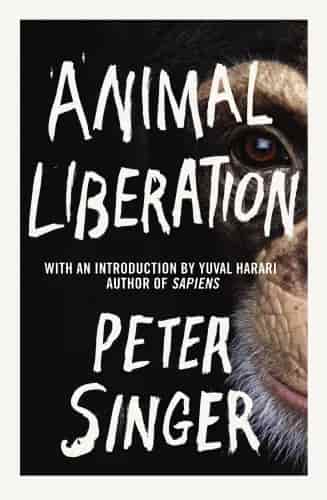
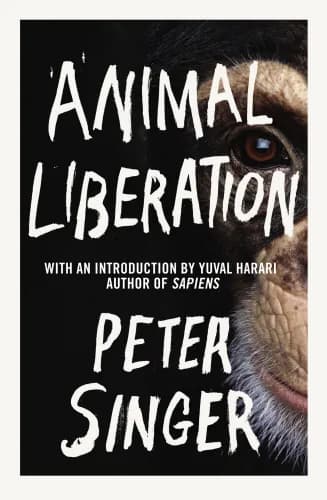
The animals themselves are incapable of demanding their own liberation, or of protesting against their condition with votes, demonstrations, or boycotts. Human beings have the power to continue to oppress other species forever, or until we make this planet unsuitable for living beings. Will our tyranny continue, proving that morality counts for nothing when it clashes with selfinterest, as the most cynical of poets and philosophers have always said? Or will we rise to the challenge and prove our capacity for genuine altruism by ending our ruthless exploitation of the species in our power, not because we are forced to do so by rebels or terrorists, but because we recognize that our position is morally indefensible? The way in which we answer this question depends on the way in which each one of us, individually, answers it.
How far down the evolutionary scale shall we go? Shall we eat fish? What about shrimps? Oysters? To answer these questions we must bear in mind the central principle on which our concern for other beings is based. As I said … the only legitimate boundary to our concern for the interests of other beings is the point at which it is no longer accurate to say that the other being has interests. To have interests, in a strict, nonmetaphorical sense, a being must be capable of suffering or experiencing pleasure. If a being suffers, there can be no moral justification for disregarding that suffering, or for refusing to count it equally with the like suffering of any other being. But the converse of this is also true. If a being is not capable of suffering, or of enjoyment, there is nothing to take into account.
Becoming a vegetarian is not merely a symbolic gesture. Nor is it an attempt to isolate oneself from the ugly realities of the world, to keep oneself pure and so without responsibility for the cruelty and carnage all around. Becoming a vegetarian is a highly practical and effective step one can take toward ending both the killing of nonhuman animals and the infliction of suffering upon them.
[One thing] underpins, makes consistent, and gives meaning to all our other activities on behalf of animals. This one thing is that we take responsibility for our own lives, and make them as free of cruelty as we can. The first step is that we cease to eat animals. Many people who are opposed to cruelty to animals draw the line at becoming a vegetarian. It was of such people that Oliver Goldsmith, the eighteenth-century humanitarian essayist, wrote: "They pity, and they eat the objects of their compassion."
Animal Liberation is Human Liberation too.
Speciesism—the word is not an attractive one, but I can think of no better term—is a prejudice or attitude of bias in favor of the interests of members of one's own species and against those of members of other species.
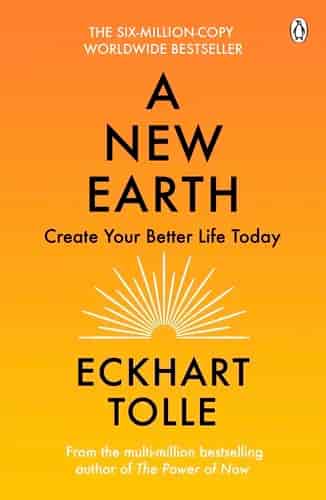
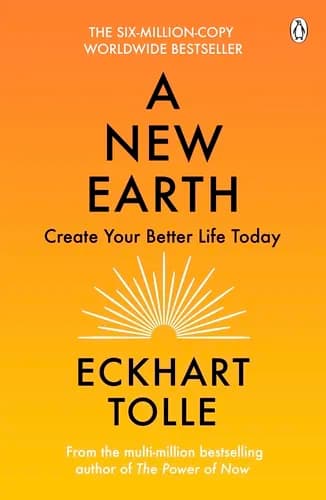
Another aspect of the collective dysfunction of the human mind is the unprecedented violence that humans are inflicting on other lifeforms and the planet itself – the destruction of oxygen producing forests and other plant and animal life; ill treatment of animals in factory farms; and poisoning of rivers, oceans, and air.
To his complete astonishment, he later found himself offering up a stumbling prayer that the dog would be protected. It was a moment in which he felt a desperate need to believe in a God that shepherded his own creations. But, even praying, he felt a twinge of self-reproach, and knew he might start mocking his own prayer at any second.
Somehow, though, he managed to ignore his iconoclastic self and went on praying anyway. Because he wanted the dog, because he needed the dog.