Mathematics is not just a language. Mathematics is a language plus reasoning. It's like a language plus… — Richard P. Feynman
Mathematics is not just a language. Mathematics is a language plus reasoning. It's like a language plus logic. Mathematics is a tool for reasoning. It's, in fact, a big collection of the results of some person's careful thought and reasoning. By mathematics, it is possible to connect one statement to another.
Source: Wikiquote · CC BY-SA 4.0

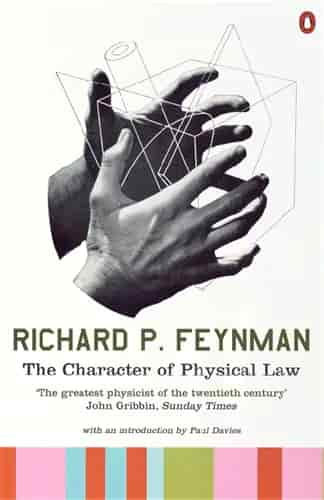
More from this book
In general we look for a new law by the following process. First we guess it. Then we compute the consequences of the guess to see what would be implied if this law that we guessed is right. Then we compare the result of the computation to nature, with experiment or experience, compare it directly with observation, to see if it works. If it disagrees with experiment it is wrong. In that simple statement is the key to science. It does not make any difference how beautiful your guess is. It does not make any difference how smart you are, who made the guess, or what his name is – if it disagrees with experiment it is wrong. That is all there is to it.
p. 156
It is not unscientific to make a guess, although many people who are not in science think it is. Some years ago I had a conversation with a layman about flying saucers — because I am scientific I know all about flying saucers! I said “I don’t think there are flying saucers”. So my antagonist said, “Is it impossible that there are flying saucers? Can you prove that it’s impossible?” “No”, I said, “I can’t prove it’s impossible. It’s just very unlikely”. At that he said, “You are very unscientific. If you can’t prove it impossible then how can you say that it’s unlikely?” But that is the way that is scientific. It is scientific only to say what is more likely and what less likely, and not to be proving all the time the possible and impossible. To define what I mean, I might have said to him, "Listen, I mean that from my knowledge of the world that I see around me, I think that it is much more likely that the reports of flying saucers are the results of the known irrational characteristics of terrestrial intelligence than of the unknown rational efforts of extra-terrestrial intelligence." It is just more likely. That is all.
p. 165
In general, we look for a new law by the following process: First we guess it. Then we – now don't laugh, that's really true. Then we compute the consequences of the guess to see what, if this is right, if this law that we guessed is right, to see what it would imply. And then we compare the computation results to nature, or we say compare to experiment or experience, compare it directly with observations to see if it works. If it disagrees with experiment, it's wrong. In that simple statement is the key to science. It doesn't make any difference how beautiful your guess is, it doesn't make any difference how smart you are, who made the guess, or what his name is. If it disagrees with experiment, it's wrong. That's all there is to it.