Leafy Quotes
Recently added
The newest book quotes in the Leafy Quotes collection — passages readers have just added, each with its author, book and the page it came from.
Social scientists have found that when confronted with either an enormous threat or a huge reward, people tend to focus on the magnitude of the consequence and ignore the probability.
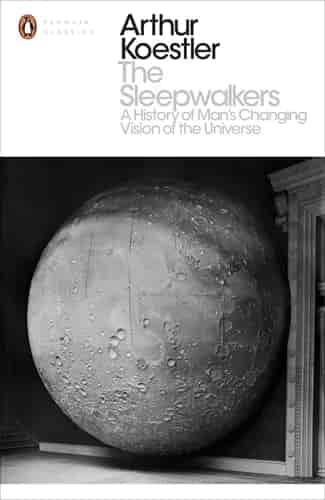
Today we know that on the sub-atomic level the fate of an electron or a whole atom is not determined by its past. But this discovery has not led to any basically new departure in the philosophy of nature, only to a state of bewildered embarrassment, a further retreat of physics into a language of even more abstract symbolism. Yet if causality has broken down and events are not rigidly governed by the pushes and pressures of the past, may they not be influenced in some manner by the "pull" of the future—which is a manner of saying that "purpose" may be a concrete physical factor in the evolution of the universe, both on the organic and unorganic levels. In the relativistic cosmos, gravitation is a result of the curvature and creases in space which continually tend to straighten themselves out—which, as Whittaker remarked, "is a statement so completely teleological that it certainly would have delighted the hearts of the schoolmen."
For hand in glove with that power was an insatiate greed; they were one and the same.
Television's quasi-hypnotic effect is one reason that the political economy supported by the television industry is as different from the vibrant politics of America's first century as those politics were different from the feudalism that thrived on the ignorance of the masses of people in the Dark Ages.
Our systematic exposure to fear and other arousal stimuli on television can be exploited by the clever public relations specialist, advertiser, or politician.
History will surely judge America's decision to invade and occupy a fragile and unstable nation that did not attack us and posed no threat to us as a decision that was not only tragic but absurd. Saddam Hussein was a brutal dictator, to be sure, but not one who posed an imminent danger to us. It is a decision that could have been made only at a moment in time when reason was playing a sharply diminished role in our national deliberations.
The sixth pre-Christian century—the miraculous century of Buddha, Confucius and Lâo-Tse, of the Ionian philosophers and Pythagoras—was a turning point for the human species. A March breeze seemed to blow across the planet from China to Samos, stirring man into awareness, like the breath of Adam's nostrils. In the Ionian school of philosophy, rational thought was emerging from the mythological dream-world. ...which, within the next two thousand years, would transform the species more radically than the previous two hundred thousand had done.
We find in the history of ideas mutations which do not seem to correspond to any obvious need, and at first sight appear as mere playful whimsies — such as Apollonius' work on conic sections, or the non-Euclidean geometries, whose practical value became apparent only later.
The uomo universale of the Renaissance, who was artist and craftsman, philosopher and inventor, humanist and scientist, astronomer and monk, all in one, split up into his component parts. Art lost its mythical, science its mystical inspiration; man became again deaf to the harmony of the spheres. The Philosophy of Nature became ethically neutral, and "blind" became the favourite adjective for the working of natural law. The space-spirit hierarchy was replaced by the space-time continuum. ...man's destiny was no longer determined from "above" by a super-human wisdom and will, but from "below" by the sub-human agencies of glands, genes, atoms, or waves of probability. ...they could determine his fate, but could provide him with no moral guidance, no values and meaning. A puppet of the Gods is a tragic figure, a puppet suspended on his chromosomes is merely grotesque.
Any new dominant communications medium leads to a new information ecology in society that inevitably changes the way ideas, feelings, wealth, power and influence are distributed and the way collective decisions are made.
In the world of television, the massive flows of information are largely in only one direction, which makes it virtually impossible for individuals to take part in what passes for a national conversation. Individuals receive, but they cannot send. They hear, but they do not speak. The "well-informed citizenry" is in danger of becoming the "well-amused audience."
It is well documented that humans are especially fearful of threats that can be easily pictured or imagined. For example, one study found that people are willing to spend significantly more for flight insurance that covers "death by terrorism" than for flight insurance that covers "death by any cause." Now, logically, flight insurance for death by any cause would cover terrorism in addition to a number of other potential problems. But something about the buzzword terrorism creates a vivid impression that generates excessive fear.
The remedy for what ails our democracy is not simply better education (as important as that is) or civic education (as important as that can be), but the re-establishment of a genuine democratic discourse in which individuals can participate in a meaningful way — a conversation of democracy in which meritorious ideas and opinions from individuals do, in fact, evoke a meaningful response.