Leafy Quotes
Recently added
The newest book quotes in the Leafy Quotes collection — passages readers have just added, each with its author, book and the page it came from.
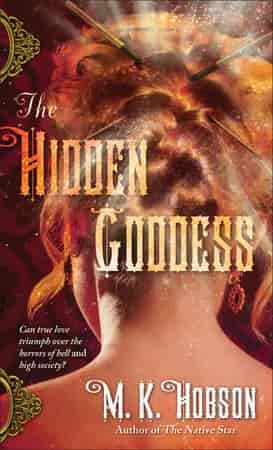
Having engaged in vigorous and passionate debate while on their honeymoon trip from New York, they had arrived at the startling—and rather liberating—conclusion that the marriage itself was not at all necessary. Stanton no longer had a name to give, and taking Emily’s would have involved all the tedium of authority and nonsense they’d hoped to avoid. So, in the end, he had returned to her the simple gold band she had worn for so long, sliding it onto the ring finger of her new right hand. And she had given him a soft slow kiss. They were the only vows required.
p. 373
“Was your mother furious?”
“She’ll get over it,” Stanton said. “Perhaps not in this lifetime, but I happen to believe in reincarnation, so there’s still hope.”
p. 65
Sadly, there is a fine line between patriotism and paranoia.
p. 3
Love. Such a lot of damn fuss.
p. 15
There’s never been an act done since the beginning, from a kid stealing candy to a dictator committing genocide, that the person doing it didn’t think he was fully justified. That’s a mental trick called rationalizing, and it’s done the human race more harm than anything else you can name.
“I wasn’t sure if we were still engaged.”
“After everything we’ve been through? After true love conquered all?” Emily shook her head. “Being dead had done nothing to alleviate your obtuseness, Mr. Stanton.”
“Being dead allowed me to learn the heart’s deepest secret,” he said. “That sometimes love—even true love—isn’t enough.”
”But it’s a start,” Emily said.
p. 353
Emily looked at him for a long time. There were so many things she wanted to know—but she wanted not to know them even more. She didn’t want any more answers. He had been the one thing she could trust, the one person she could rely on. She wanted to beg him to be that way again. But it wasn’t him who had changed. It was her. It was her own credulity she really wanted back. And credulity, like virtue, could be lost only once.
p. 237
Among life’s cruelest truths is this one: Wonderful things are especially wonderful the first time they happen, but their wonderfulness wanes with repetition. Just compare the first and last time your child said "Mama" or your partner said "I love you" and you’ll know exactly what I mean. When we have an experience hearing a particular sonata, making love with a particular person, watching the sunset from a particular window of a particular room—on successive occasions, we quickly begin to adapt to it, and the experience yields less pleasure each time. Psychologists call this habituation, economists call it declining marginal utility, and the rest of us call it marriage. But human beings have discovered two devices that allow them to combat this tendency: variety and time.
p. 30
There are many different techniques for collecting, interpreting, and analyzing facts, and different techniques often lead to different conclusions, which is why scientists disagree about the dangers of global warming, the benefits of supply-side economics, and the wisdom of low-carbohydrate diets. Good scientists deal with this complication by choosing the techniques they consider most appropriate and then accepting the conclusions that these techniques produce, regardless of what those conclusions might be. But bad scientists take advantage of this complication by choosing techniques that are especially likely to produce the conclusions they favour, thus allowing them to reach favoured conclusions by way of supportive facts. Decades of research suggests that when it comes to collecting and analyzing facts about ourselves and our experiences, most of us have the equivalent of an advanced degree in Really Bad Science.
p. 164
“Dignity is like morality,” Mirabilis barked. “Too much is as bad as too little.”
p. 274
You know, there’s one thing about you that always astonishes me. The longer you talk, the wronger you get.
p. 331
Senator Stanton? The man who’s sold his own soul so many times that no one can figure out who actually owns it?
p. 285