Leafy Quotes
Recently added
The newest book quotes in the Leafy Quotes collection — passages readers have just added, each with its author, book and the page it came from.
Having money is a way of being free of money.
Only it takes time to be happy. A lot of time. Happiness, too, is a long patience.
In the end, man is not entirely guilty — he did not start history. Nor is he wholly innocent — he continues it.
Mother died today. Or maybe yesterday; I can't be sure.
Real generosity toward the future consists in giving all to the present.
p. 313
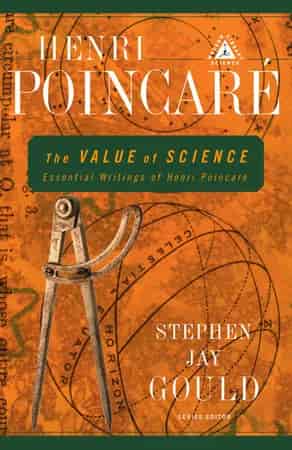
Time and Space … It is not nature which imposes them upon us, it is we who impose them upon nature because we find them convenient.
The advance of science is not comparable to the changes of a city, where old edifices are pitilessly torn down to give place to new, but to the continuous evolution of zoologic types which develop ceaselessly and end by becoming unrecognizable to the common sight, but where an expert eye finds always traces of the prior work of the centuries past. One must not think then that the old-fashioned theories have been sterile or vain.
It is because simplicity and vastness are both beautiful that we seek by preference simple facts and vast facts; that we take delight, now in following the giant courses of the stars, now in scrutinizing the microscope that prodigious smallness which is also a vastness, and now in seeking in geological ages the traces of a past that attracts us because of its remoteness.
p. 23
I think I have already said somewhere that mathematics is the art of giving the same name to different things.
p. 31
It is by logic that we prove, but by intuition that we discover. To know how to criticize is good, to know how to create is better.
p. 129
The scientist does not study nature because it is useful to do so. He studies it because he takes pleasure in it, and he takes pleasure in it because it is beautiful. If nature were not beautiful it would not be worth knowing, and life would not be worth living. I am not speaking, of course, of the beauty which strikes the senses, of the beauty of qualities and appearances. I am far from despising this, but it has nothing to do with science. What I mean is that more intimate beauty which comes from the harmonious order of its parts, and which a pure intelligence can grasp.
p. 22
The greatest chance is the birth of a great man. It is only by chance that two reproductive cells, of different sexes, met, each containing precisely those mysterious elements whose mutual reaction was to produce genius. We will agree that these elements must be rare and that their meeting is even rarer. That it would have taken little to deviate the spermatozoon that carried them from its course; it would have been enough to deviate it by a tenth of a millimeter and Napoleon would not have been born and the destiny of a continent would have been changed. No other example can better explain the true nature of chance.