Leafy Quotes
Recently added
The newest book quotes in the Leafy Quotes collection — passages readers have just added, each with its author, book and the page it came from.
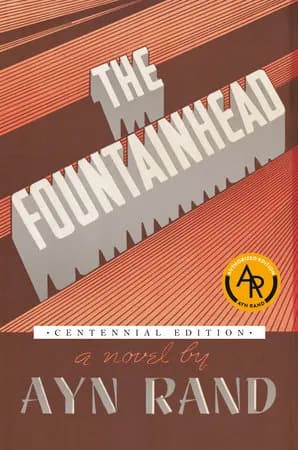
"Why do you want me to think that this is great architecture?" He pointed to the picture of the Parthenon.
"That," said the Dean, "is the Parthenon!"
"So it is."
"I haven't the time to waste on silly questions."
"All right, then." Roark got up, he took a long ruler from the desk, he walked to the picture. "Shall I tell you what's rotten about it?"
"It’s the Parthenon!" said the Dean.
"Yes, God damn it, the Parthenon."
The ruler struck the glass over the picture.
"Look, " said Roark. "The famous flutings on the famous columns—what are they there for? To hide the joints in the wood—when columns were made of wood, only these aren't, they're marble. The triglyphs, what are they? Wood. Wooden beams, the way they had to be laid when people began to build wooden shacks. Your Greeks took marble and they made copies of their wooden structures out of it, because others had done it that way. Then your masters of the Renaissance came along and made copies in plaster of copies in marble of copies in wood. Now here we are, making copies in steel and concrete of copies in plaster of copies in marble of copies in wood. Why?"
p. 23
"It's good to suffer. Don't complain. Bear, bow, accept—and be grateful that God has made you suffer. For this makes you better than the people who are laughing and happy. If you don't understand this, don't try to understand. Everything bad comes from the mind, because the mind asks too many questions. It is blessed to believe, not to understand. So if you didn't get passing grades, be glad of it. It means that you are better than the smart boys who think too much and too easily."
p. 318
To put it very simply, anyone can become an American, but only a Chinese can be Chinese - and that places an additional and significant barrier in the way of any essentially national global hegemony.
p. 210
"Here are my rules: what can be done with one substance must never be done with another. No two materials are alike. No two sites on earth are alike. No two buildings have the same purpose. The purpose, the site, the material determine the shape. Nothing can be reasonable or beautiful unless it's made by one central idea, and the idea sets every detail. A building is alive, like a man. Its integrity is to follow its own truth, its one single theme, and to serve its own single purpose. A man doesn't borrow pieces of his body. A building doesn't borrow hunks of its soul. Its maker gives it the soul and every wall, window and stairway to express it."
p. 18
In the long run, global politics are bound to become increasingly uncongenial to the concentration of hegemonic power in the hands of a single state. Hence America is not only the first, as well as the only, truly global superpower, but is also likely to be the very last.
p. 209
"We must not think. We must believe. Believe, Katie, even if your mind objects. Don't think. Believe. Trust your heart, not your brain. Don't think. Feel. Believe."
p. 388
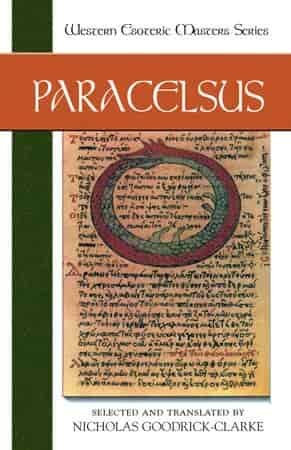
If you have been given a talent, exercise it freely and happily like the sun: give everyone from your splendour.
The art of medicine has its roots in the heart. If your heart is false, then also the doctor in you is false. If it is fair, then also the doctor is fair.
It is also a fact that America is too democratic at home to be autocratic abroad. This limits the use of America's power, especially its capacity for military intimidation. Never before has a populist democracy attained international supremacy. But the pursuit of power is not a goal that commands popular passion, except in conditions of a sudden threat or challenge to the public's sense of domestic well-being. The economic self-denial (that is, defense spending) and the human sacrifice (casualties, even among professional soldiers) required in the effort are uncongenial to democratic instincts. Democracy is inimical to imperial mobilization.
p. 35
What maintains the marriage and what is it? Only the knowledge of the hearts, that is its beginning and end.
Consider that we shouldn’t call our brother a fool, since we don’t know ourselves what we are.
He who wants to govern must have insight into the hearts of men and act accordingly.