Leafy Quotes
Recently added
The newest book quotes in the Leafy Quotes collection — passages readers have just added, each with its author, book and the page it came from.
The dysfunctions and idiosyncrasies of childhood became the self-evident norms of adulthood.
p. 96
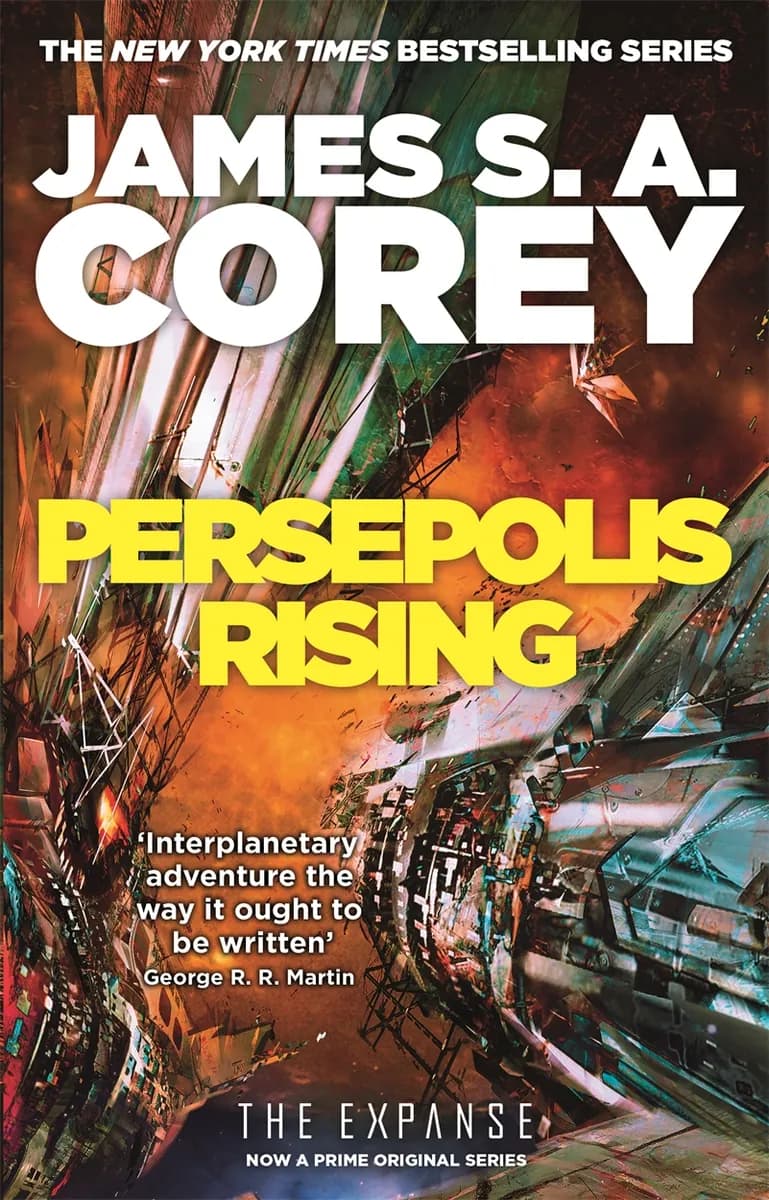
“You’re not picking a fight with the things that made the protomolecule. You’re picking a fight with whatever killed them. Orders of magnitude above the things that were orders of magnitude above us. You’ve got to know this is going to escalate if we keep using these technologies.”
“We were always going to keep using these technologies. That was inevitable the moment we opened the gates,” Duarte said. “If you’ve studied any history at all, you know that. Never in human history have we discovered something useful and then chosen not to use it.”
p. 548
“We knew that, though.”
“We suspected it.”
“Do we know it now?”
“We suspect it harder,” Elvi said. “We’re scientists. We only know things until someone shows us we’re wrong.”
p. 151
Owning your mistakes meant not making them twice.
p. 231
The fight for survival made everything either resilient or forgotten.
p. 532
Portraits of great war leaders or critical battles that looked flattering, well composed, and balanced always felt like propaganda. Tanaka had spent a lot of time in the halls of power. She’d seen many paintings of great men in uniform staring eagle-eyed into the distance where their future glory lay. She’d seen very few paintings of soldiers with only a ragged tent and a dying fire to hold back the cold nights before some stranger tried to bayonet them in the morning.
p. 384
This was a new variation, but that was all. She wanted to believe that, and like anything she fund herself wanting to be true, she forced herself to double-check it.
p. 265
She was reaching for supernatural answers when memory and mundanity were enough.
p. 360
“I can’t see how this all plays out.”
“Sure you do. Everyone dies. That’s always been how it is. Only question now is whether we can find some way to not all go at once.”
“If we do, then civilization dies. Everything humanity has ever done goes away.”
“Well, at least there won’t be anyone who misses it,” Amos said, and sighed. “You’re overthinking this, Cap’n. You got now and you got the second your lights go out. Meantime is the only time there is. All that matters is what we do during it.”
“I just want to go out knowing that things will be okay without me. That it all keeps going.”
“That you’re not the one who dropped the ball.”
“Or maybe,” Amos said, “you’re not that important and it ain’t up to you to fix the universe?”
“You always know how to cheer me up.”
p. 241
“It would have worked,” she said. “If we’d cooperated, it would have worked.”
“It would have been better.”
“I think about all the things we could have done, all the miracles we could have achieved, if we were all just a little bit better than it turns out we are.”
p. 374
“What we’re doing here is bigger than politics.”
“I know,” he said. “I just keep hoping the politicians see it too.”
p. 50
“There’s sensor data already? I mean, I figured there’d be a few hours at least before they gathered enough to have a meeting about.”
“When people don’t know anything,” Amos said, “they love having meetings to talk about it.”
p. 383