
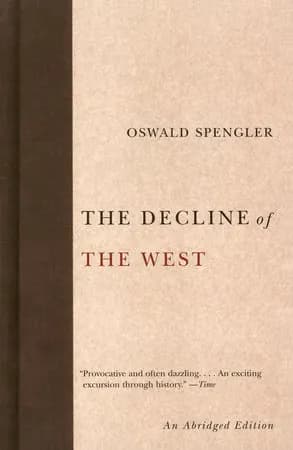
Quotes
And at that point, too, in Buddhist India as in Babylon, in Rome as in our own cities, a man's choice of the woman who is to be, not mother of his children as amongst peasants and primitives, but his own "companion for life", becomes a problem of mentalities. The Ibsen marriage appears, the "higher spiritual affinity" in which both parties are "free"—free, that is, as intelligences, free from the plantlike urge of the blood to continue itself, and it becomes possible for a Shaw to say "that unless Woman repudiates her womanliness, her duty to her husband, to her children, to society, to the law, and to everyone but herself, she cannot emancipate herself." The primary woman, the peasant woman, is mother. The whole vocation towards which she has yearned from childhood is included in that one word. But now emerges the Ibsen woman, the comrade, the heroine of a whole megalopolitan literature from Northern drama to Parisian novel. Instead of children, she has soul-conflicts; marriage is a craft-art for the achievement of "mutual understanding". ...
p. 104
The press to-day is an army with carefully organized arms and branches, with journalists as officers, and readers as soldiers. But here, as in every army, the soldier obeys blindly, and war-aims and operation-plans change without his knowledge. The reader neither knows, nor is allowed to know, the purposes for which he is used, nor even the role that he is to play. A more appalling caricature of freedom of thought cannot be imagined. Formerly a man did not dare to think freely. Now he dares, but cannot; his will to think is only a willingness to think to order, and this is what he feels as his liberty.
p. 462
The dictature of money marches on, tending to its material peak, in the Faustian Civilization as in every other. And now something happens that is intelligible only to one who has penetrated the essence of money. If it were anything tangible, then its existence would be forever — but, as it is a form of thought, it fades out as soon as it has thought its economic world to finality, and has no more material upon which to feed. … We have not the freedom to reach to this or that, but to do the necessary or to do nothing. And a task that historic necessity has set will be accomplished with the individual or against him.
p. 506
If by "democracy" we mean the form which the Third Estate as such wishes to impart to public life as a whole, it must be concluded that democracy and plutocracy are the same thing under the two aspects of wish and actuality, theory and practice, knowing and doing. It is the tragic comedy of the world‑improvers' and freedom‑teachers' desperate fight against money that they are ipso facto assisting money to be effective. Respect for the big number—expressed in the principles of equality for all, natural rights, and universal suffrage—is just as much a class‑ideal of the unclassed as freedom of public opinion (and more particularly freedom of the press) is so. These are ideals, but in actuality the freedom of public opinion involves the preparation of public opinion, which costs money; and the freedom of the press brings with it the question of possession of the press, which again is a matter of money; and with the franchise comes electioneering, in which he who pays the piper calls the tune. The representatives of the ideas look at one side only, while the representatives of money operate with the other. The concepts of Liberalism and Socialism are set in effective motion only by money. … There is no proletarian, not even a Communist movement, that has not operated in the interests of money, and for the time being permitted by money—and that without the idealists among its leaders having the slightest suspicion of the fact.
To-day we live so cowed under the bombardment of this intellectual artillery that hardly anyone can attain to the inward detachment that is required for a clear view of the monstrous drama. The will-to-power operating under a pure democratic disguise has finished off its masterpiece so well that the object's sense of freedom is actually flattered by the most thorough-going enslavement that has ever existed.
p. 461
Finally, speech and truth exclude one another. And in fact this is just what brings up, in the age of fixed language, the typical "judge of men," who is all race and knows how to take the being that is speaking. To look a man keenly in the eyes, to size up the speaker behind the stump speech or the philosophical discourse, to know behind the prayer the heart, and behind the common good-tone the more intimate levels of social importance—and that instantaneously, immediately, and with the self-evident certainty that characterizes everything cosmic—that is what is lacking to the real Taboo-man, for whom one language at any rate carries conviction. A priest who is also a diplomat cannot be genuinely a priest. An ethical philosopher of the Kant stamp is never a "judge of men."
The man who lies in his verbal utterances betrays himself, without observing it, in his demeanour. One who uses demeanour to dissimulate with betrays himself in his tone. It is precisely because rigid speech separates means and intent that it never carries it off with the keen appraiser. The adept reads between the lines and understands a man as soon as he sees his walk or his handwriting. The deeper and more intimate a spiritual communion, the more readily it dispenses with signs and linkages through waking-consciousness. A real comradeship makes itself understood with few words, a real faith is silent altogether. The purest symbol of an understanding that has again got beyond language is the old peasant couple sitting in the evening in front of their cottage and entertaining one another without a word's being passed, each knowing what the other is thinking and feeling. Words would only disturb the harmony. From such a state of reciprocal understanding something or other reaches back, far beyond the collective existence of the higher animal-world, deep in the primeval history of free-moving life. Here deliverance from the waking-consciousness is, at moments, very nearly achieved.
p. 137


That’s all the quotes.
6 quotes in the collection · come back when we add more