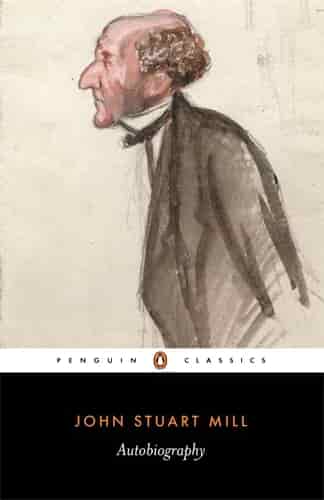
I now saw, that a science is either deductive or experimental, according as, in the province it deals with… — John Stuart Mill
I now saw, that a science is either deductive or experimental, according as, in the province it deals with, the effects of causes when conjoined, are or are not the sums of the effects which the same causes produce when separate. It followed that politics must be a deductive science. It thus appeared, that both Macaulay and my father were wrong; the one in assimilating the method of philosophising in politics to the purely experimental method of chemistry; while the other, though right in adopting a deductive method, had made a wrong selection of one, having taken as the type of deduction, not the appropriate process, that of the deductive branches of natural philosophy, but the inappropriate one of pure geometry, which, not being a science of causation at all, does not require or admit of any summing-up of effects.
p. 160Source: Wikiquote · CC BY-SA 4.0
More from this book
The practical reformer has continually to demand that changes be made in things which are supported by powerful and widely-spread feelings, or to question the apparent necessity and indefeasibleness of established facts; and it is often an indispensable part of his argument to show, how these powerful feelings had their origin, and how those facts came to seem necessary and indefeasible. There is therefore a natural hostility between him and a philosophy which discourages the explanation of feelings and moral facts by circumstances and association, and prefers to treat them as ultimate elements of human nature; a philosophy which is addicted to holding up favorite doctrines as intuitive truths, and deems intuition to be the voice of Nature and of God, speaking with an authority higher than that of our reason. In particular, I have long felt that the prevailing tendency to regard all the marked distinctions of human character as innate, and in the main indelible, and to ignore the irresistible proofs that by far the greater part of those differences, whether between individuals, races, or sexes, are such as not only might but naturally would be produced by differences in circumstances, is one of the chief hindrances to the rational treatment of great social questions, and one of the greatest stumbling blocks to human improvement.
p. 273
I well knew that to propose something which would be called extreme, was the true way not to impede but to facilitate a more moderate experiment.
p. 294
It is the character of the British people, or at least of the higher and middle classes who pass muster for the British people, that to induce them to approve of any change, it is necessary that they should look upon it as a middle course: they think every proposal extreme and violent unless they hear of some other proposal going still farther, upon which their antipathy to extreme views may discharge itself. So it proved in the present instance; my proposal was condemned, but any scheme for Irish Land reform, short of mine, came to be thought moderate by comparison.
p. 294