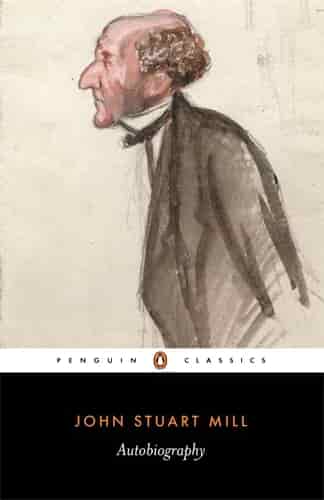
Alike in the highest regions of speculation and in the smaller practical concerns of daily life, her mind was… — John Stuart Mill
Alike in the highest regions of speculation and in the smaller practical concerns of daily life, her mind was the same perfect instrument, piercing to the very heart and marrow of the matter; always seizing the essential idea or principle. The same exactness and rapidity of operation, pervading as it did her sensitive as well as her mental faculties, would, with her gifts of feeling and imagination, have fitted her to be a consummate artist, as her fiery and tender soul and her vigorous eloquence would certainly have made her a great orator, and her profound knowledge of human nature and discernment and sagacity in practical life, would, in the times when such a carrière was open to women, have made her eminent among the rulers of mankind. Her intellectual gifts did but minister to a moral character at once the noblest and the best balanced which I have ever met with in life.
p. 186Source: Wikiquote · CC BY-SA 4.0
More from this book
The practical reformer has continually to demand that changes be made in things which are supported by powerful and widely-spread feelings, or to question the apparent necessity and indefeasibleness of established facts; and it is often an indispensable part of his argument to show, how these powerful feelings had their origin, and how those facts came to seem necessary and indefeasible. There is therefore a natural hostility between him and a philosophy which discourages the explanation of feelings and moral facts by circumstances and association, and prefers to treat them as ultimate elements of human nature; a philosophy which is addicted to holding up favorite doctrines as intuitive truths, and deems intuition to be the voice of Nature and of God, speaking with an authority higher than that of our reason. In particular, I have long felt that the prevailing tendency to regard all the marked distinctions of human character as innate, and in the main indelible, and to ignore the irresistible proofs that by far the greater part of those differences, whether between individuals, races, or sexes, are such as not only might but naturally would be produced by differences in circumstances, is one of the chief hindrances to the rational treatment of great social questions, and one of the greatest stumbling blocks to human improvement.
p. 273
I well knew that to propose something which would be called extreme, was the true way not to impede but to facilitate a more moderate experiment.
p. 294
It is the character of the British people, or at least of the higher and middle classes who pass muster for the British people, that to induce them to approve of any change, it is necessary that they should look upon it as a middle course: they think every proposal extreme and violent unless they hear of some other proposal going still farther, upon which their antipathy to extreme views may discharge itself. So it proved in the present instance; my proposal was condemned, but any scheme for Irish Land reform, short of mine, came to be thought moderate by comparison.
p. 294