Isaac Asimov
Quotes
Junz found revulsion growing strong within him. A planet full of people meant nothing against the dictates of economic necessity!
p. 184
That is the most stupid thing yet. I tell you that I could despair of human intelligence when I see what can exist in men’s minds.
p. 136
“You make interstellar politics sound a very dirty game.”
“It is, but disapproving of dirt doesn’t remove it.”
p. 141
Well, it was healthy to miss once in a while. It kept self-confidence balanced at a point safely short of arrogance.
p. 166
No one is so modest as not to believe himself a competent amateur sleuth.
p. 114
Gillbret said, “Statistics show that one out of three stars has a planetary system.”
Biron nodded. It was a well-worn statistic. Every child was taught that in elementary Galactography.
p. 142
How then to enforce peace? Not by reason, certainly, nor by education. If a man could not look at the fact of peace and the fact of war and choose the former in preference to the latter, what additional argument could persuade him? What could be more eloquent as a condemnation of war than war itself? What tremendous feat of dialectic could carry with it a tenth the power of a single gutted ship with its ghastly cargo?
p. 61
An unpleasant nest of nasty, materialistic and aggressive people, careless of the rights of others, imperfectly democratic at home though quick to see the minor slaveries of others, and greedy without end.
p. 62
The same man who could not find it in his conscience to curb his curiosity into the nuclear studies that might someday kill half of Earth would risk his life to save that of an unimportant fellow man.
p. 6
Economics is on the side of humanity now.
p. 185
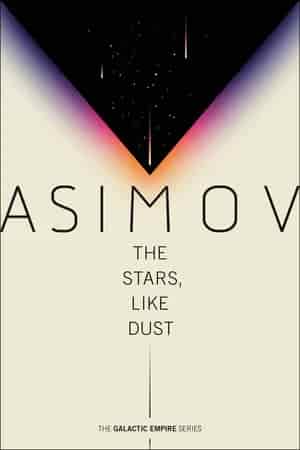
The stars, like dust, encircle me
In living mists of light;
And all of space I seem to see
In one vast burst of sight.
p. 30
There was no denying that he would always be conscious of the fact that an Earthman was an Earthman. He couldn’t help that. That was the result of a childhood immersed in an atmosphere of bigotry so complete that it was almost invisible, so entire that you accepted its axioms as second nature. Then you left it and saw it for what it was when you looked back.
p. 58