
Douglas R. Hofstadter
Quotes
Perhaps the most concise summary of enlightenment would be: transcending dualism. … Dualism is the conceptual division of the world into categories … human perception is by nature a dualistic phenomenon—which makes the quest for enlightenment an uphill struggle, to say the least.
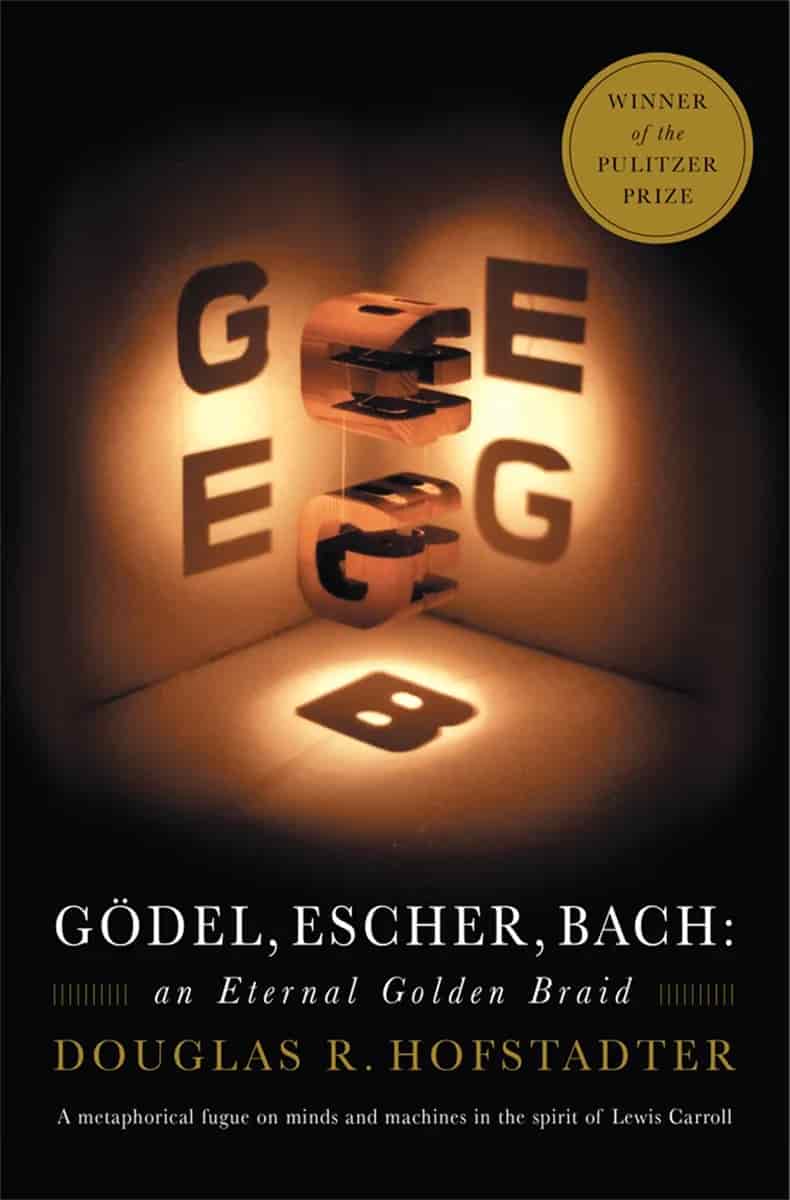
 Godel, Escher, Bach
This type of paradox is quite characteristic of Zen. It is an attempt to "break the mind of logic".
Godel, Escher, BachHofstadter's Law: It always takes longer than you expect, even when you take into account Hofstadter's Law.
Godel, Escher, BachRelying on words to lead you to the truth is like relying on an incomplete formal system to lead you to the truth. A formal system will give you some truths, but as we shall soon see, a formal system, no matter how powerful—cannot lead to all truths.
Godel, Escher, BachNo reference is truly direct—every reference depends on some kind of coding scheme. It's just a question of how implicit it is.
Godel, Escher, BachThe proverbial German phenomenon of the verb-at-the-end about which droll tales of absentminded professors who would begin a sentence, ramble on for an entire lecture, and then finish up by rattling off a string of verbs by which their audience, for whom the stack had long since lost its coherence, would be totally nonplussed, are told, is an excellent example of linguistic recursion.
Godel, Escher, BachThe "Strange Loop" phenomenon occurs whenever, by moving upwards (or downwards) through levels of some hierarchial system, we unexpectedly find ourselves right back where we started.
Godel, Escher, BachOne of the basic tenets of Zen Buddhism is that there is no way to characterize what Zen is. No matter what verbal space you try to enclose Zen in, it resists, and spills over. It might seem, then, that all efforts to explain Zen are complete wastes of time. But that is not the attitude of Zen masters and students. For instance, Zen koans are a central part of Zen study, verbal though they are. Koans are supposed to be "triggers" which, though they do not contain enough information in themselves to impart enlightenment, may possibly be sufficient to unlock the mechanisms inside one's mind that lead to enlightenment. But in general, the Zen attitude is that words and truth are incompatible, or at least that no words can capture truth.
Godel, Escher, BachReality includes creating every real connection and reference.
Godel, Escher, BachBelow Every Tangled Hierarchy Lies An Inviolate Level
Godel, Escher, Bach

That’s all the quotes.
10 quotes in the collection · come back when we add more