
I am sure that a definite limit exists to the degree of equality which is desirable. We do not want complete… — Anthony Crosland
I am sure that a definite limit exists to the degree of equality which is desirable. We do not want complete equality of incomes, since extra responsibility and exceptional talent require and deserve a differential reward. We are not hostile, as our opponents sometimes foolishly suggest, to 'detached residences in Bournemouth where some elderly woman has obviously more than a thousand a year'. I do not myself want to see all private education disappear; nor the Prime Minister denied an official car, as in one Scandinavian country; nor the Queen riding a bicycle; nor the House of Lords instantly abolished; nor the manufacture of Rolls-Royces banned; nor the Brigade of Guards, nor Oxford and Cambridge, nor Boodle's nor (more doubtfully) the Royal Yacht Squadron, nor even, on a rather lower level, the Milroy Room, lose their present distinctive character; nor anything so dull and colourless as this.
p. 149Source: Wikiquote · CC BY-SA 4.0
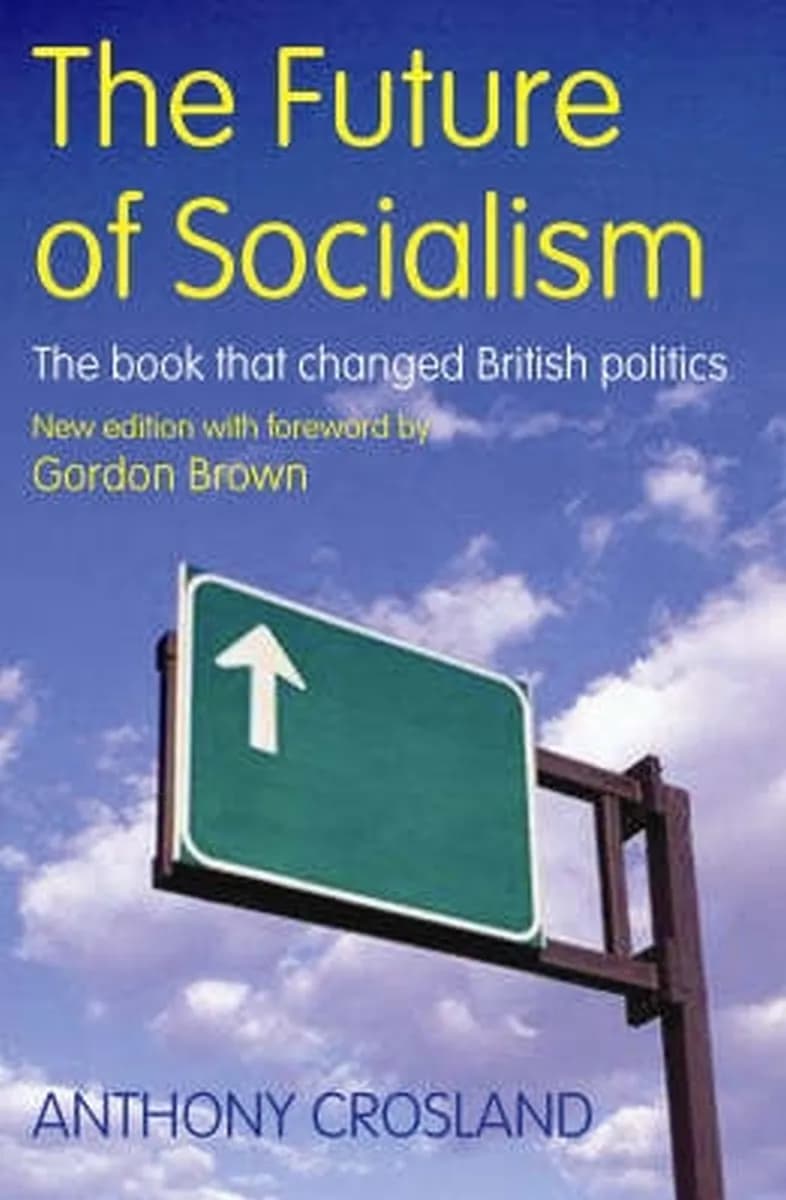
More from this book
We still retain in Britain a deeper sense of class, a more obvious social stratification, and stronger class resentments, than any of the Scandinavian, Australasian, or North American countries.
Objectively, class differences in accent, dress, manners, and general style of life are very much smaller; and one cannot, strolling about the street or travelling on a train, instantly identify a person’s social background as one can in England. Subjectively, social relations are more natural and egalitarian, and less marked by deference, submissiveness, or snobbery, as one quickly discovers from the cab-driver, the barman, the air-hostess and the drug-store assistant.
(The) pattern of consumption is markedly more equal than in Britain. ‘Prestige-goods’ are widely distributed, and there is less conspicuous contrast between the standard of living of different income-groups. To take the most obvious example, almost every family owns a car; and this is significant not only because a car is the most conspicuous of all consumption goods, but also because universal car-ownership leads to the universal consumption of other conspicuous or semi-luxury goods – holidays, hotels, middle-class habits of shopping, etc. But the lack of external class-distinctions can be observed in many other spheres: e.g. clothes, eating-habits, drug-stores, the ownership of consumer durables, and so on.
