Quotes
There is no man, and no place, without a war. The only thing we can do is choose a side, and fight. That is the only choice we get - who we fight for, who we fight against. That is life.
"They will say to you," growled a kneeling man who stooped with his two bands in the earth and shook his shoulders like a mastiff, 'My friend, you have been a wonderful hero!' I don't want them to say it!
"Heroes? Some sort of extraordinary being? Idols? Rot! We've been murderers. We have respectably followed the trade of hangmen. We shall do it again with all our might, because it's of great importance to follow that trade, so as to punish war and smother it. The act of slaughter is always ignoble; sometimes necessary, but always ignoble. Yes, hard and persistent murderers, that's what we've been. But don't talk to me about military virtue because I've killed Germans."
"Nor to me," cried another in so loud a voice that no one could have replied to him even had he dared; "nor to me, because I've saved the lives of Frenchmen! Why, we might as well set fire to houses for the sake of the excellence of life-saving!"
"We shall say to ourselves," says one, "'After all, why do we make war?' We don't know at all why, but we can say who we make it for. We shall be forced to see that if every nation every day brings the fresh bodies of fifteen hundred young men to the God of War to be lacerated, it's for the pleasure of a few ringleaders that we could easily count; that if whole nations go to slaughter marshaled in armies in order that the gold-striped caste may write their princely names in history, so that other gilded people of the same rank can contrive more business, and expand in the way of employees and shops — and we shall see, as soon as we open our eyes, that the divisions between mankind are not what we thought, and those one did believe in are not divisions."
"It would be a crime to exhibit the fine side of war, even if there were one!" murmured one of the somber soldiers.
The first man continued. "They'll say those things to us by way of paying us with glory, and to pay themselves, too, for what they haven't done. But military glory — it isn't even true for us common soldiers. It's for some, but outside those elect the soldier's glory is a lie, like every other fine-looking thing in war. In reality, the soldier's sacrifice is obscurely concealed. The multitudes that make up the waves of attack have no reward. They run to hurl themselves into a frightful inglorious nothing. You cannot even heap up their names, their poor little names of nobodies."
It's with us only that they make battles. It is we who are the material of war. War is made up of the flesh and the souls of common soldiers only. It is we who make the plains of dead and the rivers of blood, all of us, and each of us is invisible and silent because of the immensity of our numbers. The emptied towns and the villages destroyed, they are a wilderness of our making. Yes, war is all of us, and all of us together.
Stop war? Impossible! There is no cure for the world's disease.
Two armies at death-grips — that is one great army committing suicide.
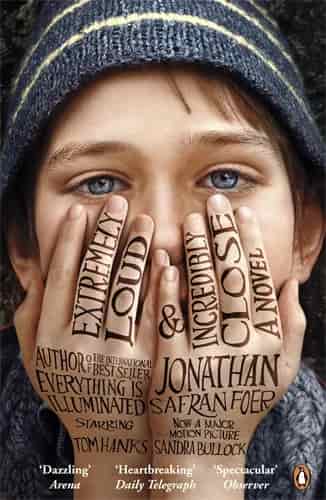
She died in my arms saying, "I don't want to die." That is what death is like. It doesn't matter what uniforms the soldiers are wearing. It doesn't matter how good the weapons are. I thought if everyone could see what I saw, we could never have war anymore. (p. 189)
Unfortunately, it appeared that she was going to be around when they learned the hard way that interstellar wars of aggression were much easier to lose than to win.
p. 188
I don't believe it can end. Now that I've seen what war is, what civil war is, I know that everybody, if one day it should end, ought to ask himself: "And what shall we make of the fallen? Why are they dead?" I wouldn't know what to say. Not now, at any rate. Nor does it seem to me that the others know. Perhaps only dead know, and only for them is the war really over.
That war in which I had been sheltering, convinced of having accepted it, of having made my own uncomfortable peace, grew more ferocious, bit deeper, reached into one's nerves and brain.
p. 125
But I have seen the unknown dead, those little men of the Republic. It was they who woke me up. If a stranger, an enemy, becomes a thing like that when he dies, if one stops short and is afraid to walk over him, it means that even beaten our enemy is someone, that after having shed his blood, one must placate it, give this blood a voice, justify the man who shed it. Looking at certain dead is humiliating. One has the impression that the same fate that threw these bodies to the ground holds us nailed to the spot to see them, to fill our eyes with the sight. It's not fear, not our usual cowardice. One feels humiliated because one understands–touching it with one's eyes–that we might be in their place ourselves: there would be no difference, and if we live we owe it to this dirtied corpse. That is why every war is a civil war; every fallen man resembles one who remains and calls him to account.
p. 176