Quotes
I'd be glad of a retaliation that wouldn't recoil on myself; but treachery and violence are spears pointed at both ends; they wound those who resort to them worse than their enemies.
If the history of humanity were the clinical case history of a single human being, the diagnosis would have to be: chronic paranoid delusions, a pathological propensity to commit murder and acts of extreme violence and cruelty against his perceived “enemies” – his own unconsciousness projected outward. Criminally insane, with a few brief lucid intervals.
The more unconscious individuals, groups, or nations are, the more likely it is that egoic pathology will assume the form of physical violence. Violence is a primitive but still very widespread way in which the ego attempts to assert itself, to prove itself right or another wrong. With very unconscious people, arguments can easily lead to physical violence.
Teachings that pointed the way beyond the dysfunction of the human mind, the way out of the collective insanity, were distorted and became themselves part of the insanity.
And so religions, to a large extent, became divisive rather than unifying forces. Instead of bringing about an ending of violence and hatred through a realization of the fundamental oneness of all life, they brought more violence and hatred, more divisions between people as well as between different religions and even within the same religion.
As boys without bonds to their fathers grow older and more desperate about their masculinity, they are in danger of forming gangs in which they strut their masculinity for one another, often overdo it, and sometimes turn to displays of fierce, macho bravado and even violence.
Television is of great educational value. It teaches you while still young how to (a) kill, (b) rob, (c) embezzle, (d) shoot, (e) poison, and, generally speaking, (f) how to grow up into a Wild West outlaw or gangster by the time you leave school.
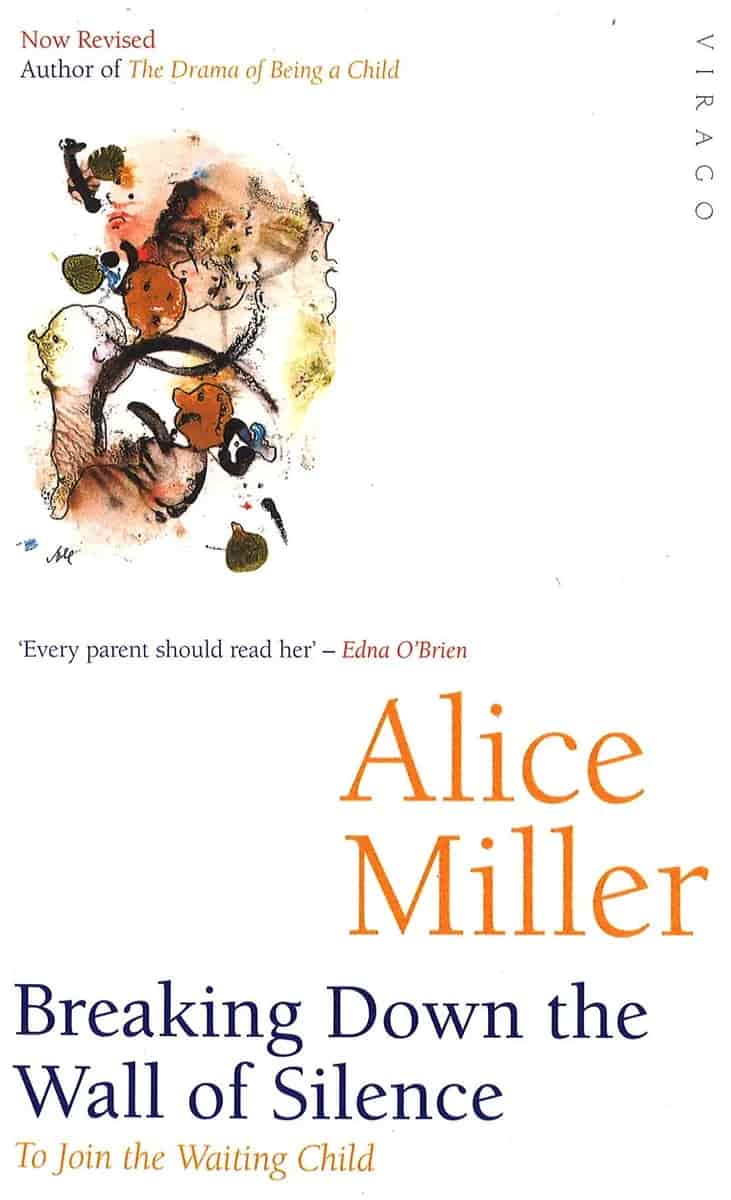
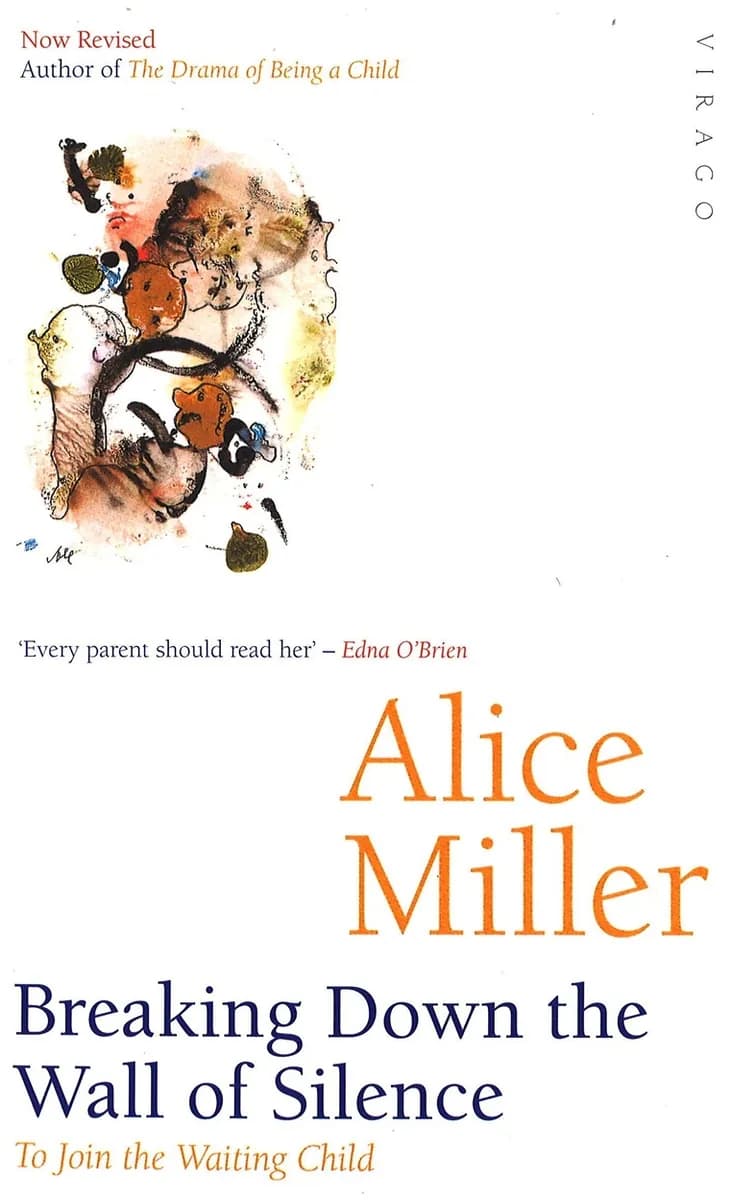
The danger does not lie with individuals, however criminal they may be. Far more, it lies in the ignorance of our entire society, which confirms these people in the lies that they were obliged to believe in childhood. Teachers, attorneys, doctors, social workers, priests, and other respected representatives of society protect parents from the mistreated child's every accusation and see to it that the truth about child abuse remains concealed. Even the child protection agencies insist that this crime, and this crime alone, should go unpunished.
The possibility of change depends on whether there is a sufficient number of enlightened witnesses to create a safety net for the growing consciousness of those who have been mistreated as children, so that they do not fall into the darkness of forgetfulness, from which they will later emerge as criminals or the mentally ill.
Just as I need never wonder what it is like to die, so I need never wonder what it is like to kill, Ziller, because I have done it, and it is a wasteful, graceless, worthless and hateful thing to have to do.
p. 317
All the usual rules of uprising realpolitik still apply, especially that concerning the peculiar of dialectic of dissent which—simply stated—dictates that in all but the most dedicatedly repressive hegemonies, if in a sizable population there are one hundred rebels, all of whom are then rounded up and killed, the number of rebels present at the end of the day is not zero, and not even one hundred, but two hundred or three hundred or more; an equation based on human nature which seem often to baffle the military and political mind.
p. 168
What persuades men and women to mistake each other from time to time for gods or vermin is ideology. One can understand well enough how human beings may struggle and murder for good material reasons—reasons connected, for instance, with their physical survival. It is much harder to grasp how they may come to do so in the name of something as apparently abstract as ideas. Yet ideas are what men and women live by, and will occasionally die for.
The West won the world not by the superiority of its ideas or values or religion (to which few members of other civilizations were converted) but rather by its superiority in applying organized violence. Westerners often forget this fact; non-Westerners never do.
p. 51