Quotes
A six-year-old will not understand that “By and large it has been demonstrated that violence is counterproductive to the constructive interaction of persons and societies.” True. But a child can better understand that the rule out in the world and in the school is the same: Don’t hit people. Bad things happen. The child must understand this rule is connected to the first rule: People won’t share or play fair if you hit them.
What's more American than violence?" Hayduke wanted to know. "Violence, it's as American as pizza pie.
From their French masters, [the slaves] had known rape, torture, degradation, and, at the slightest provocation, death. They returned in kind. For two centuries the higher civilization had shown them that power was used for wreaking your will on those whom you controlled. Now that they held power they did as they had been taught.
p. 88
Nobody, so far as I can see, is making use of those elements in the air which give direction and motivation to our lives. Only the killers seem to be extracting from life some satisfactory measure of what they are putting into it. The age demands violence, but we are getting only abortive explosions. Revolutions are nipped in the bud or else succeed too quickly. Passion is quickly exhausted. Men fall back on ideas, comme d'habitude. Nothing is proposed that can last more than twenty four hours. We are living a million lives in the space of a generation. In the study of entomology, or deep sea life, or cellular activity, we derive more...
As I refuse violence, I refuse to serve the violent.
p. 13
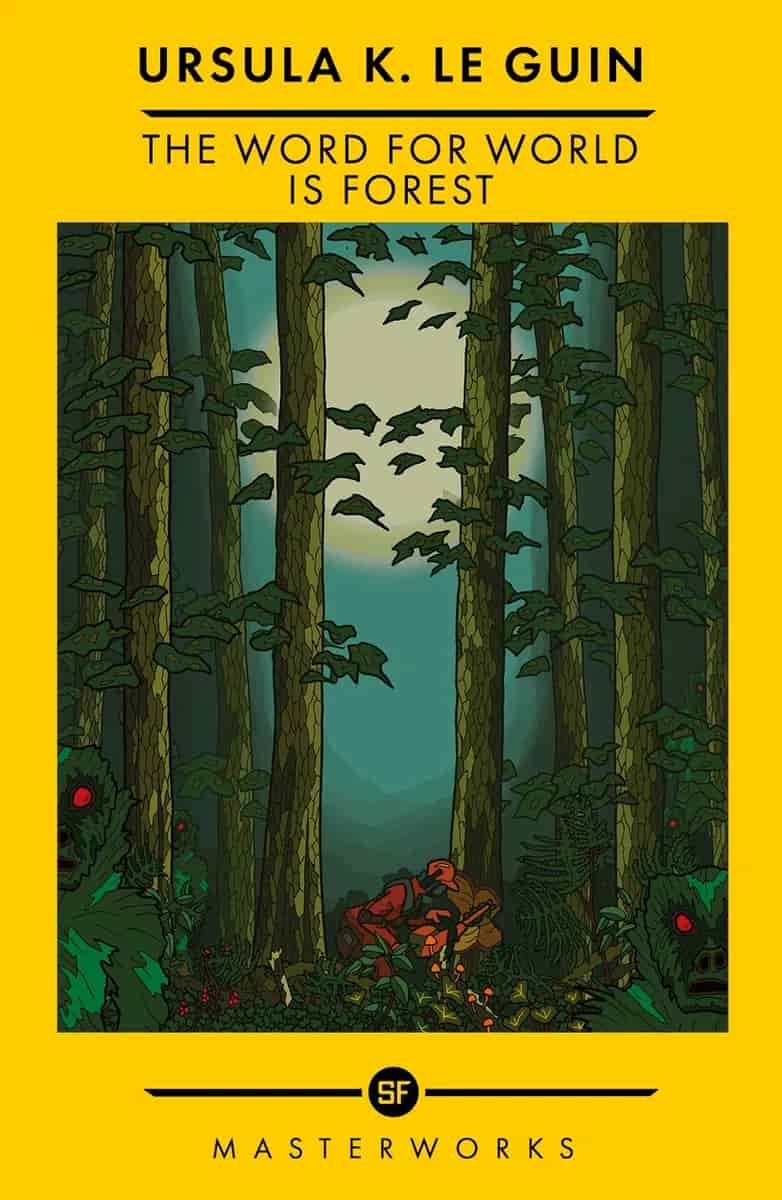
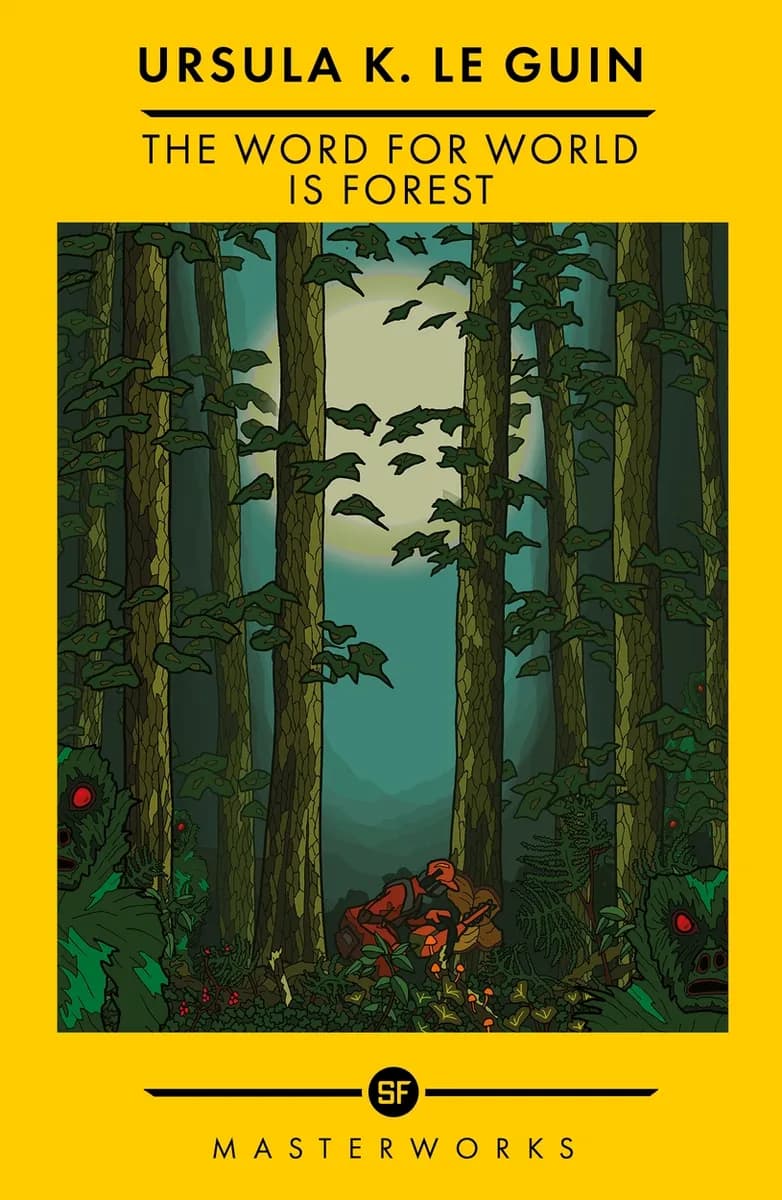
“Sometimes a god comes,” Selver said. “He brings a new way to do a thing, or a new thing to be done. A new kind of singing, or a new kind of death. He brings this across the bridge between the dream-time and the world-time. When he has done this, it is done. You cannot take things that exist in the world and try to drive them back into the dream, to hold them inside the dream with walls and pretenses. That is insanity. What is, is. There is no use pretending, now, that we do not know how to kill one another.”
You either approve of violence or you don't, and nothing on earth is more violent or extreme than the meat industry.
We cling in our public life to a brutal hypocrisy. In our century of almost universal violence of humans against fellow humans, and against our natural and cultural commonwealth, hypocrisy has been inescapable because our opposition to violence has been selective or merely fashionable. Some of us who approve of our monstrous military budget and our peacekeeping wars nonetheless deplore “domestic violence” and think that our society can be pacified by “gun control.” Some of us are against capital punishment but for abortion. Some of us are against abortion but for capital punishment.
We are disposed, somewhat by culture and somewhat by nature, to solve our problems by violence, and even to enjoy doing so. And yet by now all of us must at least have suspected that our right to live, to be free, and to be at peace is not guaranteed by any act of violence. It can be guaranteed only by our willingness that all other persons should live, be free, and be at peace — and by our willingness to use or give our own lives to make that possible.
Violence breeds violence. Acts of violence committed in “justice” or in affirmation of “rights” or in defense of “peace” do not end violence. They prepare and justify its continuation.
We have become blind to the alternatives to violence. This involves us in a sort of official madness, in which, while following what seems to be a perfect logic of self-defense and deterrence, we commit one absurdity after another: We seek to preserve peace by fighting a war, or to advance freedom by subsidizing dictatorships, or to "win the hearts and minds of the people" by poisoning their crops and burning their villages and confining them in concentration camps; we seek to uphold the "truth" of our cause with lies, or to answer conscientious dissent with threats and slurs and intimidations. … I have come to the realization that I can no longer imagine a war that I would believe to be either useful or necessary. I would be against any war.
If I solve my dispute with my neighbor by killing him, I have certainly solved the immediate dispute. If my neighbor was a scoundrel, then the world is no doubt better for his absence. But in killing my neighbor, though he may have been a terrible man who did not deserve to live, I have made myself a killer — and the life of my next neighbor is in greater peril than the life of the last. In making myself a killer I have destroyed the possibility of neighborhood.