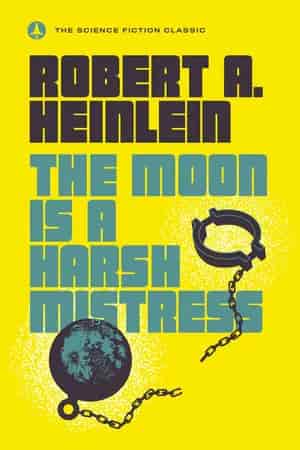
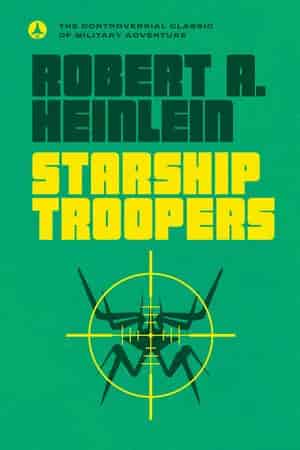
Quotes
Each set of woes can be left behind in a folder in a drawer at the end of the day. Whereas in the outside world there is no end of obligation, no protection from the needs and grief of others.
I have walked that long road to freedom. I have tried not to falter; I have made missteps along the way. But I have discovered the secret that after climbing a great hill, one only finds that there are many more hills to climb. I have taken a moment here to rest, to steal a view of the glorious vista that surrounds me, to look back on the distance I have come. But I can rest only for a moment, for with freedom comes responsibilities, and I dare not linger, for my long walk is not yet ended.
Pass the buck. It's the secret of life. You can't fight every battle and dry every tear. Whenever you're dealing with something that you don't really care about, pass the buck. You've got me to do your music; that's what you wanted, isn't it? Very well then, let Mrs Forrester clean up the mess.
One way or other, what you get, you pay for.
I will accept any rules that you feel necessary to your freedom. I am free, no matter what rules surround me. If I find them tolerable, I tolerate them; if I find them too obnoxious, I break them. I am free because I know that I alone am morally responsible for everything I do.
p. 85
If it has to be done, a man — a real man — shoots his own dog himself; he doesn't hire a proxy who may bungle it.
Service men are not brighter than civilians. In many cases civilians are much more intelligent. That was the sliver of justification underlying the attempted coup d' etat just before the Treaty of New Delhi, the so-called 'Revolt of the Scientists': let the intelligent elite run things and you'll have utopia. It fell flat on its foolish face of course. Because the pursuit of science, despite its social benefits, is itself not a social virtue; its practitioners can be men so self-centered as to be lacking in social responsibility.
To permit irresponsible authority is to sow disaster; to hold a man responsible for anything he does not control is to behave with blind idiocy. The unlimited democracies were unstable because their citizens were not responsible for the fashion in which they exerted their sovereign authority . . . other than through the tragic logic of history. The unique 'poll tax' that we must pay was unheard of. No attempt was made to determine whether a voter was socially responsible to the extent of his literally unlimited authority. If he voted the impossible, the disastrous possible happened instead—and responsibility was then forced on him willy-nilly and destroyed both him and his foundationless temple.
I will accept the rules that you feel necessary to your freedom. I am free, no matter what rules surround me. If I find them tolerable, I tolerate them; if I find them too obnoxious, I break them. I am free because I know that I alone am morally responsible for everything I do.
"I told you that 'juvenile delinquent' is a contradiction in terms. 'Delinquent' means 'failing in duty.' But duty is an adult virtue—indeed a juvenile becomes an adult when, and only when, he acquires a knowledge of duty and embraces it as dearer than the self-love he was born with. There never was, there cannot be a 'juvenile delinquent.' But for every juvenile criminal there are always one or more adult delinquents—people of mature years who either do not know their duty, or who, knowing it, fail."
p. 120
A rational anarchist believes that concepts such as "state" and "society" and "government" have no existence save as physically exemplified in the acts of self-responsible individuals. He believes that it is impossible to shift blame, share blame, distribute blame. . . as blame, guilt, responsibility are matters taking place inside human beings singly and nowhere else. But being rational, he knows that not all individuals hold his evaluations, so he tries to live perfectly in an imperfect world. . . aware that his effort will be less than perfect yet undismayed by self-knowledge of self-failure.
No one was responsible for the great Wall Street crash. No one engineered the speculation that preceded it. Both were the product of free choice and decision of hundreds of thousands of individuals.