Quotes
It has been said a thousand times and in a thousand books that ancestor-worship is for the most part the source of primitive religions, and it may be strictly said that what most distinguishes man from the other animals is that, in one form or another, he guards his dead and does not give them over to the neglect of teeming mother earth; he is an animal that guards its dead.
For what is specific in the Catholic religion is immortalization and not justification, in the Protestant sense. Rather is this latter ethical. It is from Kant, in spite of what orthodox Protestants may think of him, that Protestantism derived its penultimate conclusions — namely, that religion rests upon morality, and not morality upon religion, as in Catholicism.
And yet Catholicism does not abandon ethics. No! No modern religion can leave ethics on one side. But our religion — although its doctors may protest against this — is fundamentally and for the most part a compromise between eschatology and ethics; it is eschatology pressed into the service of ethics. What else but this is that atrocity of the eternal pains of hell, which agrees so ill with the Pauline apocatastasis? Let us bear in mind these words which the Theologica Germanica, the manual of mysticism that Luther read, puts into the mouth of God: "If I must recompense your evil, I must recompense it with good, for I am and have no other." And Christ said: "Father, forgive them, for they know not what they do," and there is no man who perhaps knows what he does.
But it has been necessary, for the benefit of the social order, to convert religion into a kind of police system, and hence hell. Oriental or Greek Christianity is predominantly eschatological, Protestantism predominantly ethical, and Catholicism is a compromise between the two, although with the eschatological element predominating.
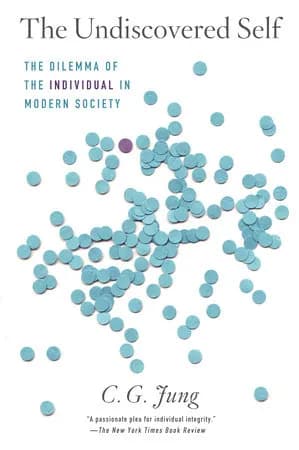
Philosophy and religion are enemies, and because they are enemies they have need of one another. There is no religion without some philosophical basis, no philosophy without roots in religion. … the attacks which are directed against religion from a presumed scientific or philosophical point of view are merely attacks from another but opposing religious point of view.
My interests drew me in different directions. On the one hand I was powerfully attracted by science, with its truths based on facts; on the other hand I was fascinated by everything to do with comparative religion. [...] In science I missed the factor of meaning; and in religion, that of empiricism.
p. 72
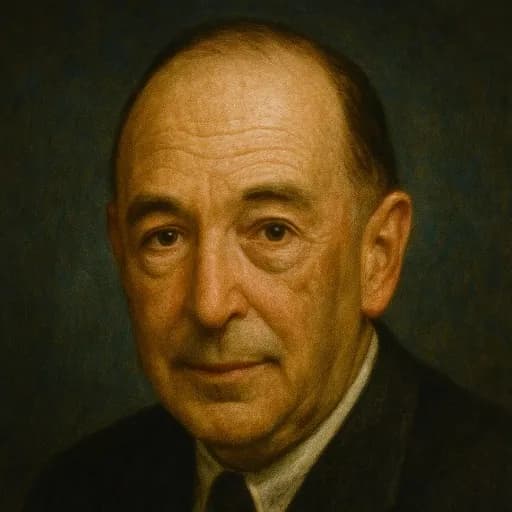
You can take away a man's gods, but only to give him others in return.
p. 63
All thinking men are atheists.
The trouble about argument is that it moves the whole struggle onto the Enemy's own ground.
p. 9
There are two equal and opposite errors into which our race can fall about the devils. One is to disbelieve in their existence. The other is to believe, and to feel an excessive and unhealthy interest in them. They themselves are equally pleased by both errors and hail a materialist or a magician with the same delight.
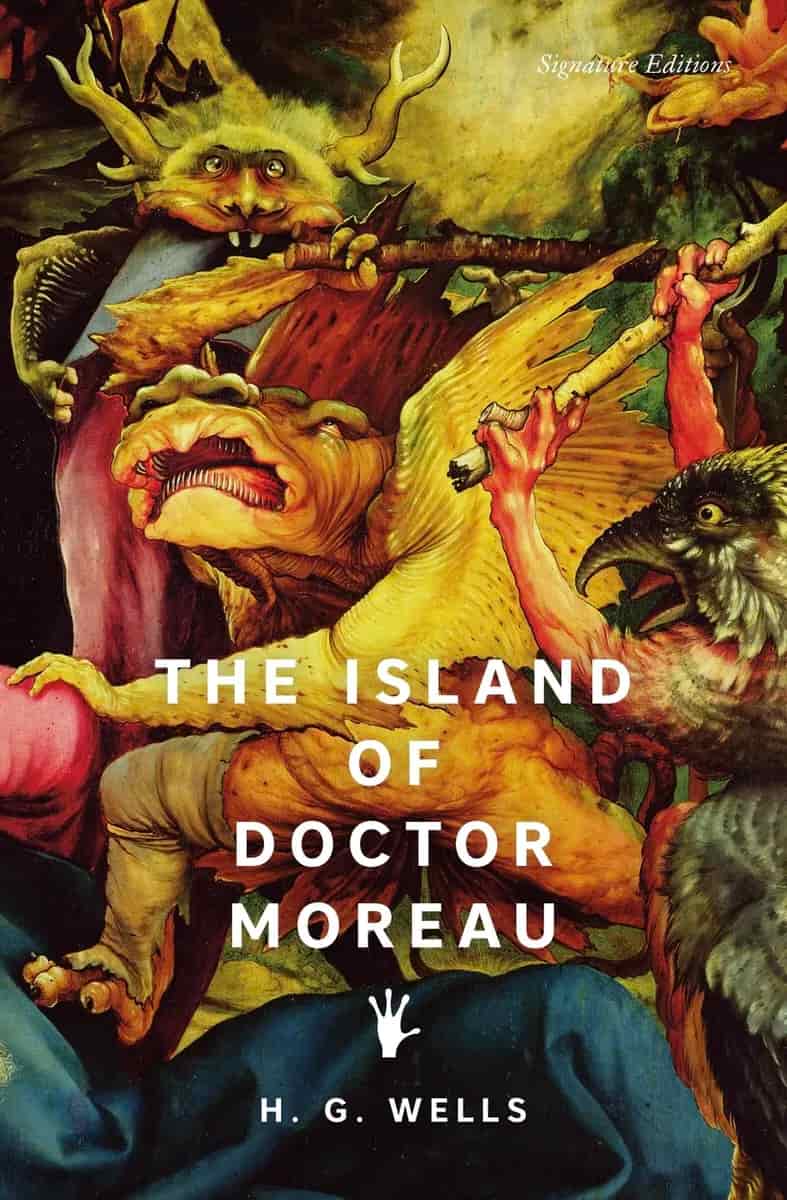
Then I am a religious man, Prendick, as every sane man must be. It may be, I fancy, that I have seen more of the ways of this world's Maker than you — for I have sought his laws, in my way, all my life, while you, I understand, have been collecting butterflies. And I tell you, pleasure and pain have nothing to do with heaven or hell. Pleasure and pain — bah! What is your theologian's ecstasy but Mahomet's houri in the dark? This store which men and women set on pleasure and pain, Prendick, is the mark of the beast upon them, the mark of the beast from which they came! Pain, pain and pleasure, they are for us only so long as we wriggle in the dust.
In reality there are as many religions as there are individuals.... Religions are different roads converging to the same point. What does it matter that we take different roads, so long as we reach the same goal. Wherein is the cause for quarreling?