Quotes
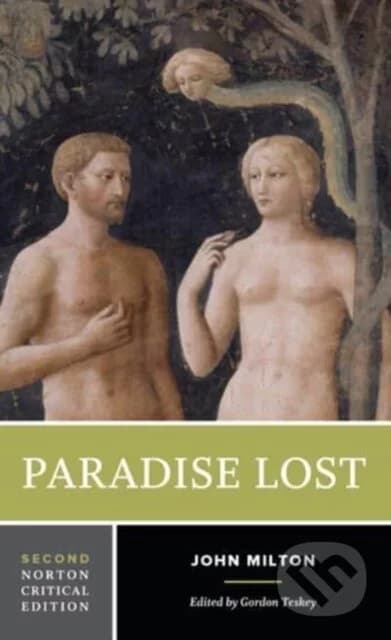
What in me is dark
Illumine, what is low raise and support;
That to the height of this great argument
I may assert eternal Providence,
And justify the ways of God to men.
The highest ensign that men ever met and embraced under, the Cross itself, had no meaning save an accidental extrinsic one.
Wonder is the basis of worship.
The Jews’ other customs, which are at once perverse and disgusting, owe their strength to their very badness. The most degraded out of other races, scorning their national beliefs, brought to them their contributions and presents. This augmented the wealth of the Jews, as also did the fact, that among themselves they are inflexibly honest and ever ready to shew compassion, though they regard the rest of mankind with all the hatred of enemies. They sit apart at meals, they sleep apart, and though, as a nation, they are singularly prone to lust, they abstain from intercourse with foreign women; among themselves nothing is unlawful. Circumcision was adopted by them as a mark of difference from other men. Those who come over to their religion adopt the practice, and have this lesson first instilled into them, to despise all gods, to disown their country, and set at nought parents, children, and brethren. Still they provide for the increase of their numbers. It is a crime among them to kill any newly-born infant.
The name [Christians] was derived from Christ, who, in the reign of Tiberius, suffered under Pontius Pilate, the procurator of Judæa. By that event the sect, of which he was the founder, received a blow, which, for a time, checked the growth of a dangerous superstition; but it revived soon after, and spread with recruited vigour, not only in Judæa, the soil that gave it birth, but even in the city of Rome, the common sink into which every thing infamous and abominable flows like a torrent from all quarters of the world.
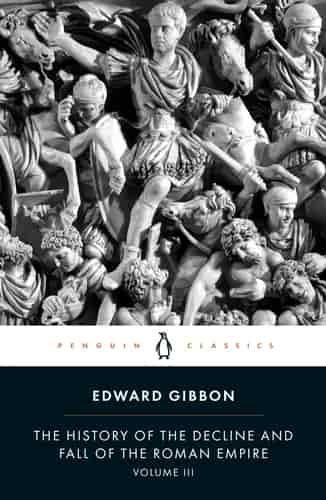
In the spirit of enthusiasm or vanity, the prophet [Muhammad] rests the truth of his mission on the merit of his book; audaciously challenges both men and angels to imitate the beauties of a single page; and presumes to assert that God alone could dictate this incomparable performance. This argument is most powerfully addressed to a devout Arabian, whose mind is attuned to faith and rapture; whose ear is delighted by the music of sounds; and whose ignorance is incapable of comparing the productions of human genius... If the composition of the Koran exceed the faculties of a man to what superior intelligence should we ascribe the Iliad of Homer, or the Philippics of Demosthenes?
A state of scepticism and suspense may amuse a few inquisitive minds. But the practice of superstition is so congenial to the multitude that, if they are forcibly awakened, they still regret the loss of their pleasing vision. ... So urgent on the vulgar is the necessity of believing, that the fall of any system of mythology will most probably be succeeded by the introduction of some other mode of superstition.
The theologian may indulge the pleasing task of describing Religion as she descended from Heaven, arrayed in her native purity. A more melancholy duty is imposed on the historian. He must discover the inevitable mixture of error and corruption which she contracted in a long residence upon earth, among a weak and degenerate race of beings.
It was in the school of Alexandria that the Christian theology appears to have assumed a regular and scientifical form.
The example and reputation of Constantine seemed to countenance the delay of baptism. Future tyrants were encouraged to believe that the innocent blood which they might shed in a long reign would instantly be washed away in the waters of regeneration; and the abuse of religion dangerously undermined the foundations of moral virtue.
Such is the constitution of civil society, that whilst a few persons are distinguished by riches, by honors, and by knowledge, the body of the people is condemned to obscurity, ignorance and poverty. The Christian religion, which addressed itself to the whole human race, must consequently collect a far greater number of proselytes from the lower than from the superior ranks of life. This innocent and natural circumstance has been improved into a very odious imputation, which seems to be less strenuously denied by the apologists, than it is urged by the adversaries, of the faith; that the new sect of Christians was almost entirely composed of the dregs of the populace, of peasants and mechanics, of boys and women, of beggars and slaves, the last of whom might sometimes introduce the missionaries into the rich and noble families to which they belonged. These obscure teachers (such was the charge of malice and infidelity) are as mute in public as they are loquacious and dogmatical in private. Whilst they cautiously avoid the dangerous encounter of philosophers, they mingle with the rude and illiterate crowd, and insinuate themselves into those minds, whom their age, their sex, or their education, has the best disposed to receive the impression of superstitious terrors.
But these transient persecutions served only to revive the zeal and to restore the discipline of the faithful; and the moments of extraordinary rigour were compensated by much longer intervals of peace and security. The indifference of some princes and the indulgence of others permitted the Christians to enjoy, though not perhaps a legal, yet an actual and public toleration of their religion.