Quotes
Religion enables us to ignore nothingness and get on with the jobs of life.
Our brains are no longer conditioned for reverence and awe. We cannot imagine a Second Coming that would not be cut down to size by the televised evening news, or a Last Judgment not subject to pages of holier-than-Thou second-guessing in The New York Review of Books.
In primis venerare Deos.
The Times was rushing to assure its readers that "prominent Islamic scholars and theologians in the West say unequivocally that nothing in Islam countenances the Sept. 11 actions." (That's if you set aside Muhammad's many specific instructions to kill nonbelievers whenever possible).
Catholicism has begotten much great art; Protestantism none at all – not a single painting. But Catholicism has fostered art in the very teeth of Christianity. The Kingdom of Christ, if it ever comes, will contain no art; Christ never showed the least concern with it. His church has inspired much but not because of anything the Master said. Who then was the inspirer? The much-maligned Devil, one supposes. It is he who understands and ministers to man's carnal and intellectual self, and art is carnal and intellectual.
She knew enough about the McRorys to hang them, she told herself, but she held her tongue. Judge not that ye be not judged. Of course, you can't be a Calvinist without judging, but as a Calvinist you know what God's ordinances are, so it isn't really judging. It's just knowing right from wrong.
"No, it is in the story. I saw it in New York. The kings say, We bring you Gold, Frank Innocence, and Mirth." "Sancta simplicitas," said Darcourt. "If only there were more Mirth in the message He has left to us. We miss it sadly, in the world we have made."
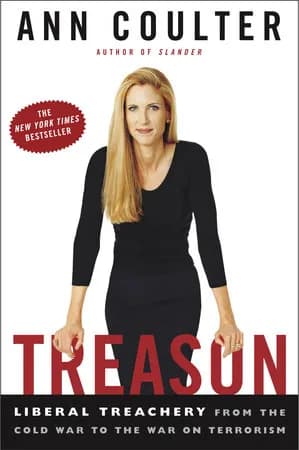
Conservatives believe man was created in God's image, while liberals believe they are gods. All of the behavioral tics of the liberals proceed from their godless belief that they can murder the unborn because they, the liberals, are themselves gods. They try to forcibly create "equality" through affirmative action and wealth redistribution because they are gods. They flat-out lie, with no higher power to constrain them, because they are gods. They adore pornography and the mechanization of sex because man is just an animal, and they are gods. They revere the U.N. and not the U.S. because they aren't Americans — they are gods.
Naked anger may sometimes be seen in priests of the Church of Rome, but the Church of England prefers the icy smile, the false bonhomie, the sword concealed in the palm-branch.
"God for men — religions for women," he muttered sometimes.
Circumcision is startling, all right, particularly when performed by a garlicked old man upon the glory of a newborn body, but then maybe that’s what the Jews had in mind and what makes the act seem quintessentially Jewish and the mark of their reality. Circumcision makes it clear as can be that you are here and not there, that you are out and not in — also that you’re mine and not theirs.... Quite convincingly, circumcision gives the lie to the womb-dream of life in the beautiful state of innocent prehistory, the appealing idyll of living "naturally," unencumbered by man-made ritual. To be born is to lose all that. The heavy hand of human values falls upon you right at the start, marking your genitals as its own.
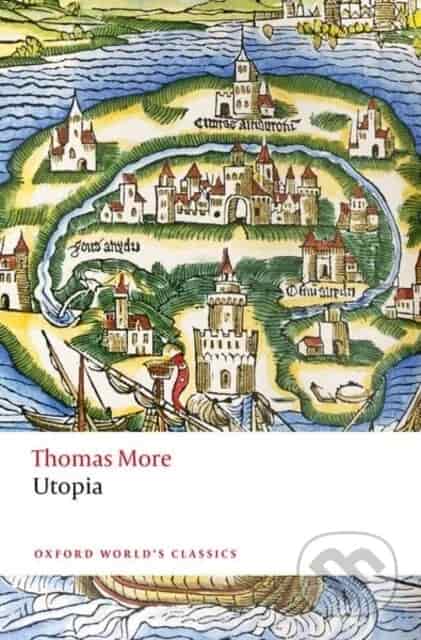
Utopus having understood that before his coming among them the old inhabitants had been engaged in great quarrels concerning religion, by which they were so divided among themselves, that he found it an easy thing to conquer them, since, instead of uniting their forces against him, every different party in religion fought by themselves. After he had subdued them he made a law that every man might be of what religion he pleased, and might endeavour to draw others to it by the force of argument and by amicable and modest ways, but without bitterness against those of other opinions; but that he ought to use no other force but that of persuasion, and was neither to mix with it reproaches nor violence; and such as did otherwise were to be condemned to banishment or slavery.
This law was made by Utopus, not only for preserving the public peace, which he saw suffered much by daily contentions and irreconcilable heats, but because he thought the interest of religion itself required it. He judged it not fit to determine anything rashly; and seemed to doubt whether those different forms of religion might not all come from God, who might inspire man in a different manner, and be pleased with this variety; he therefore thought it indecent and foolish for any man to threaten and terrify another to make him believe what did not appear to him to be true. And supposing that only one religion was really true, and the rest false, he imagined that the native force of truth would at last break forth and shine bright, if supported only by the strength of argument, and attended to with a gentle and unprejudiced mind; while, on the other hand, if such debates were carried on with violence and tumults, as the most wicked are always the most obstinate, so the best and most holy religion might be choked with superstition, as corn is with briars and thorns; he therefore left men wholly to their liberty, that they might be free to believe as they should see cause.