Quotes about relationships
106 quotes · 55 authors
Quotes
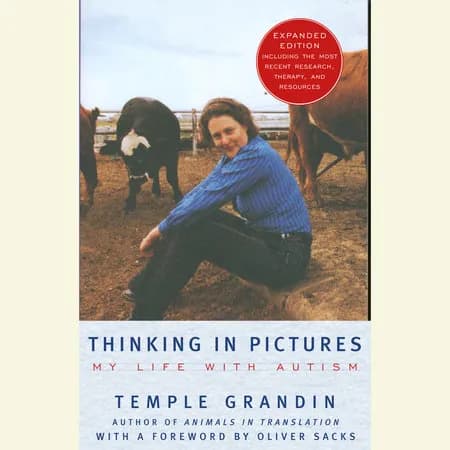
Problems that autistic people have with eye contact and awkward gestures are not visible on the Internet, and typewritten messages avoid many of the social problems of face-to-face contact. The Internet may be the best thing yet for improving an autistic person's social life. (p100)
The more shared past there is in a relationship, the more present you need to be; otherwise, you will be forced to relive the past again and again.
Whenever you meet anyone, no matter how briefly, do you acknowledge their being by giving them your full attention, or are you reducing them to a means to an end, a mere function or role. What is the quality of your relationship with the cashier at the supermarket, the parking attendant, the repair man, the customer? (Ch 8)
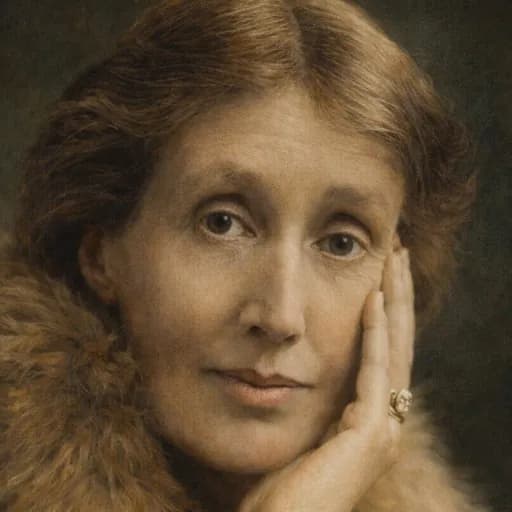
She had done the usual trick – been nice. She would never know him. He would never know her. Human relations were all like that, she thought, and the worst (if it had not been for Mr Bankes) were between men and women. Inevitably these were extremely insincere.
Mrs Ramsay sat silent. She was glad, Lily thought, to rest in silence, uncommunicative; to rest in the extreme obscurity of human relationships. Who knows what we are, what we feel? Who knows even at the moment of intimacy, This is knowledge? Aren't things spoilt then, Mrs Ramsay may have asked (it seemed to have happened so often, this silence by her side) by saying them?
"It's just the same story as a doctor once told me," observed the elder. "He was a man getting on in years, and undoubtedly clever. He spoke as frankly as you, though in jest, in bitter jest. 'I love humanity,' he said, 'but I wonder at myself. The more I love humanity in general, the less I love man in particular. In my dreams,' he said, 'I have often come to making enthusiastic schemes for the service of humanity, and perhaps I might actually have faced crucifixion if it had been suddenly necessary; and yet I am incapable of living in the same room with any one for two days together, as I know by experience. As soon as any one is near me, his personality disturbs my self-complacency and restricts my freedom. In twenty-four hours I begin to hate the best of men: one because he's too long over his dinner; another because he has a cold and keeps on blowing his nose. I become hostile to people the moment they come close to me. But it has always happened that the more I detest men individually the more ardent becomes my love for humanity.'"
It is a small world. You do not have to live in it particularly long to learn that for yourself. There is a theory that, in the whole world, there are only five hundred real people (the cast, as it were; all the rest of the people in the world, the theory suggests, are extras) and what is more, they all know each other. And it’s true, or true as far as it goes. In reality the world is made of thousands upon thousands of groups of about five hundred people, all of whom will spend their lives bumping into each other, trying to avoid each other, and discovering each other in the same unlikely teashop in Vancouver. There is an unavoidability to this process. It’s not even coincidence. It’s just the way the world works, with no regard for individuals or for propriety.
Surely if each saw another's heart,
There would be no commerce,
No sale or bargain pass: all would disperse,
And live apart.
The beings closest to us, whether in love or hate, are often virtually our interpreters of the world, and some feather-headed gentleman or lady whom in passing we regret to take as legal tender for a human being may be acting as a melancholy theory of life in the minds of those who live with them — like a piece of yellow and wavy glass that distorts form and makes colour an affliction. Their trivial sentences, their petty standards, their low suspicions, their loveless ennui, may be making somebody else's life no better than a promenade through a pantheon of ugly idols.
I get along quite well with someone only when he is at his lowest point and has neither the desire nor the strength to restore his habitual illusions.
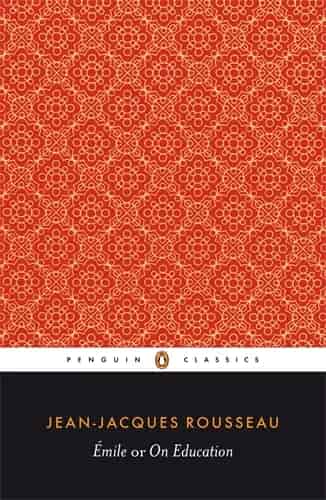
When I see the studies of young men at the period of their greatest activity confined to purely speculative matters, while later on they are suddenly plunged, without any sort of experience, into the world of men and affairs, it strikes me as contrary alike to reason and to nature, and I cease to be surprised that so few men know what to do. How strange a choice to teach us so many useless things, while the art of doing is never touched upon! They profess to fit us for society, and we are taught as if each of us were to live a life of contemplation in a solitary cell, or to discuss theories with persons whom they did not concern. You think you are teaching your scholars how to live, and you teach them certain bodily contortions and certain forms of words without meaning. I, too, have taught Emile how to live; for I have taught him to enjoy his own society and, more than that, to earn his own bread. But this is not enough. To live in the world he must know how to get on with other people, he must know what forces move them, he must calculate the action and re-action of self-interest in civil society, he must estimate the results so accurately that he will rarely fail in his undertakings, or he will at least have tried in the best possible way.
Man's weakness makes him sociable. Our common sufferings draw our hearts to our fellow-creatures; we should have no duties to mankind if we were not men. Every affection is a sign of insufficiency; if each of us had no need of others, we should hardly think of associating with them. So our frail happiness has its roots in our weakness. A really happy man is a hermit; God only enjoys absolute happiness; but which of us has any idea what that means? If any imperfect creature were self-sufficing, what would he have to enjoy? To our thinking he would be wretched and alone. I do not understand how one who has need of nothing could love anything, nor do I understand how he who loves nothing can be happy.