Quotes
The Good was not a form of reality. It was reality itself, ever changing, ultimately unknowable in any kind of fixed, rigid way.
In our highly complex organic state we advanced organisms respond to our environment with an invention of many marvelous analogues. We invent earth and heavens, trees, stones and oceans, gods, music, arts, language, philosophy, engineering, civilization and science. We call these analogues reality. And they are reality. We mesmerize our children in the name of truth into knowing that they are reality. We throw anyone who does not accept these analogues into an insane asylum. But that which causes us to invent the analogues is Quality. Quality is the continuing stimulus which our environment puts upon us to create the world in which we live. All of it. Every last bit of it.
What is essential to understand at this point is that until now there was no such thing as mind and matter, subject and object, form and substance. Those divisions are just dialectical inventions that came later. The modern mind sometimes tends to balk at the thought of these dichotomies being inventions and says, "Well, the divisions were there for the Greeks to discover," and you have to say, "Where were they? Point to them!" And the modern mind gets a little confused and wonders what this is all about anyway, and still believes the divisions were there.
But they weren't, as Phædrus said. They are just ghosts, immortal gods of the modern mythos which appear to us to be real because we are in that mythos. But in reality they are just as much an artistic creation as the anthropomorphic Gods they replaced.
'''What terrible tragedies realism inflicts on people.'
There was reality and there was reality; and some things were more real than others.
When you know quite absolutely that everything is unreal, you then cannot see why you should take the trouble to prove it.
Reality is a creation of our excesses.
"It's possible, but not interesting," Lonnrot answered. "You will reply that reality hasn't the slightest need to be of interest. And I'll answer you that reality may avoid the obligation to be interesting, but that hypotheses may not. In the hypothesis you have postulated, chance intervenes largely. Here lies a dead rabbi; I should prefer a purely rabbinical explanation; not the imaginary mischances of an imaginary robber."
Hegel made famous his aphorism that all the rational is real and all the real rational; but there are many of us who, unconvinced by Hegel, continue to believe that the real, the really real, is irrational, that reason builds upon irrationalities. Hegel, a great framer of definitions, attempted with definitions to reconstruct the universe, like that artillery sergeant who said that cannon were made by taking a hole and enclosing it with steel.
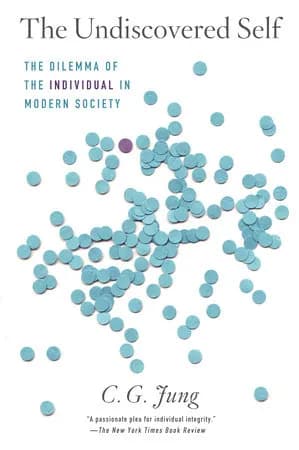
Any theory based on experience is necessarily statistical; that is to say, it formulates an ideal average which abolishes all exceptions at either end of the scale and replaces them by an abstract mean. This mean is quite valid though it need not necessarily occur in reality. Despite this it figures in the theory as an unassailable fundamental fact. ... If, for instance, I determine the weight of each stone in a bed of pebbles and get an average weight of 145 grams, this tells me very little about the real nature of the pebbles. Anyone who thought, on the basis of these findings, that he could pick up a pebbles of 145 grams at the first try would be in for a serious disappointment. Indeed, it might well happen that however long he searched he would not find a single pebble weighing exactly 145 grams. The statistical method shows the facts in the light of the ideal average but does not give us a picture of their empirical reality. While reflecting an indisputable aspect of reality, it can falsify the actual truth in a most misleading way.
p. 6
"Don't brood too much," she wrote to Helen, "on the superiority of the unseen to the seen. It's true, but to brood on it is mediæval. Our business is not to contrast the two, but to reconcile them."
Photographs... are the most curious indicators of reality.