Quotes
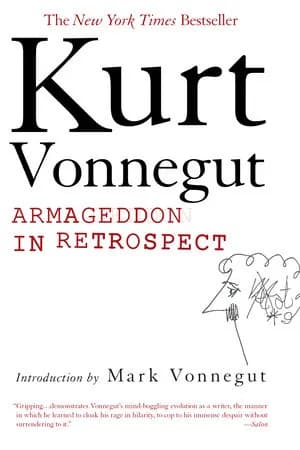
But listen: If anyone here should wind up on a gurney in a lethal-injection facility, maybe the one at Terre Haute, here is what your last words should be: "This will certainly teach me a lesson."
p. 22
The public execution is to be understood not only as a judicial, but also as a political ritual. It belongs, even in minor cases, to the ceremonies by which power is manifested.
The disappearance of public executions marks therefore the decline of the spectacle; but it also marks a slackening of the hold on the body.
The public execution, then, has a juridico-political function. It is a ceremonial by which a momentarily injured sovereignty is reconstituted. It restores that sovereignty by manifesting it at its most spectacular. The public execution, however hasty and everyday, belongs to a whole series of great rituals in which power is eclipsed and restored (coronation, entry of the king into a conquered city, the submission of rebellious subjects); over and above the crime that has placed the sovereign in contempt, it deploys before all eyes an invincible force. Its aim is not so much to re-establish a balance as to bring into play, as its extreme point, the dissymmetry between the subject who has dared to violate the law and the all-powerful sovereign who displays his strength.
The guillotine takes life almost without touching the body, just as prison deprives of liberty or a fine reduces wealth. It is intended to apply the law not so to a real body capable of feeling pain as to a juridical subject, the possessor, among other rights, of the right to exist it had to have the abstraction of the law itself.
p. 13
But a punishment like forced labour or even imprisonment – mere loss of liberty – has never functioned without a certain additional element of punishment that certainly concerns the body itself: rationing of food, sexual deprivation, corporal punishment, solitary confinement ... There remains, therefore, a trace of ‘torture’ in the modern mechanisms of criminal justice – a trace that has not been entirely overcome, but which is enveloped, increasingly, by the non-corporal nature of the penal system
It is ugly to be punishable, but there is no glory in punishing. Hence the double system of protection that justice has set up between itself and the punishment it imposes.
p. 10
Beneath the humanization of the penalties, what one finds are all those rules that authorize, or rather demand, 'leniency', as a calculated economy of the powder to punish. But they also provoke a shift in the point of application of this power: it is no longer the body, with the ritual play of excessive pains, spectacular branding in the ritual of the public execution; it is the mind or rather a play of representations and sings circulating discreetly but necessarily and evidently in the minds of all. It is no longer the body, but the soul, said Mably. And we see very clearly what he meant by this term: the correlative of a technique of power. Old 'anatomies' of punishment are abandoned, But have we really entered the age of non-corporal punishment?
p. 101
Not only must people know, they must see with their own eyes. Because they must be made to be afraid; but also because they must be the witnesses, the guarantors, of the punishment, and because they must to a certain extent take part in it.
p. 58
We are aware of all the inconveniences of prison, and that it is dangerous when it is not useless. And yet one cannot 'see' how to replace it. It is the detestable solution, which one seems unable to do without.
Once you have the gallows, you'll find new reasons to hang people from it.
Logically, the "infantilization" of the culprit implied by the notion of punishment demands that he should have a corresponding right to a reward, in the absence of which the initial procedure will prove ineffective and may even lead to results contrary to those that were hoped for. Our system is the height of absurdity, since we treat the culprit both as a child, so as to have the right to punish him, and as an adult, in order to deny him consolation; and we believe we have made great spiritual progress because, instead of eating a few of our fellow-men, we subject them to physical and moral mutilation.
p. 388