Quotes about propaganda
73 quotes · 41 authors
Quotes
The effectiveness of political and religious propaganda depends upon the methods employed, not upon the doctrines taught. These doctrines may be true or false, wholesome or pernicious—it makes little or no difference.
p. 63
Propaganda in favor of action that is consonant with enlightened self-interest appeals to reason by means of logical arguments based upon the best available evidence fully and honestly set forth. Propaganda in favor of action dictated by the impulses that are below self-interest offers false, garbled or incomplete evidence, avoids logical argument and seeks to influence its victims by the mere repetition of catchwords, by the furious denunciation of foreign or domestic scapegoats, and by cunningly associating the lower passions with the highest ideals, so that atrocities come to be perpetrated in the name of God and the most cynical kind of Realpolitik is treated as a matter of religious principle and patriotic duty.
p. 33
In regard to propaganda the early advocates of universal literacy and a free press envisaged only two possibilities: the propaganda might be true, or it might be false. They did not foresee what in fact has happened, above all in our Western capitalist democracies—the development of a vast mass communications industry, concerned in the main neither with the true nor the false, but with the unreal, the more or less totally irrelevant. In a word, they failed to take into account man's almost infinite appetite for distraction.
p. 35
One hundred repetitions three nights a week for four years, thought Bernard Marx, who was a specialist on hypnopædia. Sixty-two thousand four hundred repetitions make one truth. Idiots!
Never has the media been so influential in determining the course of war as during the Al-Aqsa Intifada, which, as far as the Western media are concerned, has essentially become a battle over images and ideas. Israel has already poured hundreds of millions of dollars into what in Hebrew is called hasbara, or information for the outside world (hence, propaganda). This has included an entire range of efforts: lunches and free trips for influential journalists; seminars for Jewish university students who, over a week in a secluded country estate, can be primed to “defend” Israel on the campus; bombarding congressmen and women with invitations and visits; pamphlets and, most important, money for election campaigns; directing (or, as the case requires, harassing) photographers and writers of the current intifada into producing certain images and not others; lecture and concert tours by prominent Israelis; training commentators to make frequent references to the Holocaust and Israel’s predicament today; many advertisements in the newspapers attacking Arabs and praising Israel; and on and on. Because so many powerful people in the media and publishing business are strong supporters of Israel, the task is made vastly easier.
And it taught a lesson: State propaganda, when supported by the educated classes and when no deviation is permitted from it, can have a big effect. It was a lesson learned by Hitler and many others, and it has been pursued to this day.
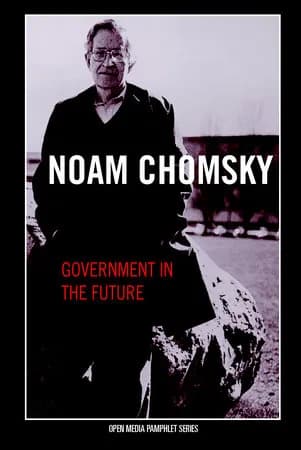
Let's begin with the first modern (U.S.) government propaganda operation. That was under the Woodrow Wilson Administration. Woodrow Wilson was elected President in 1916 on the platform "Peace Without Victory." That was right in the middle of the World War I. The population was extremely pacifistic and saw no reason to become involved in a European war. The Wilson administration was actually committed to war and had to do something about it. They established a government propaganda commission, called the Creel Commission which succeeded, within six months, in turning a pacifist population into a hysterical, warmongering population which wanted to destroy everything German, tear the Germans limb from limb, go to war and save the world.
The progressive intellectuals, people of the John Dewey circle ... took great pride, as you can see from their own writings at the time, in having shown that what they called the "more intelligent members of the community," namely, themselves, were able to drive a reluctant population into a war by terrifying them and eliciting jingoist fanaticism.
That was a major achievement, and it led to a further achievement. Right at that time and after the war the same techniques were used to whip up a hysterical Red Scare, as it was called, which succeeded pretty much in destroying unions and eliminating such dangerous problems as freedom of the press and freedom of political thought. There was very strong support from the media, from the business establishment, which in fact organized, pushed much of this work, and it was, in general, a great success.
The means that were used were extensive. For example, there was a good deal of fabrication of atrocities by the Huns, Belgian babies with their arms torn off, all sorts of awful things that you still read in history books. Much of it was invented by the British propaganda ministry, whose own commitment at the time, as they put it in their secret deliberations, was "to direct the thought of most of the world." But more crucially they wanted to control the thought of the more intelligent members of the community in the United States, who would then disseminate the propaganda that they were concocting and convert the pacifistic country to wartime hysteria. That worked. It worked very well.
The Cold War ideology and the international communist conspiracy function in an important way as essentially a propaganda device to mobilize support at a particular historical moment for this long-time imperial enterprise. In fact, I believe that this is probably the main function of the Cold War: it serves as a useful device for the managers of American society and their counterparts in the Soviet Union to control their own populations and their own respective imperial systems.
p. 143
Already handbills were in circulation; some presenting, in large print, the alternative of justice on the conspirators or ruin to the Republic; others in equally large print urging the observance of the law and the granting of the Appeal. Round these jutting islets of black capitals there were lakes of smaller characters setting forth arguments less necessary to be read: for it was an opinion entertained at that time (in the first flush of triumph at the discovery of printing), that there was no argument more widely convincing than question-begging phrases in large type.