Quotes about politics
593 quotes · 194 authors
Quotes
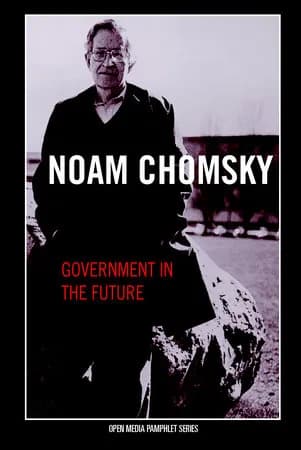
Roughly speaking, I think it's accurate to say that a corporate elite of managers and owners governs the economy and the political system as well, at least in very large measure. The people, so-called, do exercise an occasional choice among those who Marx once called "the rival factions and adventurers of the ruling class."
p. 146
This it is, that for ever keeps God's true princes of the Empire from the world's hustings; and leaves the highest honors that this air can give, to those men who become famous more through their infinite inferiority to the choice hidden handful of the Divine Inert, than through their undoubted superiority over the dead level of the mass. Such large virtue lurks in these small things when extreme political superstitions invest them, that in some royal instances even to idiot imbecility they have imparted potency.
p. 162
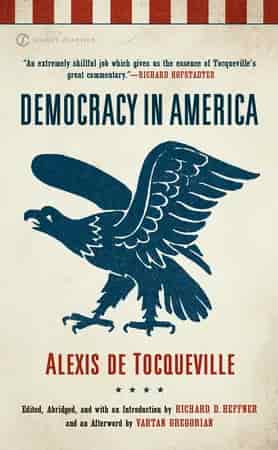
There is hardly a member of Congress who can make up his mind to go home without having despatched at least one speech to his constituents; nor who will endure any interruption until he has introduced into his harangue whatever useful suggestions may be made touching the four-and-twenty States of which the Union is composed, and especially the district which he represents.
The debates of that great assembly are frequently vague and perplexed, seeming to be dragged rather than to march, to the intended goal. Something of this sort must, I think, always happen in public democratic assemblies.
In cities men cannot be prevented from concerting together, and from awakening a mutual excitement which prompts sudden and passionate resolutions. Cities may be looked upon as large assemblies, of which all the inhabitants are members; their populace exercises a prodigious influence upon the magistrates, and frequently executes its own wishes without their intervention.
The pursuit of wealth generally diverts men of great talents and strong passions from the pursuit of power; and it frequently happens that a man does not undertake to direct the fortunes of the state until he has shown himself incompetent to conduct his own.
"The will of the nation" is one of those expressions which have been most profusely abused by the wily and the despotic of every age.
I think that if we are going to reform the world, and make it a better place to live in, the way to do it is not with talk about relationships of a political nature, which are inevitably dualistic, full of subjects and objects and their relationship to one another; or with programs full of things for other people to do. I think that kind of approach starts it at the end and presumes the end is the beginning. Programs of a political nature are important end products of social quality that can be effective only if the underlying structure of social values is right. The social values are right only if the individual values are right. The place to improve the world is first in one's own heart and head and hands, and then work outward from there. Other people can talk about how to expand the destiny of mankind. I just want to talk about how to fix a motorcycle.
When we consider the founders of our nation: Jefferson, Washington, Samuel and John Adams, Madison and Monroe, Benjamin Franklin, Tom Paine and many others; we have before us a list of at least ten and maybe even dozens of great political leaders. They were well educated. Products of the European Enlightenment, they were students of history. They knew human fallibility and weakness and corruptibility. They were fluent in the English language. They wrote their own speeches. They were realistic and practical, and at the same time motivated by high principles. They were not checking the pollsters on what to think this week. They knew what to think. They were comfortable with long-term thinking, planning even further ahead than the next election. They were self-sufficient, not requiring careers as politicians or lobbyists to make a living. They were able to bring out the best in us. They were interested in and, at least two of them, fluent in science. They attempted to set a course for the United States into the far future — not so much by establishing laws as by setting limits on what kinds of laws could be passed. The Constitution and its Bill of Rights have done remarkably well, constituting, despite human weaknesses, a machine able, more often than not, to correct its own trajectory. At that time, there were only about two and a half million citizens of the United States. Today there are about a hundred times more. So if there were ten people of the caliber of Thomas Jefferson then, there ought to be 10 x 100 = 1,000 Thomas Jefferson's today. Where are they?
This planet is run by crazy people. Remember what they have to do to get where they are. Their perspective is so narrow, so...brief. A few years. In the best of them a few decades. They care only about the time they are in power.
p. 403
We have heard the rationales offered by the nuclear superpowers. We know who speaks for the nations. But who speaks for the human species? Who speaks for Earth?
p. 329
We could not guess how different from us they (extraterrestrials) might be. It was hard enough to guess the intentions of our elected representatives in Washington.
p. 48