Quotes
Above all, he wanted to stop being a child without using the cheap disguise of becoming a parent.
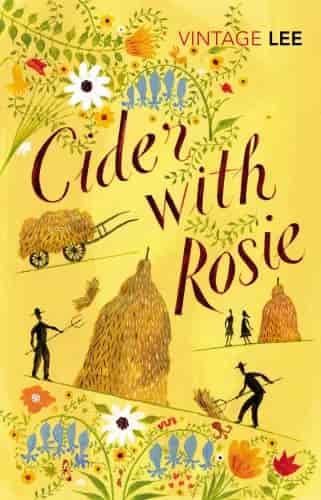
She [Lee’s mother] was muddled and mischievous as a chimney-jackdaw, she made her nest of rags and jewels, was happy in the sunlight, squawked loudly at danger, pried and was insatiably curious, forgot when to eat or ate all day, and sang when sunsets were red. She lived the easy laws of the hedgerow, loved the world and made no plans, had a quick holy eye for natural wonders and couldn’t have kept a neat house for her life.
p. 144
The stooping figure of my mother, waist-deep in the grass and caught there like a piece of sheep’s wool, was the last I saw of my country home as I left it to discover the world. She stood old and bent at the top of the bank, silently watching me go, one gnarled red hand raised in farewell and blessing, not questioning why I went. At the bend of the road I looked back again and saw the gold light die behind her; then I turned the corner, passed the village school, and closed that part of my life forever.
We don’t have children to fulfill our dreams. Children allow us to let go of the dreams we were never meant to fulfill.
Parents might believe themselves to be the bosses, but in the end it was the kids who made the rules.
p. 16
...people always said that parenting and worrying were synonymous...
p. 193
I knew my dad was a good man, a kind man, and though he'd led a wounded life, he'd done the best he could in raising me.
p. 198
"...having children changes your life like nothing else. It'll be the hardest and best thing you've ever done."
p. 247
I've come to believe that children live for the satisfaction of surprising their parents...
p. 34
My dad was a good man. A kind man... I...loved him for what he did. He'd foster independence, showed us the value of education, and taught us to be curious about the world. Even more important, he'd helped the three of us become close as siblings, which I consider to be the greatest gift of all. I could have asked for nothing more in a father. And really, who could?
p. 287
"My point is simply that kids turn out okay as long as the parents are involved, no matter where they live. It's not like small towns have a monopoly on values. I mean, I'm sure if I did some digging, I'd find lots of kids that were in trouble here, too. Kids are kids, no matter where they live."
p. 108
"...you have to give them both credit for being good parents simply because of the way their kids turned out. We're happily married, successful, ethical, and we remained close as siblings. If your kids can say the same thing later in life, won't you think you did a good job as a parent?"
p. 247