Quotes
What is the White man? What does he do?
The White man is like a human being, but he crushes all other living things under his feet.
Then why, O Ta-Kumsaw, when I look into your heart, why is it that you do not wish to hurt the White man, that you do not wish to kill the White man?
The White man doesn't know the evil that he does. The White man doesn't feel the peace of the land, so how can he tell the little deaths he makes? I can't blame the White man. But I can't let him stay. So when I make him leave this land, I won't hate him.
At night in his own bed, Alvin listened to the distant greensong, still warm and beautiful, still bright and hopeful even though the forest was getting so sparse, even though the future was so dim. Cause there's no fear of future in the song of life, just the ever-joyful present moment. That's all I want right now, thought Alvin. The present moment, which is good enough.
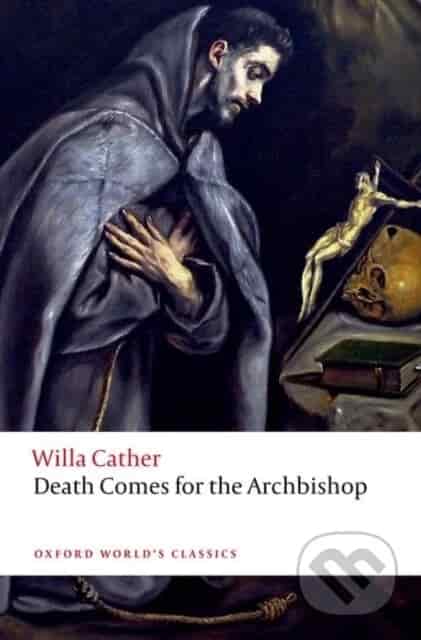
Father Latour judged that, just as it was the white man's way to assert himself in any landscape, to change it, make it over a little (at least to leave some mark of memorial of his sojourn), it was the Indian's way to pass through a country without disturbing anything; to pass and leave no trace, like fish through the water, or birds through the air.
It was the Indian manner to vanish into the landscape, not to stand out against it. The Hopi villages that were set upon rock mesas were made to look like the rock on which they sat, were imperceptible at a distance.
In New Mexico he always awoke a young man...Beautiful surroundings, the society of learned men, the charm of noble women, the graces of art, could not make up to him for the loss of those light-hearted mornings of the desert, for that wind that made one a boy again. He had noticed that this peculiar quality in the air of new countries vanished after they were tamed by man and made to bear harvests... That air would disappear from the whole earth in time, perhaps; but long after his day. He did not know just when it had become so necessary to him, but he had come back to die in exile for the sake of it. Something soft and wild and free, something that whispered to the ear on the pillow, lightened the heart, softly, softly picked the lock, slid the bolts, and released the prisoned spirit of man into the wind, into the blue and gold, into the morning, into the morning!
The windy springs and the blazing summers, one after another, had enriched and mellowed that flat tableland; all the human effort that had gone into it was coming back in long, sweeping lines of fertility. The changes seemed beautiful and harmonious to me; it was like watching the growth of a great man or of a great idea. I recognized every tree and sandbank and rugged draw. I found that I remembered the conformation of the land as one remembers the modelling of human faces.
As we walked homeward across the fields, the sun dropped and lay like a great golden globe in the low west. While it hung there, the moon rose in the east, as big as a cart-wheel, pale silver and streaked with rose colour, thin as a bubble or a ghost-moon. For five, perhaps ten minutes, the two luminaries confronted each other across the level land, resting on opposite edges of the world.
In that singular light every little tree and shock of wheat, every sunflower stalk and clump of snow-on-the-mountain, drew itself up high and pointed; the very clods and furrows in the fields seemed to stand up sharply. I felt the old pull of the earth, the solemn magic that comes out of those fields at nightfall. I wished I could be a little boy again, and that my way could end there.
There seemed to be nothing to see; no fences, no creeks or trees, no hills or fields. If there was a road, I could not make it out in the faint starlight. There was nothing but land: not a country at all, but the material out of which countries are made.
I kept as still as I could. Nothing happened. I did not expect anything to happen. I was something that lay under the sun and felt it, like the pumpkins, and I did not want to be anything more. I was entirely happy. Perhaps we feel like that when we die and become a part of something entire, whether it is sun and air, or goodness and knowledge. At any rate, that is happiness; to be dissolved into something complete and great. When it comes to one, it comes as naturally as sleep.
The great fact was the land itself, which seemed to overwhelm the little beginnings of human society that struggled in its sombre wastes. It was from facing this vast hardness that the boy's mouth had become so bitter; because he felt that men were too weak to make any mark here, that the land wanted to be let alone, to preserve its own fierce strength, its peculiar, savage kind of beauty, its uninterrupted mournfulness.
She had never known before how much the country meant to her. The chirping of the insects in the long grass had been like the sweetest music. She had felt as if her heart were hiding down there, somewhere, with the quail and the plover and all the little wild things that crooned or buzzed in the sun. Under the long shaggy ridges, she felt the future stirring.
Alexandra drew her shawl closer about her and stood leaning against the frame of the mill, looking at the stars which glittered so keenly through the frosty autumn air. She always loved to watch them, to think of their vastness and distance, and of their ordered march. It fortified her to reflect upon the great operations of nature, and when she thought of the law that lay behind them, she felt a sense of personal security.
We come and go, but the land is always here. And the people who love it and understand it are the people who own it — for a little while.