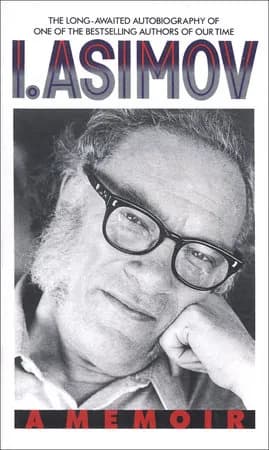
Quotes about morality
85 quotes · 21 authors
Quotes
It was, in brief, that conservatives ideals were bad, not because they were conservative, but because they were ideals. Every ideal prevented men from judging justly the particular case; every moral generalization oppressed the individual; the golden rule was there was no golden rule. And the objection to this is simply that it pretends to free men, but really restrains them from doing the only thing that men want to do. What is the good of telling a community that it has every liberty except the liberty to make laws? The liberty to make laws is what constitutes a free people. And what is the good of telling a man (or a philosopher) that he has every liberty except the liberty to make generalizations. Making generalizations is what makes him a man. In short, when Mr.Shaw forbids men to have strict moral ideals, he is acting like one who should forbid them to have children. The saying that "the golden rule is that there is no golden rule," can, indeed, be simply answered by being turned round. That there is no golden rule is itself a golden rule, or rather it is much worth than a golden rule; It is an Iron Rule; a fetter on the first movement of a man.
I had always heard it maintained by my father, and was myself convinced, that the object of education should be to form the strongest possible associations of the salutary class; associations of pleasure with all things beneficial to the great whole, and of pain with all things hurtful to it.
p. 136
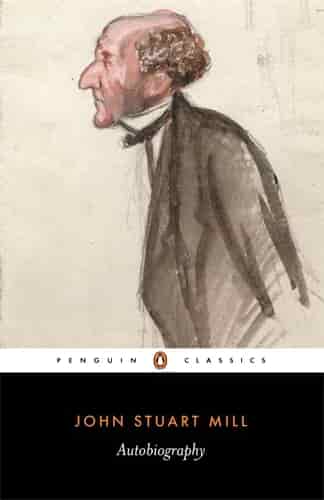
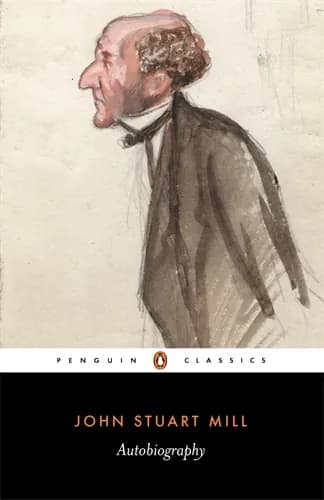 Autobiography
He blamed as severely what he thought a bad action, when the motive was a feeling of duty, as if the agents had been consciously evil doers. He would not have accepted as a plea in mitigation for inquisitors, that they sincerely believed burning heretics to be an obligation of conscience. But though he did not allow honesty of purpose to soften his disapprobation of actions, it had its full effect on his estimation of characters. No one prized conscientiousness and rectitude of intention more highly, or was more incapable of valuing any person in whom he did not feel assurance of it.
p. 49
AutobiographyMy father's moral inculcations were at all times mainly those of the "Socratici viri;" justice, temperance (to which he gave a very extended application), veracity, perseverance, readiness to encounter pain and especially labour; regard for the public good; estimation of persons according to their merits, and of things according to their intrinsic usefulness; a life of exertion in contradiction to one of self-indulgent sloth. These and other moralities he conveyed in brief sentences, uttered as occasion arose, of grave exhortation, or stern reprobation and contempt.
But though direct moral teaching does much, indirect does more; and the effect my father produced on my character, did not depend solely on what he said or did with that direct object, but also, and still more, on what manner of man he was.
p. 47
AutobiographyThough they may think the proof incomplete that the universe is a work of design, and though they assuredly disbelieve that it can have an Author and Governor who is absolute in power as well as perfect in goodness, they have that which constitutes the principal worth of all religions whatever, an ideal conception of a Perfect Being, to which they habitually refer as the guide of their conscience; and this ideal of Good is usually far nearer to perfection than the objective Deity of those, who think themselves obliged to find absolute goodness in the author of a world so crowded with suffering and so deformed by injustice as ours.
p. 46
AutobiographyMy previous education had been, in a certain sense, already a course of Benthamism. The Benthamic standard of "the greatest happiness" was that which I had always been taught to apply; I was even familiar with an abstract discussion of it, forming an episode in an unpublished dialogue on Government, written by my father on the Platonic model. Yet in the first pages of Bentham it burst upon me with all the force of novelty. What thus impressed me was the chapter in which Bentham passed judgment on the common modes of reasoning in morals and legislation, deduced from phrases like "the law of nature," "right reason," "the moral sense," "natural rectitude," and the like, and characterized them as dogmatism in disguise, imposing its sentiments upon others under cover of sounding expressions which convey no reason for the sentiment, but set up the sentiment as its own reason. It had not struck me before, that Bentham's principle put an end to all this. The feeling rushed upon me, that all previous moralists were superseded, and that here indeed was the commencement of a new era in thought.
p. 64
AutobiographyIn my education, as in that of everyone, the moral influences, which are so much more important than all others, are also the most complicated, and the most difficult to specify with any approach to completeness.
p. 38
AutobiographyI regard utility as the ultimate appeal on all ethical questions; but it must be utility in the largest sense, grounded on the permanent interests of man as a progressive being.
 On Liberty
[H]e regarded it with the feelings due not to a mere mental delusion, but to a great moral evil. He looked upon it as the greatest enemy of morality: first, by setting up factitious excellencies,—belief in creeds, devotional feelings, and ceremonies, not connected with the good of human kind,—and causing these to be accepted as substitutes for genuine virtues: but above all, by radically vitiating the standard of morals; making it consist in doing the will of a being, on whom it lavishes indeed all the phrases of adulation, but whom in sober truth it depicts as eminently hateful.
p. 40
AutobiographySo he was a little more callous than the rest of the world’s billions. But not much. Every voter had a bit of the organlegger in him. In voting the death penalty for so many crimes, the law makers had only bent to pressure from the voters. There was a spreading lack of respect for life, the evil side of transplant technology. The good side was a longer life for everyone. One condemned criminal could save a dozen deserving lives. Who could complain about that?
p. 34
'But we should kill him!'
'No. You've been listen to Brocando too often,' said Bane.
Brocando bristled. 'You know what he is! Why not kill--' he began, but he was interrupted.
'Because it doesn't matter what he is. It matters what we are.'
It is a mistake to think that because a group has suffered extreme persecution that is a sign that they are virtuous and innocent. They might be, of course, but the persecution process is no proof of that. The persecution merely shows that the persecuted group is weak. Had they been strong, then, for all we know, they might have been the persecutors.
p. 22