Quotes
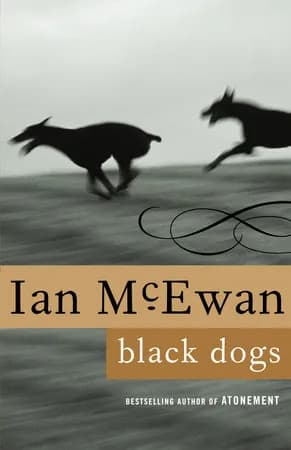
Nearby, where the main road forked, stood an iron cross on a stone base. As the English couple watched, a mason was cutting in half a dozen fresh names. On the far side of the street, in the deep shadow of a doorway, a youngish woman in black was also watching. She was so pale they assumed at first she had some sort of wasting disease. She remained perfectly still, with one hand holding an edge of her headscarf so that it obscured her mouth. The mason seemed embarrassed and kept his back to her while he worked. After a quarter of an hour an old man in blue workman's clothes came shuffling along in carpet slippers and took her hand without a word and led her away. When the propriétaire came out he nodded at the other side of the street, at the empty space and murmured, 'Trois. Mari et deux frères,' as he set down their salads.This sombre incident remained with them as they struggled up the hill in the heat, heavy with lunch, towards the Bergerie de Tédenat. They stopped half way up in the shade of a stand of pines before a long stretch of open ground. Bernard was to remember this moment for the rest of his life. As they drank from their water bottles he was struck by the recently concluded war not as a historical, geopolitical fact but as a multiplicity, a near-infinity of private sorrows, as a boundless grief minutely subdivided without diminishment among individuals who covered the continent like dust, like spores whose separate identities would remain unknown, and whose totality showed more sadness than anyone could ever begin to comprehend; a weight borne in silence by hundreds of thousands, millions, like the woman in black for a husband and two brothers, each grief a particular, intricate, keening love story that might have been otherwise. It seemed as though he had never thought about the war before, not about its cost. He had been so busy with the details of his work, of doing it well, and his widest view had been of war aims, of winning, of statistical deaths, statistical destruction, and of post-war reconstruction. For the first time he sensed the scale of the catastrophe in terms of feeling; all those unique and solitary deaths, all that consequent sorrow, unique and solitary too, which had no place in conferences, headlines, history, and which had quietly retired to houses, kitchens, unshared beds, and anguished memories. This came upon Bernard by a pine tree in the Languedoc in 1946 not as an observation he could share with June but as a deep apprehension, a recognition of a truth that dismayed him into silence and, later, a question: what possible good could come of a Europe covered in this dust, these spores, when forgetting would be inhuman and dangerous, and remembering a constant torture?
p. 164
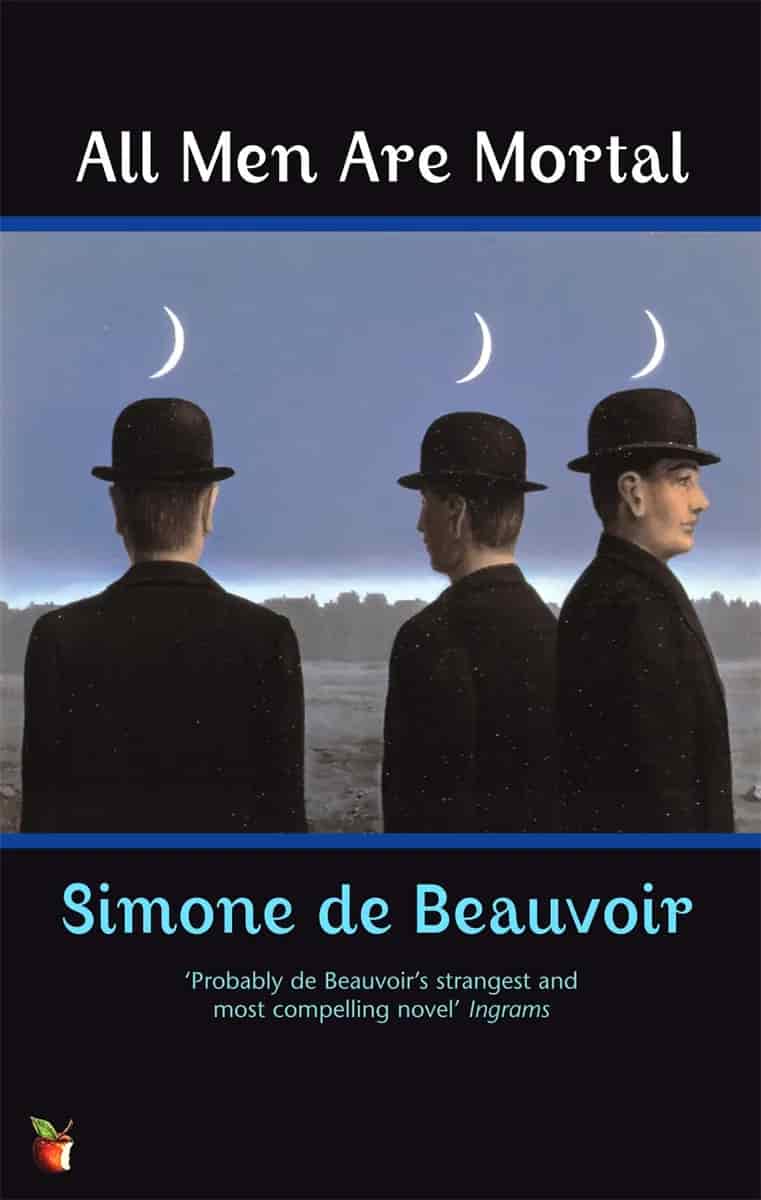
If I had amnesia, I'd be almost like other men. Perhaps I'd even be able to love you.
p. 17
I never forgot that schooling had irretrievably changed my family’s life. That knowledge, however, did not weaken ambition. Instead, it strengthened resolve. Those times I remembered the loss of my past with regret, I quickly reminded myself of all the things my teachers could give me. (They could make me an educated man.) I tightened my grip on pencil and books. I evaded nostalgia. Tried hard to forget. But one does not forget by trying to forget. One only remembers. I remembered too well that education had changed my family’s life. I would not have become a scholarship boy had I not so often remembered.
I envy your peace of mind, your clean conscience, your unpolluted memory. Little girl, a memory without blot or contamination must be an exquisite treasure — an inexhaustible source of pure refreshment: is it not?
You think the dead we loved ever truly leave us? You think that we don't recall them more clearly than ever in times of great trouble?
She was a young person whose reveries never were in retrospect. For her past was no treasury of distinct memories, all hoarded and classified, some brighter than others and more highly valued. All memories were for her but as the motes in one fused radiance that followed her and made more luminous the pathway of her future.
As I trace the route to his apartment, the twists and turns, and pass once more the old tree opposite his house, I am struck by a sudden thought: memories have ways of becoming independent of the reality they evoke. They can soften us against those we were deeply hurt by or they can make us resent those we once accepted and loved unconditionally.
Memory is a reenactment of perception, indistinguishable from the original act of knowing.
"If you want someone to be ignored, then build a life-size bronze statue of them and stick it in the middle of town..."
Experiments... have shown that at least one aspect of human thought—memory—is strongly influenced by language.
And when Thyself with shining Foot shall pass
Among the Guests Star-scatter'd on The Grass,
And in Thy joyous Errand reach the Spot
Where I made one — turn down an empty Glass!
You are part of my existence, part of myself. You have been in every line I have ever read since I first came here, the rough common boy whose poor heart you wounded even then. You have been in every prospect I have ever seen since, — on the river, on the sails of the ships, on the marshes, in the clouds, in the light, in the darkness, in the wind, in the woods, in the sea, in the streets. You have been the embodiment of every graceful fancy that my mind has ever become acquainted with. The stones of which the strongest London buildings are made are not more real, or more impossible to be displaced by your hands, than your presence and influence have been to me, there and everywhere, and will be. Estella, to the last hour of my life, you cannot choose but remain part of my character, part of the little good in me, part of the evil. But, in this separation, I associate you only with the good; and I will faithfully hold you to that always, for you must have done me far more good than harm, let me feel now what sharp distress I may. O God bless you, God forgive you!