Quotes about madness
183 quotes · 108 authors
Quotes
She wanted to be crazy. She said when you’re crazy the truth is whatever you want it to be. She wanted what she remembered not to be true.
p. 139
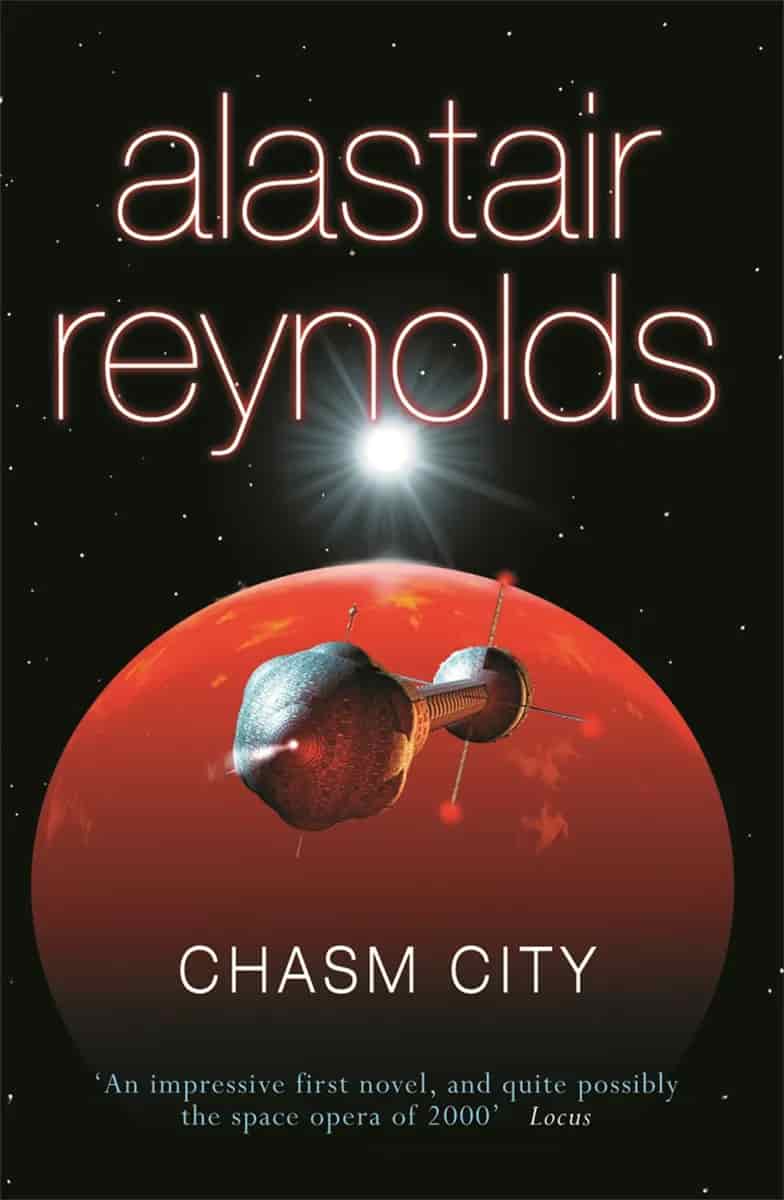
But sanity, Vasko decided, was like the pattern of lights he could see through his cabin window. In almost any direction the only way to travel was into darkness, and there was a lot more darkness than light.
p. 105
“Tanner, are you insane?”
“Very probably several kinds of insane,” I said. “But I’m afraid it doesn’t change anything. I’m perfectly happy with my current delusional system.”
p. 454
The general fact is simple. Poetry is sane because it floats easily in an infinite sea; reason seeks to cross the infinite sea, and so make it finite. The result is mental exhaustion, like the physical exhaustion of Mr. Holbein. To accept everything is an exercise, to understand everything a strain. The poet only desires exaltation and expansion, a world to stretch himself in. The poet only asks to get his head into the heavens. It is the logician who seeks to get the heavens into his head. And it is his head that splits.
The madman's explanation of a thing is always complete, and often in a purely rational sense satisfactory. Or, to speak more strictly, the insane explanation, if not conclusive, is at least unanswerable; this may be observed specially in the two or three commonest kinds of madness. If a man says (for instance) that men have a conspiracy against him, you cannot dispute it except by saying that all the men deny that they are conspirators; which is exactly what conspirators would do. His explanation covers the facts as much as yours. Or if a man says that he is the rightful King of England, it is no complete answer to say that the existing authorities call him mad; for if he were King of England that might be the wisest thing for the existing authorities to do. Or if a man says that he is Jesus Christ, it is no answer to tell him that the world denies his divinity; for the world denied Christ's.
Imagination does not breed insanity. Exactly what does breed insanity is reason. Poets do not go mad; but chess-players do. Mathematicians go mad, and cashiers; but creative artists very seldom. I am not, as will be seen, in any sense attacking logic: I only say that this danger does lie in logic, not in imagination.
Mysticism keeps men sane. As long as you have mystery you have health; when you destroy mystery you create morbidity. The ordinary man has always been sane because the ordinary man has always been a mystic. He has permitted the twilight. He has always had one foot in earth and the other in fairyland. He has always left himself free to doubt his gods; but (unlike the agnostic of to-day) free also to believe in them. He has always cared more for truth than for consistency. If he saw two truths that seemed to contradict each other, he would take the two truths and the contradiction along with them. His spiritual sight is stereoscopic, like his physical sight: he sees two different pictures at once and yet sees all the better for that. Thus, he has always believed that there was such a thing as fate, but such a thing as free will also. Thus, he believes that children were indeed the kingdom of heaven, but nevertheless ought to be obedient to the kingdom of earth. He admired youth because it was young and age because it was not. It is exactly this balance of apparent contradictions that has been the whole buoyancy of the healthy man. The whole secret of mysticism is this: that man can understand everything by the help of what he does not understand. The morbid logician seeks to make everything lucid, and succeeds in making everything mysterious. The mystic allows one thing to be mysterious, and everything else becomes lucid.
Every remedy is a desperate remedy. Every cure is a miraculous cure. Curing a madman is not arguing with a philosopher; it is casting out a devil.
The last thing that can be said of a lunatic is that his actions are causeless. If any human acts may loosely be called causeless, they are the minor acts of a healthy man; whistling as he walks; slashing the grass with a stick; kicking his heels or rubbing his hands. It is the happy man who does the useless things; the sick man is not strong enough to be idle. It is exactly such careless and causeless actions that the madman could never understand; for the madman (like the determinist) generally sees too much cause in everything. The madman would read a conspiratorial significance into those empty activities. He would think that the lopping of the grass was an attack on private property. He would think that the kicking of the heels was a signal to an accomplice. If the madman could for an instant become careless, he would become sane. Every one who has had the misfortune to talk with people in the heart or on the edge of mental disorder, knows that their most sinister quality is a horrible clarity of detail; a connecting of one thing with another in a map more elaborate than a maze. If you argue with a madman, it is extremely probable that you will get the worst of it; for in many ways his mind moves all the quicker for not being delayed by the things that go with good judgment. He is not hampered by a sense of humour or by charity, or by the dumb certainties of experience. He is the more logical for losing certain sane affections. Indeed, the common phrase for insanity is in this respect a misleading one. The madman is not the man who has lost his reason. The madman is the man who has lost everything except his reason.
He was reluctantly forced to conclude that his sanity was unshaken.
p. 27
Men are so necessarily mad, that not to be mad would amount to another form of madness.
You can’t set out to achieve your goals without a little madness.