Quotes about ideas
81 quotes · 62 authors
Quotes
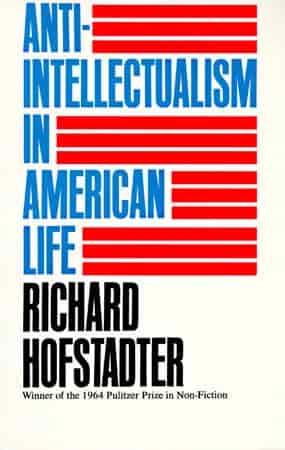
If there is anything more dangerous to the life of the mind than having no independent commitment to ideas, it is having an excess of commitment to some special and constricting idea. The effect is as observable in politics as in theology: the intellectual function can be overwhelmed by an excess of piety expended within too contracted a frame of reference.
p. 29
An intellectual … lives for ideas—which means that he has a sense of dedication to the life of the mind which is very much like a religious commitment. This is not surprising, for in a very important way the role of the intellectual is inherited from the office of the cleric: it implies a special sense of the ultimate value in existence of the act of comprehension. Socrates, when he said that the unexamined life is not worth living, struck the essence of it. We can hear the voices of various intellectuals in history repeating their awareness of this feeling, in accents suitable to time, place and culture. “The proper function of the human race, taken in the aggregate,” wrote Dante in De Monarchia, “is to actualize continually the entire capacity possible to the intellect, primarily in speculation, then through its extension and for its sake, secondarily in action.” The noblest thing, and the closest possible to divinity, is thus the act of knowing.
p. 27
April 24 - Objectivity is presumably the opposite of schizophrenia. Which means that it is nothing but acceptance of everybody else's notion of reality. But nobody's perception of reality is the same as everybody's notion of it, which means that the most objective person is the real schizophrenic. It is hard to get beyond the accepted beliefs of one's own age. The first man to think a new thought advances it very tentatively. New ideas have to be around a while before anyone will promote them hard. In their first form, they are like tiny, imperceptible mutations that may eventually lead to new species. That's why cultural cross-fertilization is so important. It increases the gene-pool of the imagination. The Arabs, say, have one part of the puzzle. The Franks another. So, when the Knights Templar meet the Hashishin, something new is born. The human race has always lived more or less happily in the kingdom of the blind. But there is an elephant among us. A one-eyed elephant.
Ideas oozed out of books like magma out of volcanoes.
p. 15
Hang ideas! They are tramps, vagabonds, knocking at the back-door of your mind, each taking a little of your substance, each carrying away some crumb of that belief in a few simple notions you must cling to if you want to live decently and would like to die easy!.
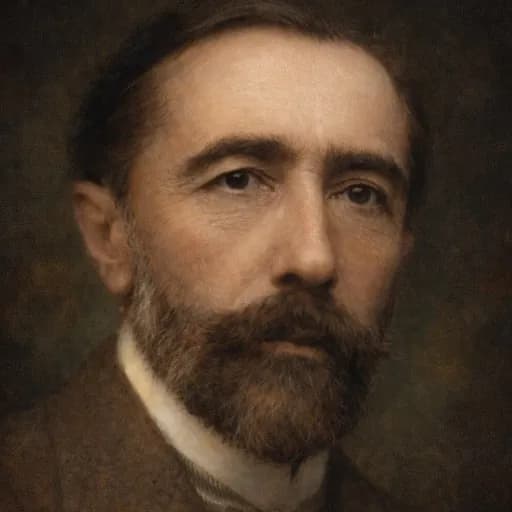
These chaps were not much account, really. They were no colonists; their administration was merely a squeeze, and nothing more, I suspect. They were conquerors, and for that you want only brute force — nothing to boast of, when you have it, since your strength is just an accident arising from the weakness of others. They grabbed what they could get for the sake of what was to be got. It was just robbery with violence, aggravated murder on a great scale, and men going at it blind — as is very proper for those who tackle a darkness. The conquest of the earth, which mostly means the taking it away from those who have a different complexion or slightly flatter noses than ourselves, is not a pretty thing when you look into it too much. What redeems it is the idea only. An idea at the back of it; not a sentimental pretence but an idea; and an unselfish belief in the idea — something you can set up, and bow down before, and offer a sacrifice to. . .
It's how creativity works. Especially in humans. For every good idea, ten thousand idiotic ones must first be posed, sifted, tried out, and discarded. A mind that's afraid to toy with the ridiculous will never come up with the brilliantly original.
Getting every employee's mind into the game is a huge part of what a CEO job is all about. Taking everyone's best ideas and transferring them to others is the secret. There's nothing more important.
In today's impoverished dialogue, critiques of liberalism are often naively called "conservative," as if twenty-five hundred years of Western intellectual tradition presented no other alternatives.
If more people had put their fellow human beings before abstractions last century, we shouldn’t be where we are now.
p. 190
Every court must have its fool, every great ideal must attract some who are motivated only by self-interest.
p. 413
We know that the real lesson to be taught is that the human person is precious and unique; but we seem unable to set it forth except in terms of ideology and abstraction.
p. 148