


Quotes
We remain in the Romantic cycle initiated by Rousseau: liberal idealism canceled by violence, barbarism, disillusionment and cynicism.
p. 232
It was not his fight. Not personally his fight. No more his fight than any one of them. But he had made it his. Because of Stone, because of Rand and Harriet, because of priest who’d hounded him across half the continent, he had tried to make a fight of it. And perhaps, as well, because of something undefinable, unknown to himself, unsuspected in himself—some crazy idealism, some deep-rooted sense of justice, some basic aversion to bullies and bigots and reformers.
p. 245
I owed my success to that principle. It had put me where I was. What you don't know don't hurt you, for it ain't real. They called that Idealism in my book I had when I was in college, and after I got hold of that principle I became an Idealist. I was a brass-bound Idealist in those days. If you are an Idealist it does not matter what you do or what goes on around you because it isn't real anyway.
For in the mulitude of middle-aged men who go about their vocations in a daily course determined for them much in the same way as the tie of their cravats, there is always a good number who once meant to shape their own deeds and alter the world a little. The story of their coming to be shapen after the average and fit to be packed by the gross, is hardly ever told even in their consciousness; for perhaps their ardor is generous unpaid toil cooled as imperceptibly as the ardor of other youthful loves, till one day their earlier self walked like a ghost in its old home and made the new furniture ghastly. Nothing in the world more subtle than the process of their gradual change! In the beginning they inhaled it unknowingly: you and I may have sent some of our breath towards infecting them, when we uttered our conforming falsities or drew our silly conclusions: or perhaps it came. with the vibrations from a woman's glance.
Some have felt that these blundering lives are due to the inconvenient indefiniteness with which the Supreme Power has fashioned the natures of women: if there were one level of feminine incompetence as strict as the ability to count three and no more, the social lot of women might be treated with scientific certitude. Meanwhile the indefiniteness remains, and the limits of variation are really much wider than any one would imagine from the sameness of women's coiffure and the favorite love-stories in prose and verse. Here and there a cygnet is reared uneasily among the ducklings in the brown pond, and never finds the living stream in fellowship with its own oary-footed kind. Here and there is born a Saint Theresa, foundress of nothing, whose loving heart-beats and sobs after an unattained goodness tremble off and are dispersed among hindrances, instead of centring in some long-recognizable deed.
Who that cares much to know the history of man, and how the mysterious mixture behaves under the varying experiments of Time, has not dwelt, at least briefly, on the life of Saint Theresa, has not smiled with some gentleness at the thought of the little girl walking forth one morning hand-in-hand with her still smaller brother, to go and seek martyrdom in the country of the Moors? Out they toddled from rugged Avila, wide-eyed and helpless-looking as two fawns, but with human hearts, already beating to a national idea; until domestic reality met them in the shape of uncles, and turned them back from their great resolve. That child-pilgrimage was a fit beginning. Theresa's passionate, ideal nature demanded an epic life: what were many-volumed romances of chivalry and the social conquests of a brilliant girl to her? Her flame quickly burned up that light fuel; and, fed from within, soared after some illimitable satisfaction, some object which would never justify weariness, which would reconcile self-despair with the rapturous consciousness of life beyond self. She found her epos in the reform of a religious order.
That Spanish woman who lived three hundred years ago, was certainly not the last of her kind. Many Theresas have been born who found for themselves no epic life wherein there was a constant unfolding of far-resonant action; perhaps only a life of mistakes, the offspring of a certain spiritual grandeur ill-matched with the meanness of opportunity; perhaps a tragic failure which found no sacred poet and sank unwept into oblivion.
But our Don Quixote, the inward, the immortal Don Quixote, conscious of his own comicness, does not believe that his doctrines will triumph in this world, because they are not of it. And it is better that they should not triumph. And if the world wished to make Don Quixote king, he would retire alone to the mountain, fleeing from the king-making crowds, as Christ retired alone to the mountain when, after the miracle of the loaves and fishes, they sought to proclaim him king. He left the title of king for the inscription written over the cross.
"And the upshot of all this," so I have been told more than once and by more than one person, "will be simply that all you will succeed in doing will be to drive people to the wildest Catholicism." And I have been accused of being a reactionary and even a Jesuit. Be it so! ...I know very well it is madness to seek to turn the waters of the river back to their source, and that it is only the ignorant who seek to find in the past a remedy for their present ills; but I know too that anyone who fights for any ideal whatever, although his ideal may seem to lie in the past, is driving the world on to the future, and that the only reactionaries are those who find themselves at home in the present. Every supposed restoration of the past is a creation of the future, and if the past which it is sought to restore is a dream, something imperfectly known, so much the better.
But Don Quixote was converted. Yes — and died, poor soul. But the other, the real Don Quixote, he who remained on earth and lives among us with his spirit — this Don Quixote was not converted, this Don Quixote continues to incite us to make ourselves ridiculous, this Don Quixote must never die.
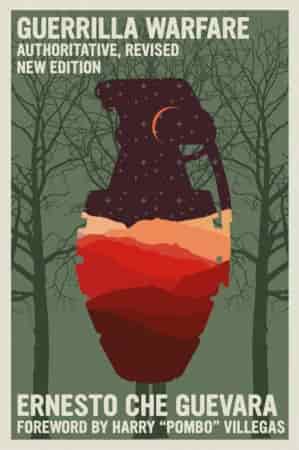
The guerrilla fighter, who is general of himself, need not die in every battle. He is ready to give his life, but the positive quality of this guerrilla warfare is precisely that each one of the guerrilla fighters is ready to die, not to defend an ideal, but rather to convert it into reality.






That’s all the quotes.
11 quotes in the collection · come back when we add more