Quotes about heroism
69 quotes · 54 authors
Quotes
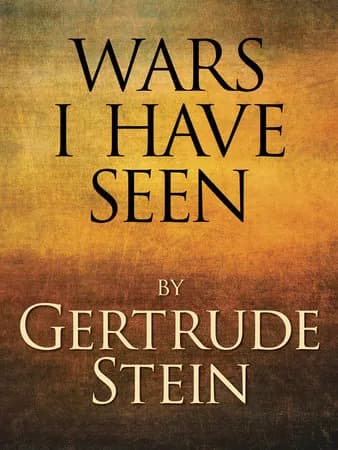
A nice war is a war where everybody who is heroic is a hero, and everybody more or less is a hero in a nice war. Now this war is not at all a nice war.
p. 77
Celebrity-worship and hero-worship should not be confused. Yet we confuse them every day, and by doing so we come dangerously close to depriving ourselves of all real models. We lose sight of the men and women who do not simply seem great because they are famous but are famous because they are great. We come closer and closer to degrading all fame into notoriety.
p. 48
Routine is the death to heroism.
Down these mean streets a man must go who is not himself mean, who is neither tarnished nor afraid. The detective in this kind of story must be such a man. He is the hero, he is everything. He must be a complete man and a common man and yet an unusual man. He must be, to use a rather weathered phrase, a man of honor, by instinct, by inevitability, without thought of it, and certainly without saying it. He must be the best man in his world and a good enough man for any world.
Where cowards never venture, heroes find splendor.
p. 300
A man without a heroic bent starts dying at the age of thirty.
p. 25
Preoccupation with efficacy is the main obstacle to a poetic, elegant, robust and heroic life.
p. 29
Modernity: we created youth without heroism, age without wisdom, and life without grandeur.
p. 27
[T]he epic poet did not judge heroes by the result... their fate depended on totally external forces... Heroes are heroes because they are heroic in behavior, not because they won or lost.
The condemned man found himself transformed into a hero by the sheer extend of his widely advertised crimes, and sometimes the affirmation of his belated repentance. Against the law, against the rich, the powerful, the magistrates, the constabulary or the watch, against taxes and their collectors, he appeared to have waged a struggle with which one all too easily identified. The proclamation of these crimes blew up to epic proportions the tiny struggle that passed unperceived in everyday life. If the condemned man was shown to be repentant, accepting the verdict, asking both God and man for forgiveness for his crimes, it was as if he had come through some process of purification: he died, in his own way, like a saint.
p. 67
"My dear young friend," said Mustapha Mond, "civilization has absolutely no need of nobility or heroism. These things are symptoms of political inefficiency. In a properly organized society like ours, nobody has any opportunities for being noble or heroic. Conditions have got to be thoroughly unstable before the occasion can arise. Where there are wars], where there are divided allegiances, where there are temptations to be resisted, objects of love to be fought for or defended–there, obviously, nobility and heroism have some sense. But there aren't any wars nowadays. The greatest care is taken to prevent you from loving any one too much. There's no such thing as a divided allegiance; you're so conditioned that you can't help doing what you ought to do. And what you ought to do is on the whole so pleasant, so many of the natural impulses are allowed free play, that there really aren't any temptations to resist. And if ever, by some unlucky chance, anything unpleasant should somehow happen, why, there's always soma to give you a holiday from the facts. And there's always soma to calm your anger, to reconcile you to your enemies, to make you patient and long-suffering. In the past you could only accomplish these things by making a great effort and after years of hard moral training. Now, you swallow two or three half-gramme tablets, and there you are. Anybody can be virtuous now. You can carry at least half your morality about in a bottle. Christianity without tears–that's what soma is."
We have not even to risk the adventure alone, for the heroes of all time have gone before us — the labyrinth is thoroughly known. We have only to follow the thread of the hero path, and where we had thought to find an abomination, we shall find a god; where we had thought to slay another, we shall slay ourselves; where we had thought to travel outward, we shall come to the center of our own existence. And where we had thought to be alone, we shall be with all the world.