Quotes
I think that if there were a God, there would be less evil on this earth. I believe that if evil exists here below, then either it was willed by God or it was beyond His powers to prevent it. Now I cannot bring myself to fear a God who is either spiteful or weak. I defy Him without fear and care not a fig for his thunderbolts.
Sheep were docile, yes, but vigilant. Unlike many people, sheep were always aware that predators existed and were alert for the scent and the schemes of wolves.
Contemporary Americans were so proseperous, so happily distracted by such a richness of vivid entertainments, they were reluctant to have their fun diminished by acknowledging that anything existed with fangs and fierce appetites. If now and then they recognized a wolf, they threw a bone to it and convinced themselves it was a dog.
p. 52
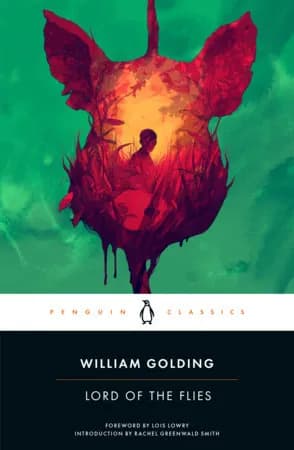
His voice rose under the black smoke before the burning wreckage of the island; and infected by that emotion, the other little boys began to shake and sob too. And in the middle of them, with filthy body, matted hair, and unwiped nose, Ralph wept for the end of innocence, the darkness of man's heart, and the fall through the air of the true, wise friend called Piggy.
Wisdom we know is the knowledge of good and evil not the strength to choose between the two.
Wicked people have nothing human about them except passions: they are almost their virtues.
Maybe we all have in us a secret pond where evil and ugly things germinate and grow strong. But this culture is fenced, and the swimming brood climbs up only to fall back. Might it not be that in the dark pools of some men the evil grows strong enough to wriggle over the fence and swim free? Would not such a man be our monster, and are we not related to him in our hidden water? It would be absurd if we did not understand both angels and devils, since we invented them.
p. 132
Some...forces seem evil to us, perhaps not in themselves but because their tendency is to eliminate the things we hold good.
p. 130
I believe there are monsters born in the world to human parents. ... They are accidents and no one’s fault, as used to be thought. Once they were considered the visible punishments for concealed sins. And just as there are physical monsters, can there not be mental or psychic monsters born? The face and body may be perfect, but if a twisted gene or a malformed egg can produce physical monsters, may not the same process produce a malformed soul? ... Sometimes when we are little we imagine how it would be to have wings, but there is no reason to suppose it is the same feeling birds have. No, to a monster, the norm must seem monstrous since everyone is normal to himself. ... To a man born without conscience, a soul-stricken man must seem ridiculous. To a criminal, honesty is foolish.
p. 71
In uncertainty I am certain that underneath their topmost layers of frailty men want to be good and want to be loved. Indeed, most of their vices are attempted short cuts to love. When a man comes to die, no matter what his talents and influence and genius, if he dies unloved his life must be a failure to him and his dying a cold horror. It seems to me that if you or I must choose between two courses of thought or action, we should remember our dying and try so to live that our death brings no pleasure to the world.
We have only one story. All novels, all poetry, are built on the never-ending contest in ourselves of good and evil. And it occurs to me that evil must constantly respawn, while good, while virtue, is immortal. Vice has always a new fresh young face, while virtue is venerable as nothing else in the world is.
It is a fact verified and recorded in many histories that the soul capable of the greatest good is also capable of the greatest evil. Who is there more impious than a backsliding priest? Who more carnal than a recent virgin? This, however, may be a matter of appearance.
No step along the way had seemed more than a little thing; but altogether it came to something rather monstrous.
p. 199
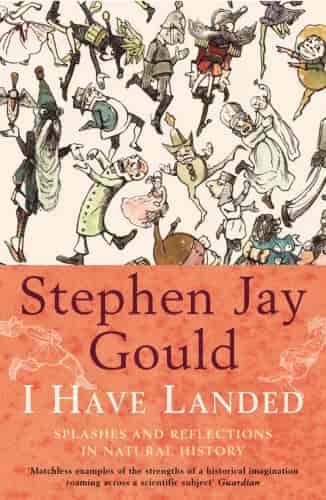
The oppressive weight of disaster and tragedy in our lives does not arise from a high percentage of evil among the summed total of all acts, but from the extraordinary power of exceedingly rare incidents of depravity to inflict catastrophic damage, especially in our technological age when airplanes can become powerful bombs. (An even more evil man, armed only with a longbow, could not have wreaked such havoc at the Battle of Agincourt in 1415.)
p. 390