Quotes
Except for cases of pathological incapacity, one can and must communicate, and thereby contribute in a useful and easy way to the peace of others and oneself, because silence, the absence of signals, is itself a signal, but an ambiguous one, and ambiguity generates anxiety and suspicion. To say that it is impossible to communicate is false; one always can.
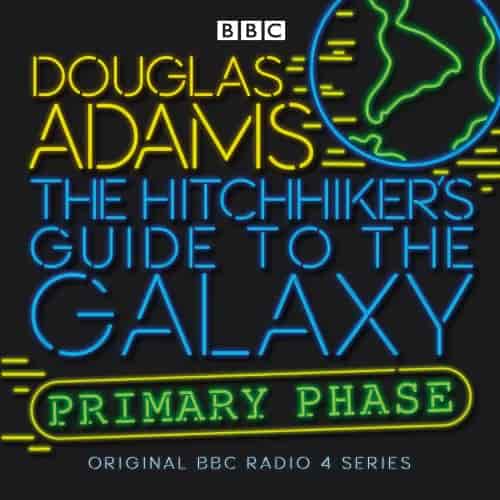
One of the things Ford Prefect had always found hardest to understand about humans was their habit of continually stating and repeating the very very obvious, as in It's a nice day, or You're very tall, or Oh dear you seem to have fallen down a thirty-foot well, are you alright? At first Ford had formed a theory to account for this strange behaviour. If human beings don't keep exercising their lips, he thought, their mouths probably seize up. After a few months' consideration and observation he abandoned this theory in favour of a new one. If they don't keep on exercising their lips, he thought, their brains start working. After a while he abandoned this one as well as being obstructively cynical.
There was much conversation, most of which sounded like the rest of it. ~ Ch. 14
The paucity of its vocabulary and syntax is for the Beats essentially expressive of withdrawal from the standard civilization and its learning. On the other hand this paucity gives, instead of opportunities for thought and problem solving, considerable satisfaction in the act and energy of speaking itself, as is true of any simple adopted language, such as pig Latin. But this can have disadvantages. One learns to one’s frustration that they regard talk as an end in itself, as a means of self-expression, without subject matter. In a Beat group it is bad form to assert or deny a proposition as true or false, probable or improbable, or to want to explore its meaning.
p. 175
It is useless to talk with those who do not understand one and troublesome to talk with those who criticize from a feeling of superiority. Especially one-sided persons are troublesome. Few are accomplished in many arts and most cling narrowly to their own opinion.
You want to talk to someone: first open your ears.
Speak for the ear and write for the memory.
The talkative person is one who speaks more than he thinks. Someone who thinks a great deal and talks a great deal is never considered a talkative person. The talkative man speaks from his mouth, the eloquent man speaks from his heart.
When we speak, we write what we are saying in the air.
Speak more softly to be better heard by a deaf public.
The voice is an aid to intelligence.
The aim of an argument or discussion should not be victory, but progress.