Quotes about change
408 quotes · 242 authors
Quotes
...there ought to be a law that we change identities and families every ten years or so.
There is nothing like returning to a place that remains unchanged to find the ways in which you yourself have altered.
If you want a conservative country, you need a conservative populace. Immigration is changing the country, and there will be no changing it back. If you don’t understand that, you are the enemy of any conservative undertaking.
Funny how languages break down and turn into something else. Latin was rubbed away until it degenerated into dreadful lingos like French and Spanish and Italian, and lo! people found out that quite new things could be said in these degenerate tongues — things nobody had ever thought of in Latin. English is breaking down now in the same way — becoming a world language that every Tom, Dick and Harry must learn, and speak in a way that would give Doctor Johnson the jim-jams.
These petitioners had no conception of art; to them a picture was a symbol of something else, and very readily the symbol became the reality. They were untouched by modern education, but their government was striving with might and main to procure this inestimable benefit from them; anticlericalism and American bustle would soon free them from belief in miracles and holy likenesses. But where, I ask myself, will mercy and divine compassion come from then? Or are such things necessary to people who are well fed and know the wonders that lie concealed in an atom? I don't regret economic and educational advance; I just wonder how much we shall have to pay for it, and in what coin.
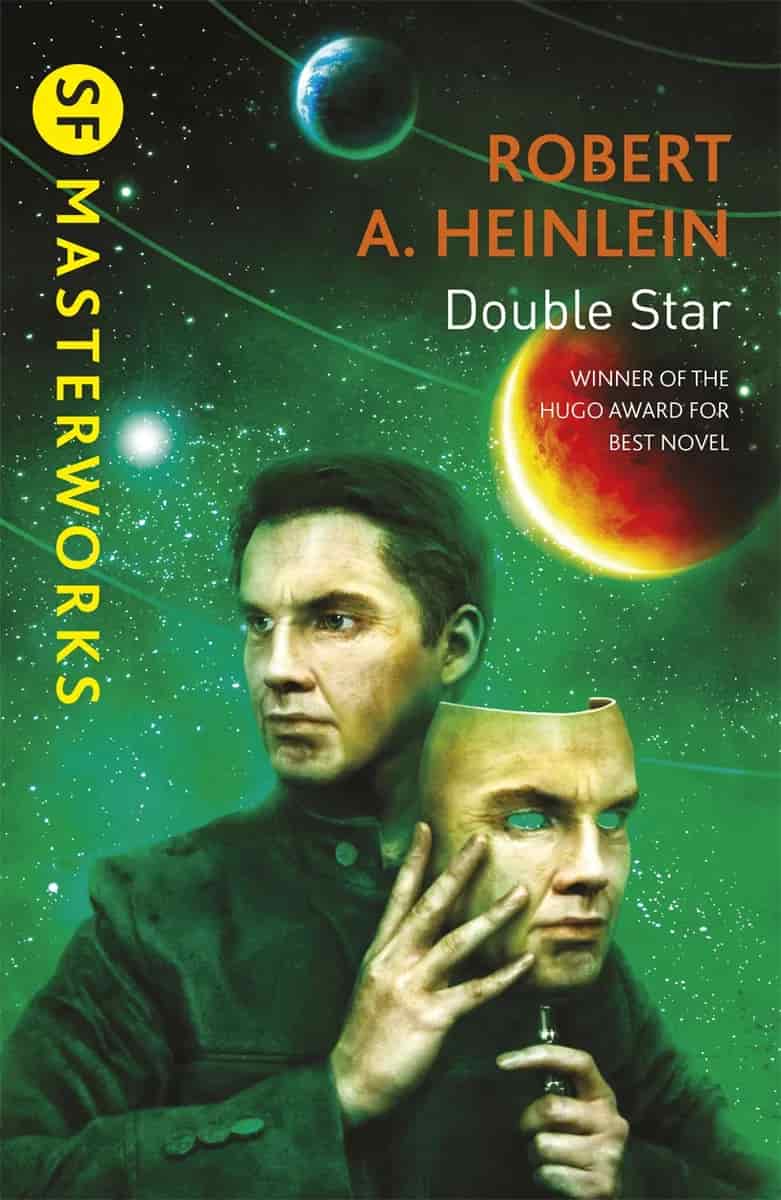
Age does not bring wisdom. Often it merely changes simple stupidity into arrogant conceit. Its only advantage, so far as I have been able to see, is that it spans change. A young person sees the world as a still picture, immutable. An old person has had his nose rubbed in changes and more changes and still more changes so many times that he knows it is a moving picture, forever changing. He may not like it — probably doesn’t; I don’t — but he knows it’s so, and knowing it is the first step in coping with it.
p. 19
People don’t really want change, any change at all — and xenophobia is very deep-rooted. But we progress, as we must — if we are to go out to the stars.
Ideas are inherently conservative. They yield not to the attack of other ideas but to the massive onslaught of circumstance with which they cannot contend.
The enemy of the conventional wisdom is not ideas but the march of events.
How wonderful, how very wonderful the operations of time, and the changes of the human mind!
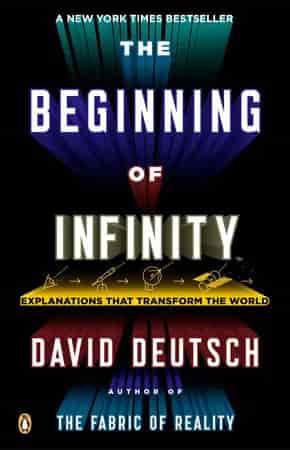
That progress is both possible and desirable is perhaps the quintessential idea of the Enlightenment. It motivates all traditions of criticism, as well as the principle of seeking good explanations. But it can be interpreted in two almost opposite ways, both of which, confusingly, are known as ‘perfectibility’. One is that humans, or human societies, are capable of attaining a state of supposed perfection – such as the Buddhist or Hindu ‘nirvana’, or various political utopias. The other is that every attainable state can be indefinitely improved. Fallibilism rules out that first position in favour of the second.
You, too, have mysteries of your own. I know that you must have dreams that you don't tell me. I don't want to know them. But I can tell you: live those dreams, play with them, build altars to them. It is not yet the ideal but it points in the right direction. Whether you and I and a few others will renew the world someday remains to be seen. But within ourselves we must renew it each day, otherwise we just aren't serious. Don't forget that!
p. 181