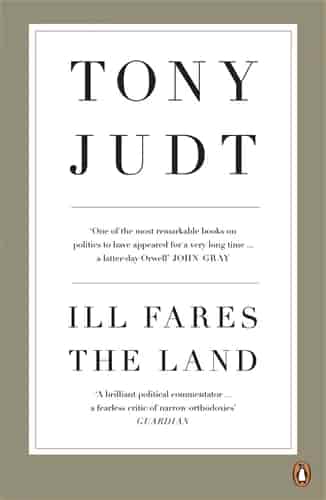
Political skepticism is the source of so many of our dilemmas. Even if free markets worked as advertised, it… — Tony Judt
Political skepticism is the source of so many of our dilemmas. Even if free markets worked as advertised, it would be hard to claim that they constituted a sufficient basis for the well-lived life. So what precisely is it that we find lacking in unrestrained financial capitalism, or ‘commercial society’ as the 18th century had it? What do we find instinctively amiss in our present arrangements and what can we do about them? What is it that offends our sense of propriety when faced with unfettered lobbying by the wealthy at the expense of everyone else? What have we lost?
We are all children of the Greeks. We intuitively grasp the need for a sense of moral direction: it is not necessary to be familiar with Socrates to feel that the unexamined life is not worth much. Natural Aristotelians, we assume that a just society is one in which justice is habitually practiced; a good society one in which people behave well. But in order for such an implicitly circular account to convince, we need to agree on the meaning of ‘just’ or ‘well’.
Source: Wikiquote · CC BY-SA 4.0
More from this book
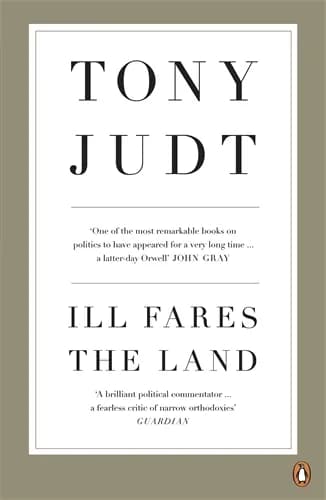
Something is profoundly wrong with the way we live today. For thirty years we have made a virtue out of the pursuit of material self-interest: indeed, this very pursuit now constitutes whatever remains of our sense of collective purpose. We know what things cost but have no idea what they are worth. We no longer ask of a judicial ruling or a legislative act: is it good? Is it fair? Is it just? Is it right? Will it help bring about a better society or a better world? Those used to be the political questions, even if they invited no easy answers. We must learn once again to pose them.
The ‘false precision’ of which Maynard Keynes accused his economist critics is with us still. Worse: we have smuggled in a misleadingly ‘ethical’ vocabulary to bolster our economic arguments, furnishing us with a self-satisfied gloss upon crassly utilitarian calculations. When imposing welfare cuts on the poor, for example, legislators in the UK and US alike have taken a singular pride in the ‘hard choices’ they have had to make.
The past was neither as good nor as bad as we suppose: it was just different. If we tell ourselves nostalgic stories, we shall never engage the problems that face us in the present—and the same is true if we fondly suppose that our own world is better in every way. The past really is another country: we cannot go back. However, there is something worse than idealizing the past—or presenting it to ourselves and our children as a chamber of horrors: forgetting it.