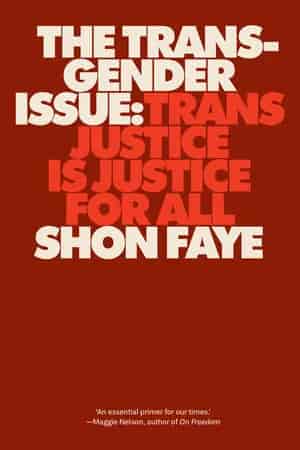
Ignoring colonialism allows British (or other Western) feminists to disregard how the imposition of the… — Shon Faye
Ignoring colonialism allows British (or other Western) feminists to disregard how the imposition of the strict gender binary of man and woman, with the accompanying hierarchy of male over female, was itself a mechanism of colonialism. Many pre-colonial societies and indigenous peoples did not view gender as binary. Some, as we have seen, had more than two genders, while the social roles around family and childrearing varied widely. To take one among a multitude of examples: in the seventeenth century, , a Jesuit missionary to the Montagnais () people residing in (eastern Quebec and Labrador in Canada), described how the women held ‘great power’ and had ‘in nearly every instance … the choice of plans, of undertakings, of journeys, of winterings’. Often, Montagnais women would hunt, while men looked after children. Conversion to Christianity, encouraged by men by like Le Jeune, required the establishment of a new hierarchy and more rigid gender roles. Within ten years of colonial missionary activity and trading relations beginning, the Montagnais had started to insist on male authority and to inflict violence on wives and children. Such accounts of colonial domination show how rapidly a society’s understanding of gender can be changed as society itself changes. They demonstrate clearly that what it means to be a woman or a man (or neither) is not a fixed and stable entity, but a complex constellation of biological, political, economic and cultural factors, which may shift over time.
Source: Wikiquote · CC BY-SA 4.0
More from this book
Moral panics rely on an inherent paradox: that the rights of a small minority of the population wielding little institutional power are in fact a risk to the majority. This is achieved by inciting in the population a mixture of moral disgust and anxiety about contagion. The problem group may be small now, but they will grow. They will grow by encouraging confused young people to join. For sexual minorities, this narrative of recruitment lends itself to the language of seduction and abuse, which helps direct the moral disgust society feels at paedophilia on to an innocent group. It is a shameful but highly effective propaganda tool. Despite the obvious parallels and analogous struggles that trans people have had with the wider queer movement’s struggle for sexual liberation, the claim that trans people are not only actively different but substantially harmful to the LGB movement has been readily embraced and promoted by extreme political conservatives. This includes even politicians who would themselves traditionally oppose lesbian, gay and bisexual rights.
It may seem paradoxical that in a period where civil rights for LGBT people seem to be at unique risk – a time in which Boris Johnson, a man who once called gay men ‘tank-topped bum boys’ and equated gay marriage with bestiality, can be prime minister – there has never been more media representation for LGBT people or more companies happy to insist they support us. This is not out of the sheer kindness of corporate hearts. Brands have recognized that the rainbow flag lends them the goodwill of people who care about social justice. Corporations can purport to be part of a movement with countercultural and liberationist roots, package that movement as ‘aspirational’ for marketing purposes, and in doing so denude it of all the politics that threaten the capitalist status quo and sell it back to those who can afford it. The idea that conspicuous consumption is a route to sexual and gender freedom has been effective in allowing the LGBT movement’s muscles to atrophy. In a godless age, there are new ways to give the masses their opium.
When non-binary people ask for legal recognition or a rethinking of gendered language (for instance through neutral pronouns, or new words for new genders), they are asking for more freedom for us all. In one sense, the claim that everyone is non-binary isn’t wrong: the binary is a powerful and pervasive myth, and everyone is somewhere on a spectrum. ‘Non-binary’ is only useful insofar as it is a term which can be used to make such ideas legible to policymakers, families, schools and societies. It is a term designed to make conversation easier; it is not the end point.