Sheri S. Tepper
Quotes
I have noticed that cats are little impressed by religion.
p. 38
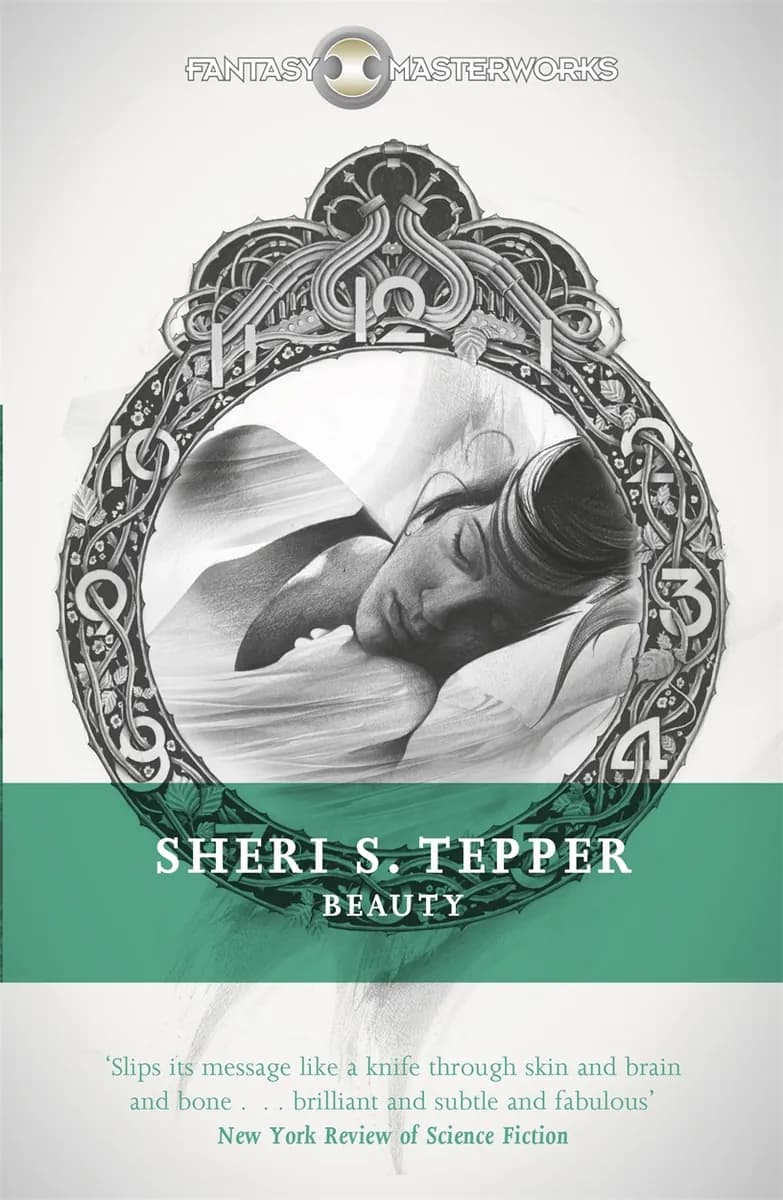 Beauty
“Love cannot be owed,” said the retreating shadow. “It can only be given.”
p. 460
 Sideshow
Their act was fine as it was, but as Sizzy said, mere titillation was limited by both prurience and credulity, while entertainment had no boundaries. “If you entertain people well enough, they don’t care you’re a fake,” said Aunt Sizzy. “Most people don’t give a damn about the truth, anyhow.” She mentioned some politicians, including a recent president, as examples. “The world’s biggest phonies, not very bright, but they entertained people, so nobody cared.”
p. 53
SideshowAfar, Legless God Orimar Breaze howled rage and resentment of this nonsense. There were only two classes of beings: adorers or persecutors.
p. 402
SideshowThere is no sin inherent in any mind save the sin of pride in believing one has seen or been taught the absolute truth. The second greatest sin is refusing to search for the truth one must acknowledge one will never absolutely find.
p. 155
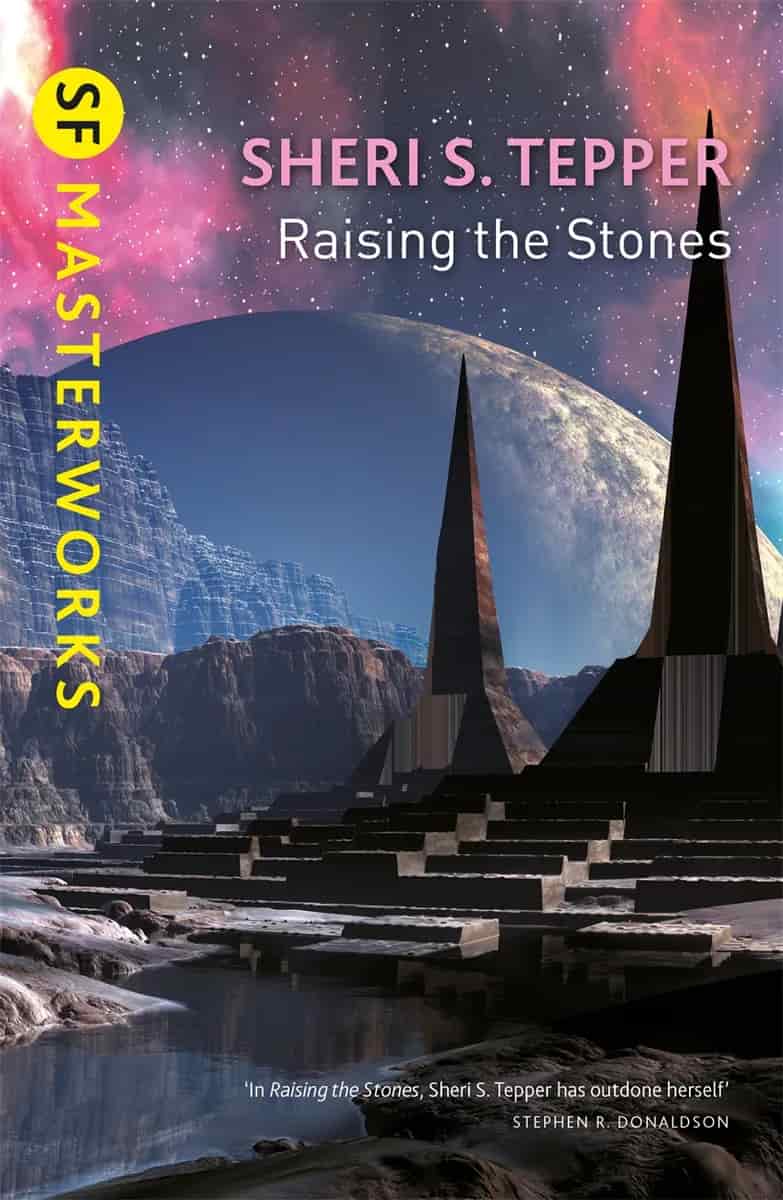
 Raising The Stones
“It seems to me,” said Spiggy softly, “that when a race of man becomes so anthropocentric it regards other living beings as lesser consumables, it could get to be a habit. It might become easy to include other living creatures with the Gharm. Animals. Children. Women. Entire planet. Perhaps they, too, become consumables, to be used up and thrown away.”
p. 284
Raising The StonesI’ve met the prophet Awateh, and he’s very religious, but he’s also completely off his head. It seems to me religious toleration stops when they intend to kill you or hurt you with it. Africa, that’s my aunt, she always said noninterference was a two-way street.
p. 397
Raising The StonesThe prophetess had declared it a sin to believe in absolute truths, but the Scrutators claimed that didn’t apply to religious truths, of which they had manufactured a good supply over the centuries.
p. 184
Raising The StonesIre and Iron and Voorstod, the three peoples who had followed Voorstod the prophet away from Manhome. Voorstod with its pastors, Ire with its priests, and Iron with its prophets: the first to rule the slaves, the second to rule the women, the last to rule the men—to rule the men, or to be used by the men, to rule. That had always been the way of men’s Gods, old men’s Gods. To use the Gods to rule.
p. 504
Raising The StonesElsewhere negotiation might have worked. With other religions, it could have worked. Voorstod’s God, however, was a jealous and vindictive deity who ruled by murder, terrorism, and malediction. How did one negotiate with that?
p. 83
Raising The StonesHer tone conveyed the unimportance of anything that might have happened, anywhere, before she came upon the scene.
p. 13
Raising The StonesLet us consider, said Theology Panel: “Is Voorstod a slave state, or is it merely pious?”
p. 83
Raising The Stones