Sheri S. Tepper
Quotes
“Much of life,” he said to me, “depends on our being ignorant of reality. If we understood reality, we would never go on.”
p. 18
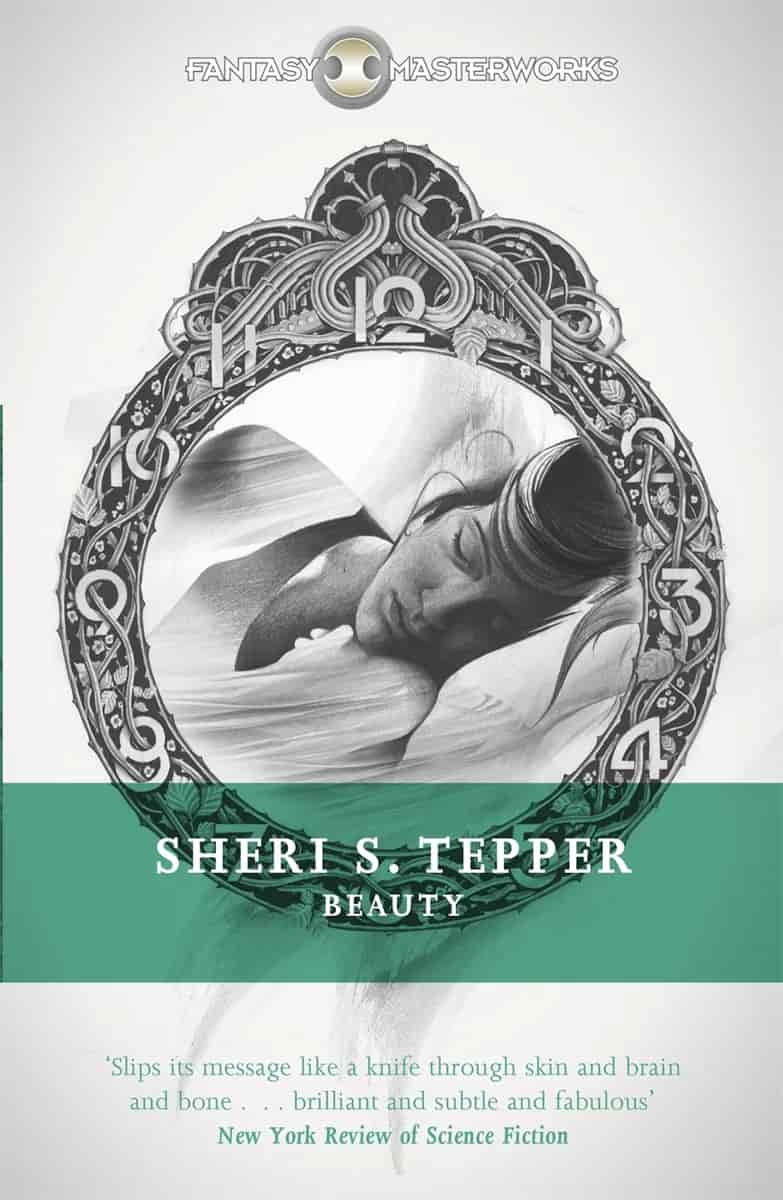
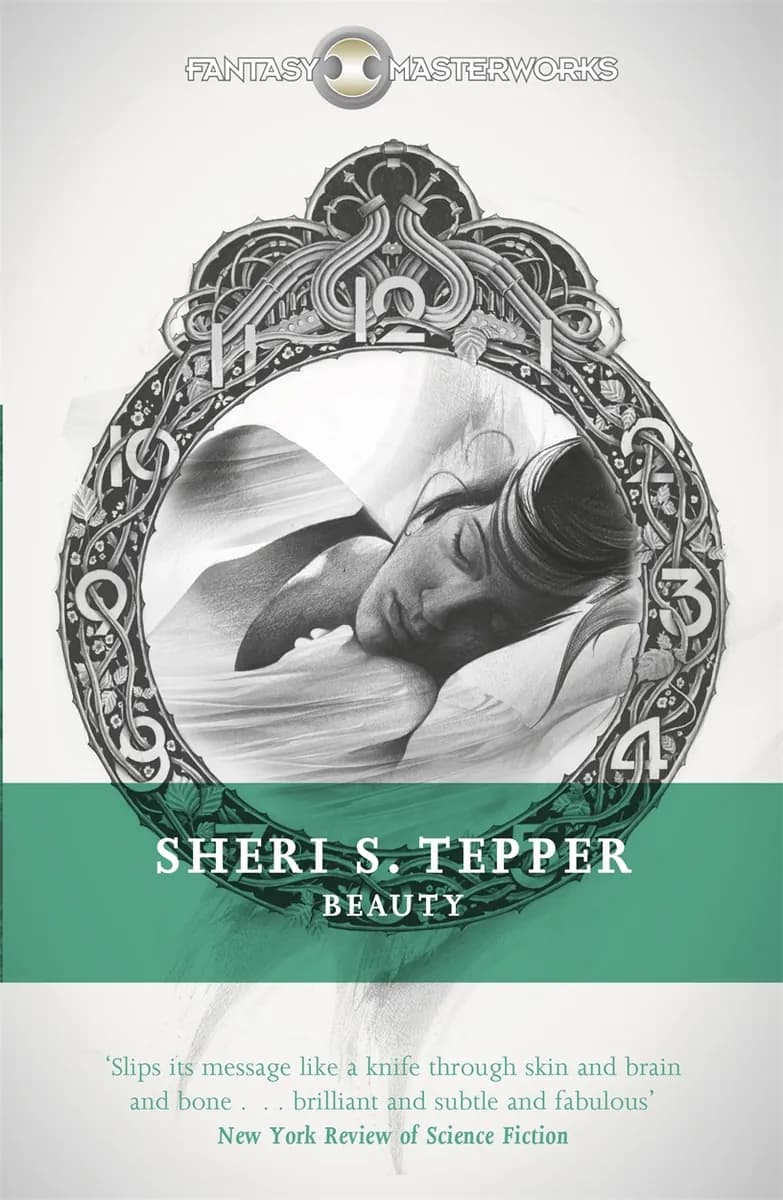 Beauty
Orimar Breaze also considered his godhood. His followers would be called Breazians. He would demand behaviors and customs peculiar to himself. He would make rules, complicated rules, and many of them, that would take a lot of time and trouble and pain to keep. The only way he could know that his people truly loved him would be if they obeyed many onerous rules. There should be many rituals, also, rituals for everything. Much crawling. He liked the idea of crawling. Slithering, even. Also, abstentions from…from anything pleasurable.
He tried to remember what things were pleasurable. What were they? It had been such a long…so many…so… Was it sex? He seemed to remember it was sex. And food. Food had been pleasurable. So, he would make many rules about sex, many rules about food. If the rules were difficult enough, they would because for much backsliding, and that, and its turn, would be cause for much reproval! He would force…He would make people…He would punish them until they…
Though he could not remember the taste of food or wine, the feel of love, the joys of human movement, he felt a surge of pure pleasure at the idea of power. He would conduct himself properly as a god, using sweet and seductive words at first; then, if that failed, using power and pain to teach his people to adore him.
p. 401
 Sideshow
Breaze had decided that he would require his followers to believe illogical things as evidence of their faith. He would require them to believe that Breaze had created Elsewhere and all its people in one day, out of nothing, exactly one thousand years ago! But… (a master stroke) he would leave evidence in Files to contradict this! Thus they would have to disbelieve the evidence of their own senses in order to believe in Breaze!
When he got to this point, a small voice asked why he had given men such senses in the first place? Why had he given them intelligence if he intended to forbid its use?
p. 424
SideshowThings are as they are, and no amount of wishful thinking will change them!
p. 432
SideshowIt takes a strong man to turn back from a bad choice.
p. 57
SideshowMen are like that. They marry for reasons that have nothing to do with what they expect from matrimony and then damn their wives for not being what they want later. They marry for beauty and charm and sex, and then expect their wives to be sensible, parsimonious and efficient.
p. 32
Beauty“The show,” Aunt Sizzy was want to say, “may not have to go on, but we don’t buy groceries unless it does!”
p. 360
SideshowIt is better to die than to be used by evil for evil’s purposes.
p. 312
SideshowThe Ultimate Destiny of Man is to stop being only man.
p. 478
Sideshow“As good Catholic children, our destiny was to be guilty over sex, to have lots of babies, and to partake of the sacraments sufficiently often to assure that we’d go to heaven when we died.”
“Right,” said Bertran. “And in the fundamentalist church down the block, they learned their destiny was to be guilty over sex, to worship the flag (in defiance of the first and second commandments), and to be born again sufficiently often to assure they’d go to heaven when they died, though I’m not sure whether it was the same heaven or not. In fact, the only real difference between us and them was whether we ranked sperm or the flag slightly ahead of god.”
p. 360
SideshowDerbeck is a theocracy based on religious and political orthodoxy. Arbitrary executions and torture are integral to such systems.
p. 166
SideshowMan has always tortured in the name of his gods and committed atrocities in the name of his culture.
p. 438
Sideshow