Leafy Quotes
Recently added
The newest book quotes in the Leafy Quotes collection — passages readers have just added, each with its author, book and the page it came from.
As much as we think science is about being right, the actual practice of the stuff is largely focused on being wrong.
Why? Because being open to the possibility that you might be wrong is exactly how you get less wrong over time, sort of like saying “I’d better find all the holes in my argument before someone else can." Strangely, the way to make your ideas stronger is to try to break them. Looking for errors in your understanding rather than just trying to find supporting evidence is the best way to improve your ideas.
p. 47
8th Juror: It's very hard to keep personal prejudice out of a thing like this. And no matter where you run into it, prejudice obscures the truth. Well, I don't think any real damage has been done here. Because I don't really know what the truth is. No one ever will, I suppose. Nine of us now seem to feel that the defendant is innocent, but we're just gambling on probabilities. We may be wrong. We may be trying to return a guilty man to the community. No one can really know. But we have a reasonable doubt, and this is the safeguard that has enormous value in our system. No jury can declare a man guilty unless it's sure.
p. 66
I was left with a great idea gutted by critical examination. But that's good. That's how we make ideas better—by trying to poke holes in them and then finding ways to fix the holes.
p. 31
Even depressions end. Climate chaos may not.
p. 195
Knowing how to combat your own confirmation bias helps remove that huge handicap that we all share—the tendency for our beliefs to drift toward what we want to be true.
p. 66
11th Juror: I beg pardon, in discussing-
10th Juror: I beg pardon. What are you so damn polite about?
11th Juror: For the same reason you're not. It's the way I was brought up.
p. 57
10th Juror: What do you want?
8th Juror: Nothing. I just want to talk.
7th Juror: Well, what's there to talk about? Eleven men here agree. Nobody had to think twice about it, except you.
10th Juror: I want to ask you something. Do you believe his story?
8th Juror: I don't know whether I believe it or not. Maybe I don't.
7th Juror: So what'd you vote "not guilty" for?
8th Juror: There were eleven votes for "guilty." It's not easy for me to raise my hand and send a boy off to die without talking about it first.
7th Juror: Who says it's easy for me?
8th Juror: No one.
7th Juror: What, just because I voted fast? I think the guy's guilty. You couldn't change my mind if you talked for a hundred years.
8th Juror: I'm not trying to change your mind. It's just that we're talking about somebody's life here. I mean, we can't decide in five minutes. Suppose we're wrong?
p. 12
I’ve found that if I can't come up with even an inkling of how my mind might be changed, then I'm not really thinking at all; I'm just set on holding on to my current beliefs.
p. 18
My students have described this process of testing ideas in science as: “Hit it with a sledgehammer and see if it breaks. Whatever survives is the best we've got." Science is a very adversarial activity! Hence the old adage among physicists: Physics is a contact sport.
p. 43
"With a spear, you only need a strong arm," Brun said.
"And strong legs and heart, and good lungs, and a great deal of courage," Zoug replied.
In any disagreement between what we want to be true and what is true, physical reality wins every time.
p. 74
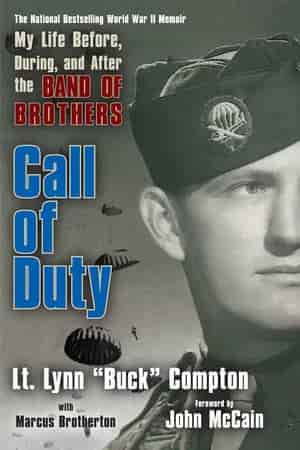
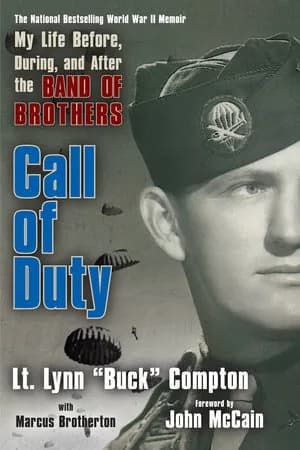
As young people, my generation would see a lot of death. I don't think I ever grew accustomed to it. It came in darkness and fervor, by our airplanes, rifles, parachutes, and tanks. But there was something about that first death I experienced the summer of 1939 when I was just eighteen, years before the war, that stayed with me so strongly. Those first few seasons after my father died were dark indeed.
p. 54