Leafy Quotes
Recently added
The newest book quotes in the Leafy Quotes collection — passages readers have just added, each with its author, book and the page it came from.
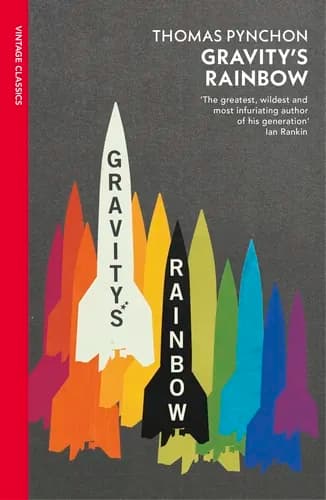
Death has come in the pantry door: stands watching them, iron and patient, with a look that says try to tickle me.
She watches Marvy's face as he pays Monika, watches him in this primal American act, paying, more deeply himself than when coming, or asleep, or maybe even dying.
But why are we taught to feel reflexive shame whenever the subject comes up? Why will the Structure allow every other kind of sexual behavior but that one? Because submission and dominance are resources it needs for its very survival. They cannot be wasted in private sex. In any kind of sex. It needs our submission so that it may remain in power. It needs our lusts after dominance so that it can co-opt us into its own power game. There is no joy in it, only power. I tell you, if S and M could be established universally, at the family level, the State would wither away.
The man's thirst for guilt was insatiable as the desert's for water.
Trees, now--Slothrop's intensely alert to trees, finally. When he comes in among trees he will spend time touching them, studying them, sitting very quietly near them and understanding that each tree is a creature, carrying on its individual life, aware of what's happening around it, not just some hunk of wood to be cut down. Slothrop's family actually made its money killing trees, amputating them from their roots, chopping them up, grinding them to pulp, bleaching that to paper and getting paid for this with more paper. "That's really insane." He shakes his head. "There's insanity in my family." He looks up. The trees are still. They know he's there. They probably also know what he's thinking. "I'm sorry," he tells them. "I can't do anything about those people, they're all out of my reach. What can I do?" A medium-size pine nearby nods its top and suggests, "Next time you come across a logging operation out here, find one of their tractors that isn't being guarded, and take its oil filter with you. That's what you can do."
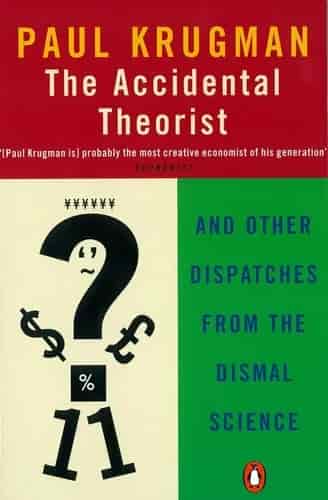
Sometimes economists in official positions give bad advice; sometimes they give very, very bad advice; and sometimes they work at the OECD.
We’re living in a Dark Age of macroeconomics. Remember, what defined the Dark Ages wasn’t the fact that they were primitive — the Bronze Age was primitive, too. What made the Dark Ages dark was the fact that so much knowledge had been lost, that so much known to the Greeks and Romans had been forgotten by the barbarian kingdoms that followed.
For the first time since 1917, then, we live in a world in which property rights and free markets are viewed as fundamental principles, not grudging expedients; where the unpleasant aspects of a market system—inequality, unemployment, injustice—are accepted as facts of life. As in the Victorian era, capitalism is secure not only because of its successes—which, as we will see in a moment, have been very real—but because nobody has a plausible alternative.
This situation will not last forever. Surely there will be other ideologies, other dreams; and they will emerge sooner rather than later if the current economic crisis persists and deepens. But for now capitalism rules the world unchallenged.
I believe in a relatively equal society, supported by institutions that limit extremes of wealth and poverty. I believe in democracy, civil liberties, and the rule of law. That makes me a liberal, and I’m proud of it.
We will not achieve the understanding we need, however, unless we are willing to think clearly about our problems and to follow those thoughts wherever they lead. Some people say that our economic problems are structural, with no quick cure available; but I believe that the only important structural obstacles to world prosperity are the obsolete doctrines that clutter the minds of men.
Nothing will avail to offset this virus which is poisoning the whole world. America is the very incarnation of doom. She will drag the whole world down to the bottomless pit.
The legend of King Midas has been generally misunderstood. Most people think the curse that turned everything the old miser touched into gold, leaving him unable to eat or drink, was a lesson in the perils of avarice. But Midas’s true sin was his failure to understand monetary economics. What the gods were really telling him is that gold is just a metal. If it sometimes seems to be more, that is only because society has found it convenient to use gold as a medium of exchange—a bridge between other, truly desirable, objects. There are other possible mediums of exchange, and it is silly to imagine that this pretty, but only moderately useful, substance has some irreplaceable significance.