Leafy Quotes
Recently added
The newest book quotes in the Leafy Quotes collection — passages readers have just added, each with its author, book and the page it came from.
Most of all, the twentieth century will be remembered as the time when we first began to understand what our address was. The “big, beautiful, blue, wet ball” of recent years is one way to say it. But a more profound way will speak of the orders of magnitude of that bigness, the shades of that blueness, the arbitrary delicacy of beauty itself, the ways in which water has made life possible, and the fragile euphoria of the complex ecosystem that is Earth, an Earth on which, from space, there are no visible fences, or military zones, or national borders.
p. 285
For large minds, the Earth is a small place. Not small enough to exhaust in one lifetime, but a compact home, cozy, buoyant, a place to cherish, the spectral center of our life. But how could we stay at home forever?
p. 281
Though it has a certain Russian-roulette quality to it, eating fugu is considered a highly aesthetic experience. That makes one wonder about the condition that we, in chauvinistic shorthand, referred to as “human.” Creatures who will one day vanish from the earth in the ultimate subtraction of sensuality that we call death, we spend our lives courting death, fomenting wars, watching sickening horror movies in which maniacs slash and torture their victims, hurrying our own deaths in fast cars, cigarette smoking, suicide. Death obsesses us, as well it might, but our response to it is so strange. Faced with tornadoes chewing up homes, with dust storms ruining crops, floods and earthquakes swallowing up whole cities, with ghostly diseases that gnaw at one’s bone marrow, cripple, or craze—rampant miseries that need no special bidding, but come freely, giving their horror like alms—you’d think human beings would hold out against the forces of Nature, combine their efforts and become allies, not create devastation of their own, not add to one another’s miseries. Death does such fine work without us. How strange that people, whole countries sometimes, wish to be its willing accomplices.
p. 170
We hallucinate sounds more often than sights. There are auditory mirages, which vanish without trace; auditory illusions that turn out to be something other than they seemed; and, of course, voices that speak to saints, seers, and psychotics, telling them how to act and what to believe.
p. 180
What I’m really wondering is why notices were posted and invitations sent out at all: If it’s a psychics’ convention, shouldn’t everyone just know where and when to meet?
p. 115
But, as sages have long said, the sexiest part of the body and the best aphrodisiac in the world is the imagination.
p. 131
"Killer asteroids are nature's way of asking, 'How's that space program coming along?'" - Anonymous
p. 54
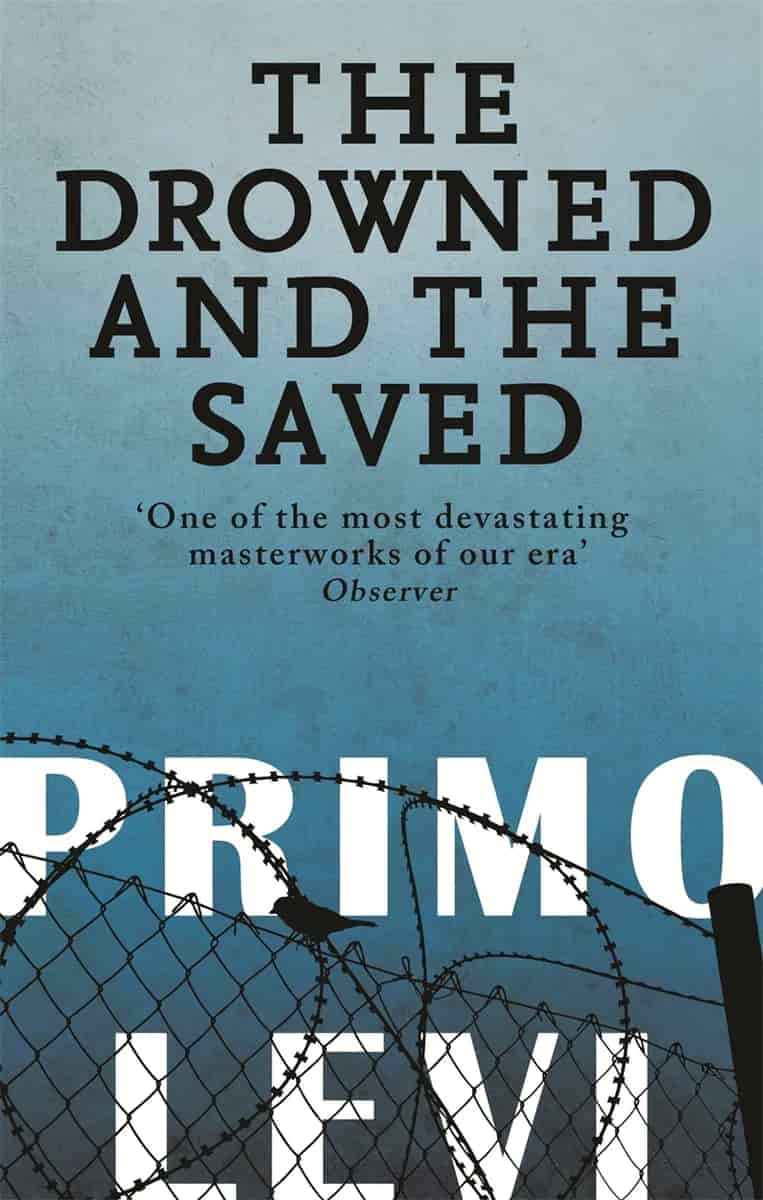
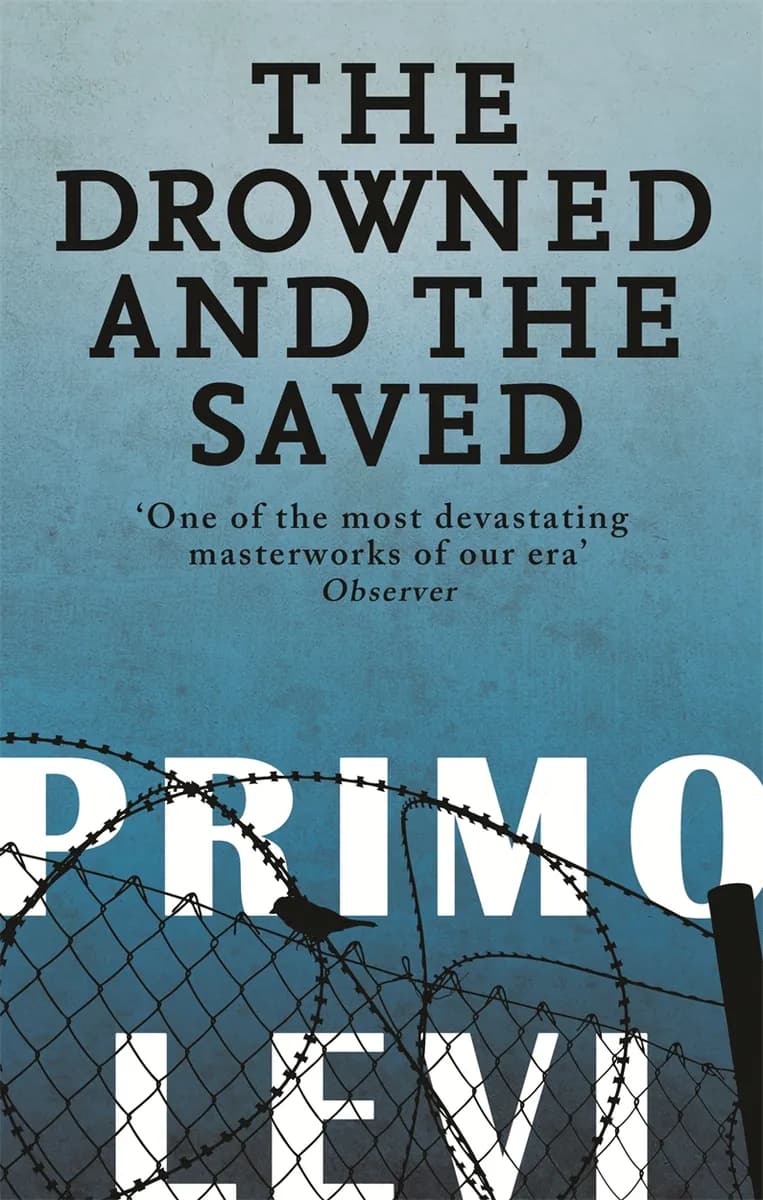
It was not possible for us nor did we want to become islands; the just (i giusti) among us, neither more nor less numerous than in any other human group, felt remorse, shame and pain for the misdeeds that others and not they had committed, and in which they felt involved, because they sensed that what had happened around them and in their presence, and in them, was irrevocable. Never again could it be cleansed; it would prove that man, the human species — we, in short — had the potential to construct an enormity of pain, and that pain is the only force created from nothing, without cost and without effort. It is enough not to see, not to listen, not to act.
The prisoners who saved themselves were not the best, the predestined to good, the bearers of a message: what I had seen and experienced showed the exact opposite. Survived the worst of preference, the selfish, the violent, the insensitive, the collaborators of the 'gray area', the spies. It was not a certain rule (there were, nor are there in human affairs, certain rules), but was also a rule. I felt so innocent, but trooped among the saved, and therefore constantly looking for an excuse, before me and the others. Survived the worst, that is the most suitable; the best are all dead.
Beware of analogies: for millenia they corrupted medicine, and it may be their fault that today's pedagogical systems are so numerous, and after three thousand years of argument we still don't know which is best.
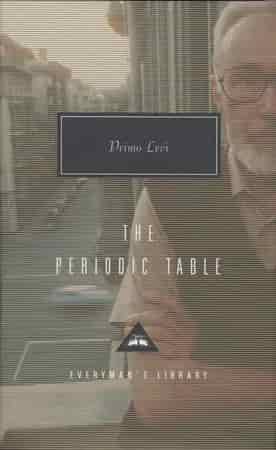
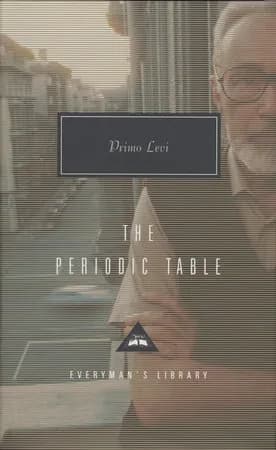
Sandro was surprised when I tried to explain to him some of the ideas that at the time I was confusedly cultivating. That the nobility of man, acquired in a hundred centuries of trial and error, lay in making himself the conquerer of matter, and that I had enrolled in chemistry because I wanted to remain faithful to this nobility. That conquering matter is to understand it, and understanding matter is necessary to understanding the universe and ourselves: and that therefore Mendeleev's Periodic Table, which just during those weeks we were laboriously learning to unravel, was poetry, loftier and more solemn than all the poetry we had swallowed down in liceo; and come to think of it, it even rhymed!
Distilling is beautiful. First of all because it is a slow, philosophic, and silent occupation, which keeps you busy but gives you time to think of other things, somewhat like riding a bike. Then, because it involves a metamorphosis from liquid to vapor (invisible), and from this once again to liquid; but in this double journey, up and down, purity is obtained, an ambiguous and fascinating condition, which starts with chemistry and goes very far. And finally, when you set about distilling, you acquire the consciousness of repeating a ritual consecrated by the centuries, almost a religious act, in which from imperfect material you obtain the essence, the ussia, the spirit, and in the first place alcohol, which gladdens the spirit and warms the heart.