Leafy Quotes
Recently added
The newest book quotes in the Leafy Quotes collection — passages readers have just added, each with its author, book and the page it came from.
Different people have irresolvably different views of the good life — not only at different periods of history and in different forms of society, but even in our own culture at the present time.
It is in imaginative literature — including those parts of it which pass for history and biography — that what may be good in human life is concretely represented.
Life is, fortunately, not a continuous application of game theory.
The happiness with which I am, inevitably, most concerned is my own, and next that of those who are in some way closely related to me. Indeed, for any reasonably benevolent person these cannot be separated: he will find much of his own happiness in the happiness of those for whom he cares, or in what he and they do together, where the enjoyment of each contributes so essentially to that of the other(s) that it will be more natural to say 'We had a good...' (whatever it was) than to speak of a mere sum of individual enjoyments.
Though we admit that the way to hell may be paved with good intentions, we are very sure that the way to heaven is not paved with bad ones.
The facts have to be determined by empirical evidence, and our thinking has then to conform to the facts, not the facts to our thinking
If we admire and enjoy the flourishing of human life, we shall naturally delight also in the flourishing of animal life.
Some history-making is intentional; much of it is accidental. People make history when they scale a mountain, ignite a bomb, or refuse to move to the back of the bus. But they also make history by keeping diaries, writing letters, or embroidering initials on linen sheets. History is a conversation and sometimes a shouting match between present and past, though often the voices we most want to hear are barely audible. People make history by passing on gossip, saving old records, and by naming rivers, mountains, and children. Some people leave only their bones, though bones too make history when someone notices.
Hardly any part of anyone's conduct concerns only himself.
Morality is not to be discovered but to be made: we have to decide what moral views to adopt, what moral stands to take.
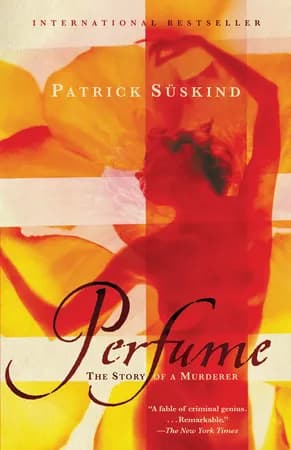
Even knowing that to possess that scent he must pay the terrible price of losing it again, the very possession and the loss seemed to him more desirable than a prosaic renunciation of both. For he had renounced things all his life. But never once had he possessed and lost.
People could close their eyes to greatness, to horrors, to beauty, and their ears to melodies or deceiving words. But they couldn't escape scent. For scent was a brother of breath.