Leafy Quotes
Recently added
The newest book quotes in the Leafy Quotes collection — passages readers have just added, each with its author, book and the page it came from.
Scientific and technological “solutions” which poison the environment or degrade the social structure and man himself are of no benefit, no matter how brilliantly conceived or how great their superficial attraction.
p. 31
Education can help us only if it produces “whole men”. The truly educated man is not a man who knows a bit of everything, not even the man who knows all the details of all subjects (if such a thing were possible): the “whole man” in fact, may have little detailed knowledge of facts and theories, he may treasure the Encyclopædia Britannica because “she knows and he needn’t”, but he will be truly in touch with the centre. He will not be in doubt about his basic convictions, about his view on the meaning and purpose of his life. He may not be able to explain these matters in words, but the conduct of his life will show a certain sureness of touch which stems from this inner clarity.
The cultivation and expansion of needs is the antithesis of wisdom. It is also the antithesis of freedom and peace. Every increase of needs tends to increase one’s dependence on outside forces over which one cannot have control, and therefore increases existential fear. Only by a reduction of needs can one promote a genuine reduction in those tensions which are the ultimate causes of strife and war.
p. 31
It might be thought that the I Ching and the oracles are metaphysical while the computer model is "real"; but the fact remains that a machine to foretell the future is based on metaphysical assumptions of a very definite kind. It is based on the implicit assumption that "the future is already here," that it exists already in a determinate form, that it requires merely good instruments and good techniques to get it into focus and make it visible. The reader will agree that this is a very far-reaching metaphysical assumption which seems to go against all direct personal experience.
p. 224
I believe all Americans are born with certain inalienable rights. As a child of God, I believe my rights are not derived from the Constitution. My rights are not derived from any government. My rights are not denied by any majority. My rights are because I exist. They were given to me and each of my fellow citizens by our creator, and they represent the essence of human dignity....
p. 194
From the point of view of the employer, it is in any case simply an item of cost, to be reduced to a minimum if it cannot be eliminated altogether, say, by automation. From the point of view of the workman, it is a 'disutility'; to work is to make a sacrifice of one's leisure and comfort, and wages are a kind of compensation for the sacrifice.
It is doubly chimerical to build peace on economic foundations which, in turn, rest on the systematic cultivation of greed and envy, the very forces which drive men into conflict.
p. 36
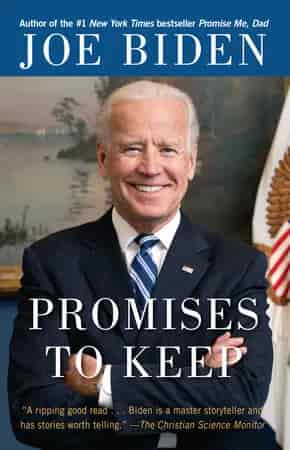
My own father had always said the measure of a man wasn't how many times or how hard he got knocked down, but how fast he got back up.
p. 208
Perhaps we cannot raise the winds. But each of us can put up the sail, so that when the wind comes we can catch it.
The disease having been caused by allowing cleverness to displace wisdom, no amount of clever research is likely to produce a cure.
p. 35
It was that hard; I still feel that way. But I believe that President Bush failed to lead. History will judge him harshly not for the mistakes he made- we all make mistakes- but for the opportunities he squandered.
p. 352
The Buddhist view, “takes the function of work to be at least threefold”: “to give a man a chance to utilize and develop his faculties; to enable him to overcome his egocentredness by joining with other people in a common task; and to bring forth the goods and services needed for a becoming existence.”