Leafy Quotes
Recently added
The newest book quotes in the Leafy Quotes collection — passages readers have just added, each with its author, book and the page it came from.
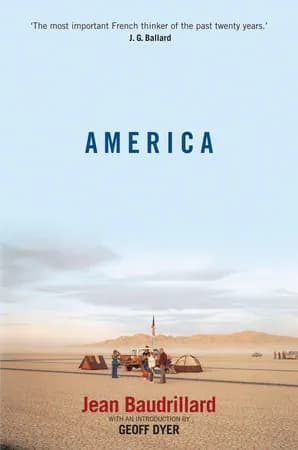
Yet there is a certain solitude like no other - that of the man preparing his meal in public on a wall, or on the hood of his car, or along a fence, alone. You see that all the time here. It is the saddest sight in the world. Sadder than destitution, sadder than the beggar is the man who eats alone in public. Nothing more contradicts the laws of man or beast, for animals always do each other the honour of sharing or disputing each other’s food. He who eats alone is dead (but not he who drinks alone. Why is this?).
p. 15
Let us learn to show our friendship for a man when he is alive and not after he is dead,” he suggested. “After that my own rule is to let everything alone."
p. 172
"I wouldn’t ask too much of her," I ventured. "You can’t repeat the past."
"Can’t repeat the past?" he cried incredulously. "Why of course you can!"
He looked around him wildly, as if the past were lurking here in the shadow of his house, just out of reach of his hand.
"I’m going to fix everything just the way it was before," he said, nodding determinedly. "She’ll see."
p. 110
It is invariably saddening to look through new eyes at things upon which you have expended your own powers of adjustment.
p. 104
No amount of fire or freshness can challenge what a man will store up in his ghostly heart.
p. 96
All right.[…] I'm glad it's a girl. And I hope she'll be a fool — that's the best thing a girl can be in this world, a beautiful little fool.
p. 17
Americans, while occasionally willing to be serfs, have always been obstinate about being peasantry.
p. 88
The truth was that Jay Gatsby, of West Egg, Long Island, sprang from his Platonic conception of himself. He was a son of God — a phrase which, if it means anything, means just that — and he must be about His Father’s business, the service of a vast, vulgar, and meretricious beauty. So he invented just the sort of Jay Gatsby that a seventeen-year-old boy would be likely to invent, and to this conception he was faithful to the end.
p. 98
"Her voice is full of money," he said suddenly.
That was it. I’d never understood before. It was full of money — that was the inexhaustible charm that rose and fell in it, the jingle of it, the cymbals’ song of it ... high in a white palace the king’s daughter, the golden girl...
p. 120
They were careless people, Tom and Daisy—they smashed up things and creatures and then retreated back into their money or their vast carelessness or whatever it was that kept them together, and let other people clean up the mess they had made....
p. 179
But his heart was in a constant, turbulent riot. The most grotesque and fantastic conceits haunted him in his bed at night. A universe of ineffable gaudiness spun itself out in his brain while the clock ticked on the washstand and the moon soaked with wet light his tangled clothes upon the floor. Each night he added to the pattern of his fancies until drowsiness closed down upon some vivid scene with an oblivious embrace. For a while these reveries provided an outlet for his imagination; they were a satisfactory hint of the unreality of reality, a promise that the rock of the world was founded securely on a fairy’s wing.
p. 99
Most of the big shore places were closed now and there were hardly any lights except the shadowy, moving glow of a ferryboat across the Sound. And as the moon rose higher the inessential houses began to melt away until gradually I became aware of the old island here that flowered once for Dutch sailors’ eyes — a fresh, green breast of the new world. Its vanished trees, the trees that had made way for Gatsby’s house, had once pandered in whispers to the last and greatest of all human dreams; for a transitory enchanted moment man must have held his breath in the presence of this continent, compelled into an aesthetic contemplation he neither understood nor desired, face to face for the last time in history with something commensurate to his capacity for wonder.
And as I sat there, brooding on the old unknown world, I thought of Gatsby's wonder when he first picked out the green light at the end of Daisy’s dock. He had come a long way to this blue lawn and his dream must have seemed so close that he could hardly fail to grasp it. He did not know that it was already behind him, somewhere back in that vast obscurity beyond the city, where the dark fields of the republic rolled on under the night.
Gatsby believed in the green light, the orgastic future that year by year recedes before us. It eluded us then, but that’s no matter — tomorrow we will run faster, stretch out our arms farther.... And one fine morning —
So we beat on, boats against the current, borne back ceaselessly into the past.
p. 180