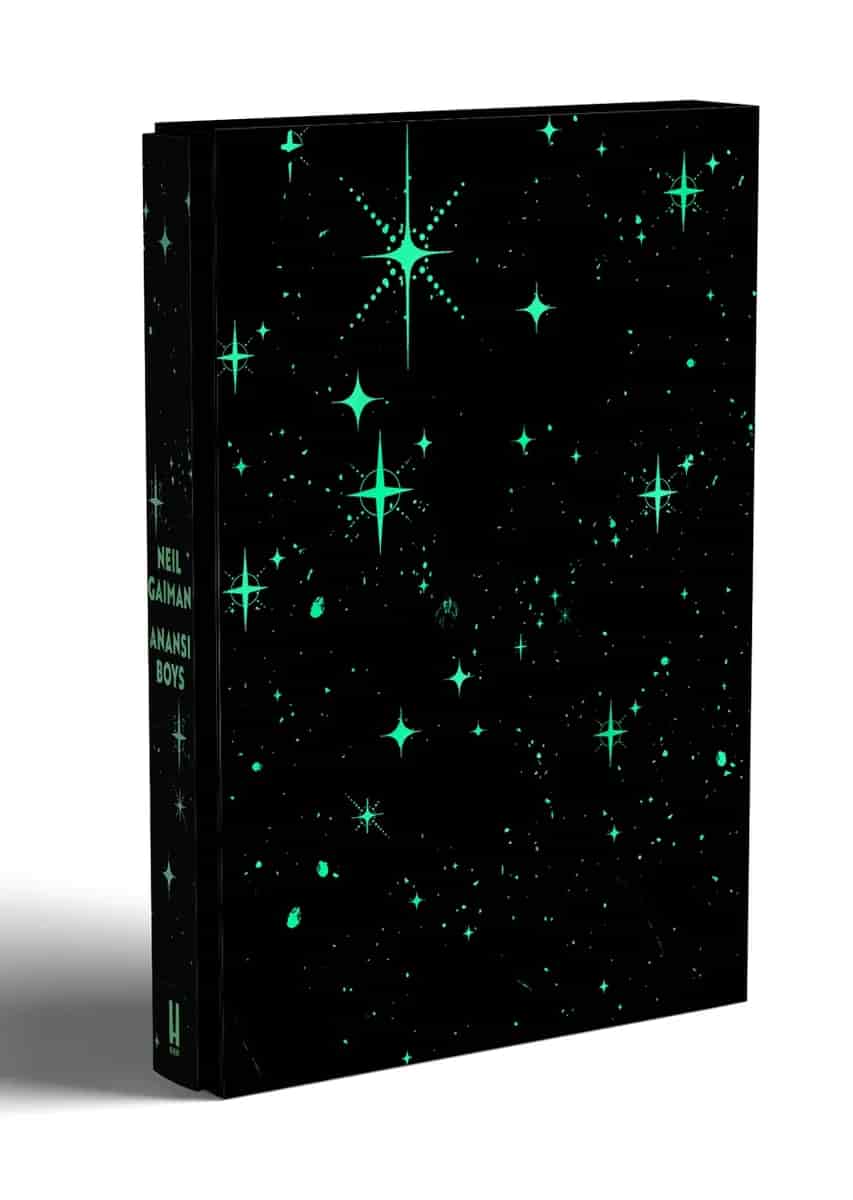
Tiger roared in anger, and Charlie took the roar and wound his song around it. Then he did the roar himself… — Neil Gaiman
Tiger roared in anger, and Charlie took the roar and wound his song around it. Then he did the roar himself, just like Tiger had done it. Well, the roar began just as Tiger’s roar had, but then Charlie changed it, so it became a really goofy sort of roar, and all the creatures watching from the rocks started to laugh. They couldn’t help it. Charlie did the goofy roar again. Like any impersonation, like any perfect caricature, it had the effect of making what it made fun of intrinsically ridiculous. No one would ever hear Tiger roar again without hearing Charlie’s roar underneath it. “Goofy sort of a roar,” they’d say.
Source: Wikiquote · CC BY-SA 4.0
More from this book
Nothing good lasts forever, after all. Sooner or later, as Grahame Coats himself would have delighted in assuring you, even if your goose habitually lays golden eggs, it will still be cooked.
Spider was not particularly good at telling the truth. He regarded truth as fundamentally malleable, more or less a matter of opinion, and Spider was able to muster some pretty impressive opinions when he had to.
It is a small world. You do not have to live in it particularly long to learn that for yourself. There is a theory that, in the whole world, there are only five hundred real people (the cast, as it were; all the rest of the people in the world, the theory suggests, are extras) and what is more, they all know each other. And it’s true, or true as far as it goes. In reality the world is made of thousands upon thousands of groups of about five hundred people, all of whom will spend their lives bumping into each other, trying to avoid each other, and discovering each other in the same unlikely teashop in Vancouver. There is an unavoidability to this process. It’s not even coincidence. It’s just the way the world works, with no regard for individuals or for propriety.