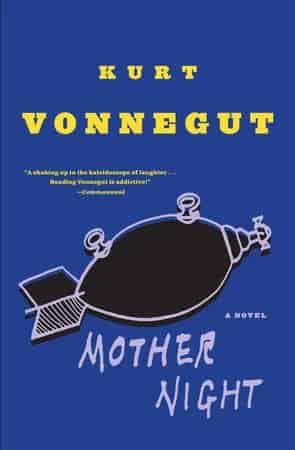
And the city was lovely, highly ornamented, like Paris, and untouched by war. It was supposedly an "open"… — Kurt Vonnegut
And the city was lovely, highly ornamented, like Paris, and untouched by war. It was supposedly an "open" city, not to be attacked since there were no troop concentrations or war industries there. But high explosives were dropped on Dresden by American and British planes on the night of February 13, 1945, just about twenty-one years ago, as I now write. There were no particular targets for the bombs. The hope was that they would create a lot of kindling and drive firemen underground. And then tens of thousands of tiny incendiaries were scattered over the kindling, like seeds on freshly turned loam. More bombs were dropped to keep firemen in their holes, and all the little fires grew, joined one another, became one apocalyptic flame. Hey presto: fire storm. It was the largest massacre in European history, by the way. … Everything was gone but the cellars where 135,000 Hansels and Gretels had been baked like gingerbread men.
Source: Wikiquote · CC BY-SA 4.0
More from this book
Drawn crudely in the dust of three window-panes were a swastika, a hammer and sickle, and the Stars and Stripes. I had drawn the three symbols weeks before, at the conclusion of an argument about patriotism with Kraft. I had given a hearty cheer for each symbol, demonstrating to Kraft the meaning of patriotism to, respectively, a Nazi, a Communist, and an American. "Hooray, hooray, hooray," I'd said.
"I had hoped, as a broadcaster, to be merely ludicrous, but this is a hard world to be ludicrous in, with so many human beings so reluctant to laugh, so incapable of thought , so eager to believe and snarl and hate. So many people wanted to believe me!"
What froze me was the fact that I had absolutely no reason to move in any direction. What had made me move through so many dead and pointless years was curiosity. Now even that flickered out.