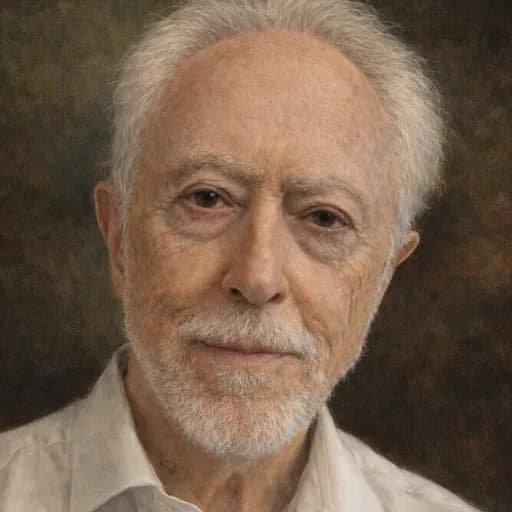
J. M. Coetzee
Quotes
They lost their humanity, in our eyes, because of a certain willed ignorance on their part.
He is here, with her, out of love. *He cannot imagine her getting through this trial without him at her side.”
At IBM he has to keep his fantasies of Monica Vitti to himself, and the rest of his arty pretensions too. [...] For reasons that are not clear to him, he has been adopted as a chum by a fellow programmer named Bill Briggs. [...] Whereas the other programmers speak with unplaceable grammar-school accents and start the day by flipping to the financial pages of the Telegraph to check the share prices, Bill Briggs has a marked London accent and stores his money in a building society account.
p. 50
But if he is going to write prose then he may have to go the whole hog and become a Jamesian. Henry James shows one how to rise above mere nationality. [...] People in James do not have to pay the rent; they certainly do not have to hold down jobs; all they are required to do is to have super-subtle conversations whose effect is to bring about tiny shifts of power, shifts so minute as to be invisible to all but the practised eye. When enough such shifts have taken place, the balance of power between the personages of the story is (Voilà!) revealed to have suddenly and irreversibly changed. And that is that: the story has fulfilled its charge and can be brought to an end. — Chapter 8, page 64.
His refuge from IBM is the cinema. [...] He goes to the whole of an Antonioni season. In a film called L'Eclisse a woman wanders through the streets of a sunstruck, deserted city. She is disturbed, anguished. What she is anguished about he cannot quite define; her face reveals nothing. The woman is Monica Vitti. With her perfect legs and sensual lips and abstracted look, Monica Vitti haunts him. He falls in love with her. — Chapter 6, page 48.
Hitherto he has found in Western music, in Bach above all, everything he needs. Now he encounters something that is not in Bach, though there are intimations of it: a joyous yielding of the reasoning, comprehending mind to the dance of the fingers. He hunts through record shops, and in one of them finds an LP of a sitar player named Ustad Vilayat Khan, with his brother — a younger brother, to judge from the picture — on a veena, and an unnamed tabla player. He does not have a gramophone of this own, but he is able to listen to the first ten minutes in the shop. It is all there: the hovering exploration of tone-sequences, the quivering emotion, the ecstatic rushes. He cannot believe his good fortune. A new continent and all for a mere nine shillings! He takes the record back to his room, packs it away between sleeves of cardboard till the day he will able to listen to it again. — Chapter 11, pages 93–4.
She is not sure, as she listens to her own voice, whether she believes any longer in what she is saying.
At the Everyman Cinema there is a season of Satyajit Ray. He watches the Apu trilogy on successive nights in a state of rapt absorption. In Apu's bitter, trapped mother, his engaging, feckless father he recognizes, with a pang of guilt, his own parents. But it is the music above all that grips him, dizzyingly complex interplays between drums and stringed instruments, long arias on the flute whose scale or mode — he does not know enough about music theory to be sure which — catches at his heart, sending him into a mood of sensual melancholy that last long after the film has ended. — Chapter 11, page 93.
It continues to astound him that people can be as clever as people are in the computer industry, yet have no outside interests beyond cars and house prices. — Chapter 18, page 149.
The nearest shops from where they live are a mile away along a bleak eucalyptus-lined road.
p. 3
Because he takes pleasure in her, because his pleasure is unfailing, an affection has grown up in him for her. To some degree, he believes, this affection is reciprocated. Affection may not be love, but it is at least its cousin.
Talking to Petrus is like punching a bag of sand.
'Are you giving him up?'
'Yes, I am giving him up.'