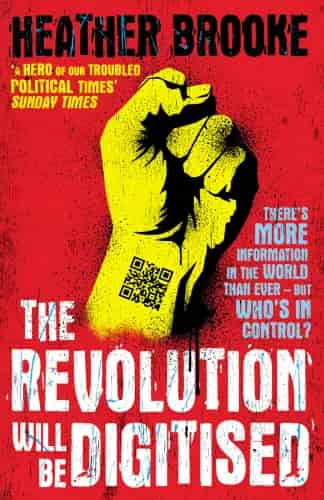
Free speech is not the great danger for humanity. Concentration of power is. We learn this lesson over and… — Heather Brooke
Free speech is not the great danger for humanity. Concentration of power is. We learn this lesson over and over again, and yet seem compelled eternally to repeat it. Communism, colonialism, monarchy, state socialism, tyranny- all become enemies of the people because they offer their citizens not too many opportunities to communicate or associate, but too few. Power is the dynamic force that fuels politics and it is this, not speech, which needs to be constantly monitored, controlled and checked. We view crimes against humanity as aberrations, individuals gone wild, when we should be seeing them through the prism of power. Abuse happens when a culture values some people more than others and those exercising power are not accountable for their actions.
p. 230Source: Wikiquote · CC BY-SA 4.0

More from this book
At a time of information overload, good journalists are more important then ever. They serve as the public's hired guns to collect information from various sources and challenge it for the purpose of distilling down what is important and true. They-signpost issues that are worthy of our attention. In the past when we bought newspapers we were paying for that particular newspaper with its content- a bundle of news and entertainment. In the digital age we're buying the carriage (e.g. the Internet access) and readers decide later what information they want to view over that carrier.
p. 70
We are at an extraordinary moment in human history: never before has the possibility of true democracy been so close to realisation. At the cost of publishing and duplication has dropped to near zero, a truly free press, and a truly informed public, becomes a reality. A new Information Enlightment is dawning where knowledge flows freely, beyond national boundaries. Technology is breaking down traditional social barriers of status, class, power, wealth and geography, replacing them with an ethos of collaboration and transparency. In this new Enlightenment it isn't just scientific truths that are the goal, but discovering truths about the way we live, about politics and power.
Authoritarians offer citizens a deal: if we hand over our freedom, they will guarantee certainty and safety. This might have been possible in a closed society with little interaction between people, but it is a false promise in a knowledge economy where citizens are interconnected. If the best chaos theorists can't model the weather beyond a week, how does the National Security Agency think it can predict which of us will turn into a terrorist? If our intelligence agencies persist in monopolising knowledge we will see continued intelligence failures.
p. 236